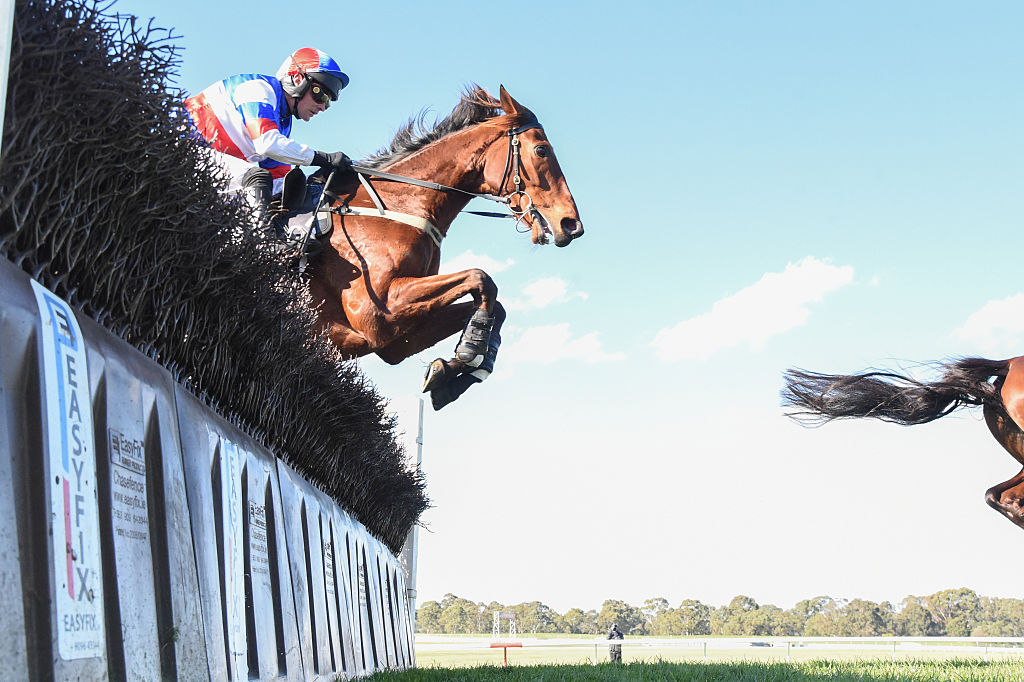

I spent years living in the UK buying and selling horses, but I didn’t know a thing about steeplechase until I moved to Maryland. Despite technically originating in 18th-century Ireland, the equestrian sport of steeplechase feels about as English as it gets. Riders race on thoroughbreds, barreling over tree-like jumps called timbers on long and wild tracks.
Steeplechase combines every elite aspect of the horse world: racing, jumping, the rugged outdoorsmanship of foxhunting and the proud formality of English jockey silks. And with a season running through early spring and fall, the crowd of spectators is typically encased in tweed.
Maryland, a state founded as a Catholic refuge, exists now as an inheritor of the English aristocracy – at least when it comes to the country life.
The food, the fashion and the free-flowing liquor liven up a who’s who of Baltimore society
Steeplechase is still popular in the UK, and there are some notable races in a few states along the East Coast of America. However, Maryland is distinct in how tightly the sport is woven into local culture and identity. Maryland businesses small and large are likely to sponsor races, with participation as an owner, trainer, sometimes even a rider, all but required to boost your standing in the local social hierarchy.
Unlike horse shows, which attract mostly dedicated “horse girls,” steeplechase attracts a layman crowd looking to usher in spring. I’ve tagged along to several races with friends who received tickets through work, spectators who participate knowing that this is simply what you do as a Marylander if you’re looking for a day in the country. Unsurprisingly, the National Steeplechase Association is based on a former DuPont estate deep in Maryland horse country.
Although Maryland has a statewide love affair with steeplechase, the sport depends on a handful of small country communities that keep the centuries-long tradition alive. Maryland is an insular state – just ask any Baltimorean who will lovingly (or sometimes bitingly) tell you of the moniker “Smalltimore.” Some argue this has weighed down the state’s development in recent decades, but it has undoubtedly been a boon for the horse culture.
My Lady’s Manor, for example, hosts the first major race of the season in early April, kicking off the first leg of the Steeplechase Triple Crown. The Manor is a sprawling agricultural district about 40 minutes north of Baltimore, and it still carries on its equestrian tradition from the colonial era. Some of the same Maryland families have lived on the land for centuries. The race began in 1902 as a competition to see who on the Manor had the biggest and fastest horse. Some of their descendants continue to host the race from the historic home today; it’s now on its 115th running.
The race itself is a feat – the food, the fashion and the free-flowing liquor all liven up a who’s who of Baltimore society. But just as there could be no race without the Manor, there could be no Manor without the race. After organization and advocacy from residents, My Lady’s Manor received a historic protection designation from the state in 1978. This has helped the families conserve the agricultural character of the land, much of which remains part of functioning farms, while resisting the suburban sprawl of outer Baltimore. They have kept dozens of historic structures well-preserved. And because of their efforts, they are free to continue living as their ancestors did centuries ago.
The country life is defined by the time, effort and, above all, dignity required to maintain one’s own distinct way of life. Isolated in the country, this used to be relatively easy – but today, it requires a consistent effort to resist the tide of cultural erasure. While the rest of the world races onward, Maryland steeplechase families can rest assured that this little slice of the world is theirs. And all of the state is better for it.



Comments