
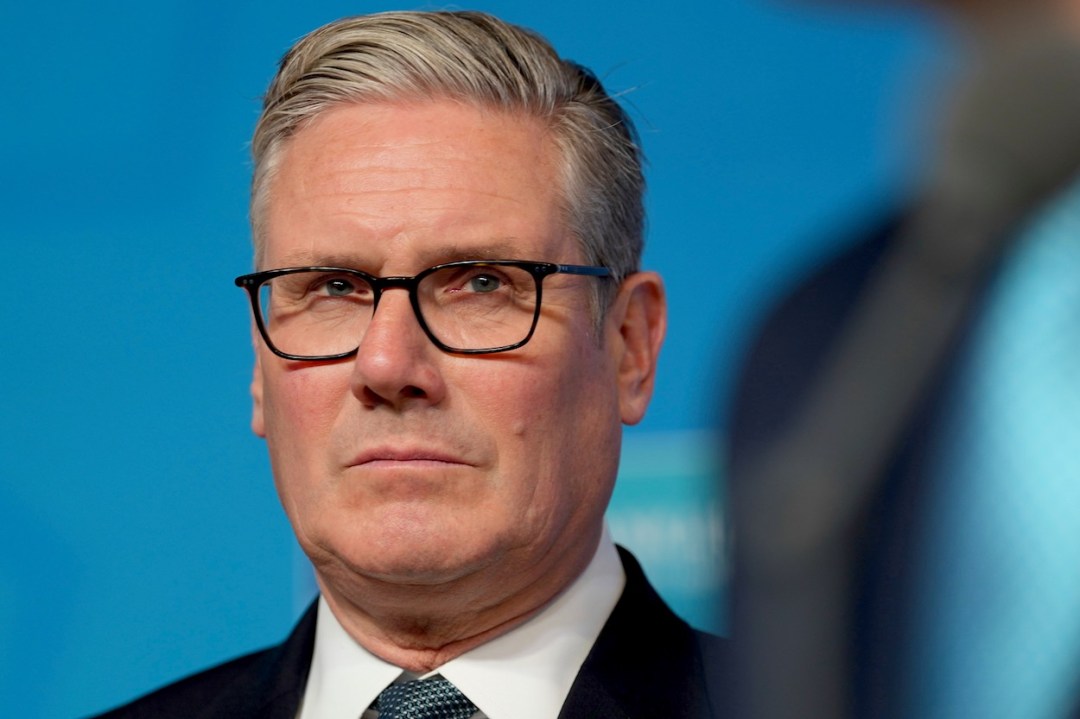
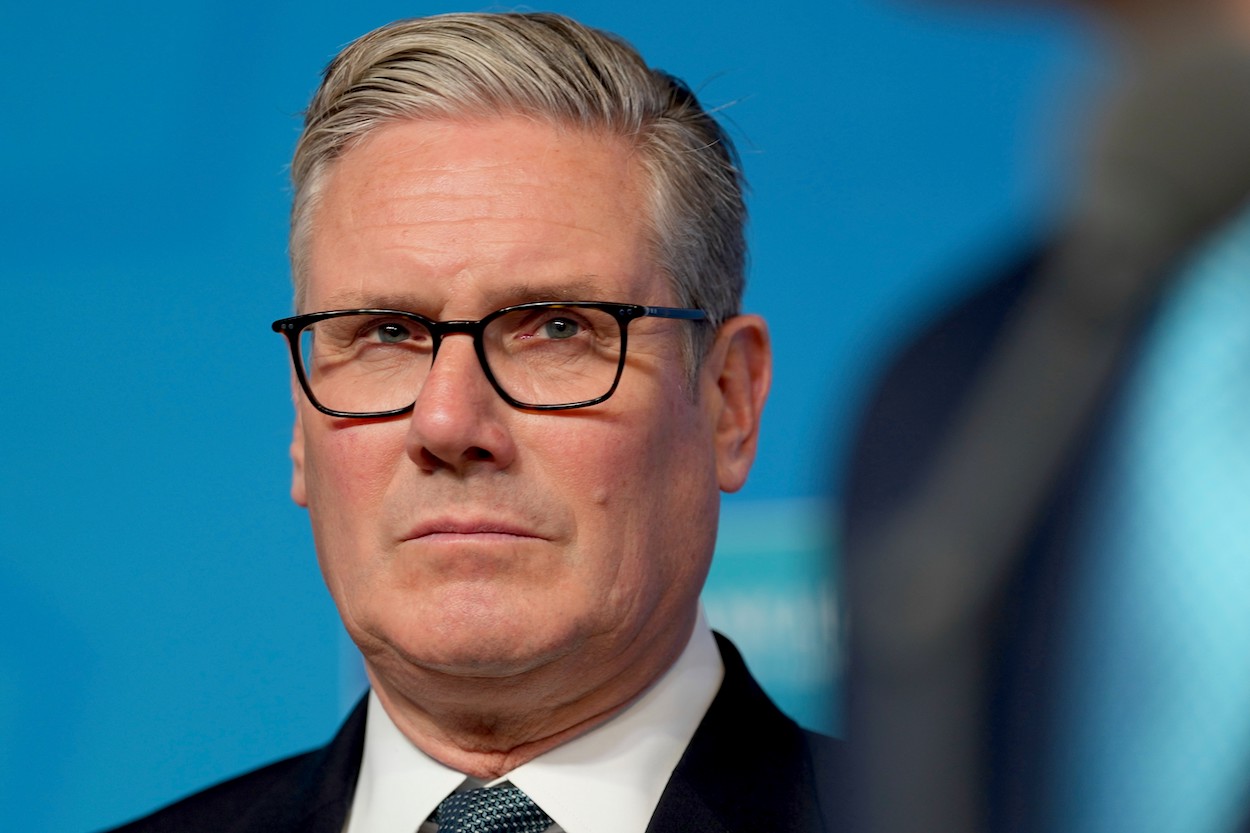
The phrase ‘Starmer’s Britain’ was first articulated three years before he got power. At 6:28 p.m. on 9 May 2021, a figure named ‘scrambled egg localist [rose emoji] [Union Jack emoji] [stars emoji]’ tweeted: ‘In Starmer’s Britain there will be no rich people or trains, leopard print will be abolished, and every woman will be pregnant and barefoot’. Recent events had shown Starmer at his most gormless. On 6 May, Labour was mauled by the Conservatives in the Hartlepool by-election, and on 9 May, Starmer tried to respond. He replaced ‘Anneliese Dodds’ with ‘Rachel Reeves’ as shadow chancellor, and attempted to sack Angela Rayner (wearer of the leopard print) but ended up making her ‘shadow first secretary of state’. Egg localist’s cryptic tweet, after that impotent day, was the earliest expression of the paradox of Keir Starmer. He was – his Britain would be – at once ineffectual and sinister.

Starmer’s Britain has a wide canon. The Chagos Islands deal is a central text, and the videos of bottle-popping yutes celebrating early release from prison are seminal works of the genre. Rachel Reeves crying, the Manchester Airport police beatings and the slow senescence of the Assisted Dying Bill are other essential moments in Starmer’s Britain – all pathetic and ominous in equal measure. Hadush Kebatu, the sex pest, is one of the Great Men of the Starmerverse (along with Peter Mandelson). Hadush caused the Epping riots last year by sexually assaulting a 14-year-old girl. He was accidentally released from HMP Chelmsford and spent two days roaming Essex and London with an avocado-print tote bag. He tried, keenly, to turn himself in, but was unable to get bemused officers to re-arrest him. He was finally caught and deported back to Ethiopia after negotiating a £500 ‘resettlement grant’ from Starmer’s government.
Starmer’s Britain was built by many hands. Other than the Prime Minister himself, there are two archetypal Starmer’s Britain ministers in his government: David Lammy, the justice secretary and deputy prime minister, and Richard Hermer, the attorney general. When Keir resigned outside No. 10, few ministers wanted to be associated with his terminal sordid croaks. But Lammy and Hermer were present. The pair carry the burdens of ineptitude and malevolence more purely than most others in the Cabinet, and ironically it has fallen on them to try to reframe Starmer’s legacy away from this reputation that they embody. On Thursday, at the think tank Chatham House’s ‘London Conference’, they gave back-to-back speeches and did a joint Q&A on the subject of ‘A defence of international law’. ‘One of Keir Starmer’s most significant achievements has been restoring, from a very low ebb, not simply the United Kingdom’s reputation as a trusted partner, but as a global leader,’ said Hermer. ‘History will write up the Keir Starmer period as tremendously strong on foreign relations and defence,’ said Lammy.
Hermer and Lammy were ordered to Chatham House, the cradle of Britain’s intelligentsia, to tell a new story about Starmer’s Britain: Keir has made this country respected abroad again. The hope, I guess, is that this narrative will trickle down to the rest of us… Burundian President Evariste Ndayishimiye thinks Starmer’s a good thing. Aren’t you pleased to hear it? Hermer explained how important the post second world war international order is, and how Keir has reinvigorated it, and then went on to say that many of Britain’s problems have been caused by external factors. ‘Putin’s aggression’ caused people’s gas prices to rise. ‘They [he means British people] can see the impact on the pound in their pocket… when vital shipping lanes are blocked.’ It’s very funny that in Starmer’s Britain the phrase ‘pound in their pocket’ has become so prevalent, given its origins in Harold Wilson’s infamous speech in 1967 where he pretended that devaluing the pound would be good for consumers. And if Keir is so accomplished in foreign affairs, wouldn’t they be having a less adverse effect on our lives?
It can be tempting to blame everything bad in Britain on Keir. Even things that aren’t – can’t be – his fault: tins of tuna being sold in faraday cages in supermarkets; big notices in the corner of World Cup games demanding you buy a TV licence; sewage dumps in the Solent; the Bedford train crash. Upon reflection, we lived in Starmer’s Britain before we knew what to call it. The festering bin bag of Britain’s old absurdities (potholes, strikes, etc) feels in agreement with his rule. No prime minister since Tony Blair seems to have left a mark as strong on this country as Starmer. He has done nothing with power, but also everything.

Comments