
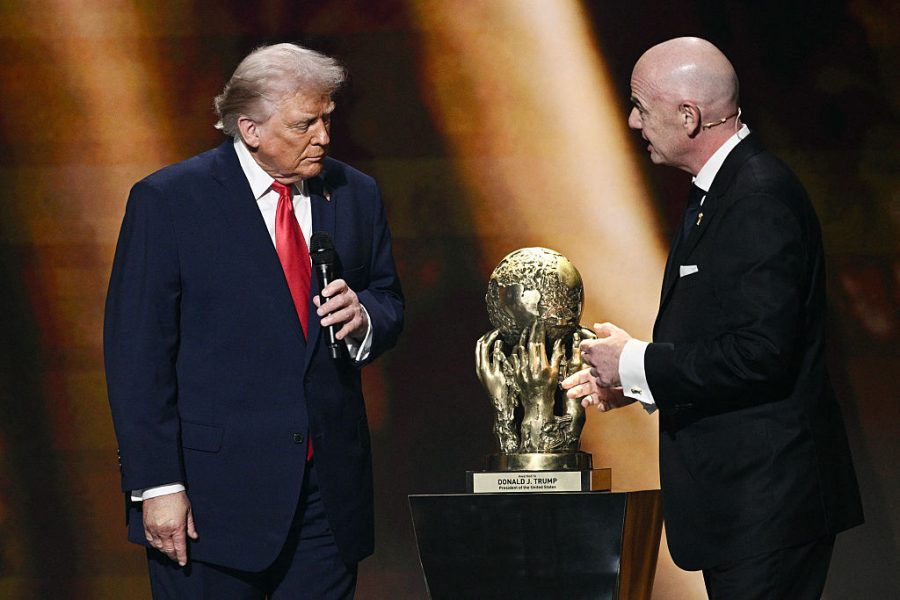
Europe has come up with a way to hit back at Donald Trump. What began last week as a suggestion that the continent’s soccer nations should boycott this summer’s World Cup has grown into a popular campaign.
As the New York Times reported earlier this week, the man who first floated the idea was Oke Göttlich, a senior member of the German Football Association’s executive committee and one of its 11 vice presidents. “What were the justifications for the boycotts of the Olympic Games in the 1980s?” said Göttlich, referring to the US-led boycott of the Moscow Olympics in 1980 and the USSR’s retaliation four years later. “By my reckoning, the potential threat is greater now than it was then. We need to have this discussion.”
Göttlich was born in 1975, so perhaps he can be excused for not knowing the justification for the 1980 boycott. With the Cold War raging, the Soviet Union invaded Afghanistan in December 1979 in support of the Marxist regime in their fight against Islamist rebels.
It is highly improbable that any European nation will boycott America’s World Cup
What is the “potential threat” to which Göttlich refers? “We do not know yet what will happen with Greenland,” he said. Yes we do. Grown-ups know that America is not going to invade Greenland. Göttlich also mentioned the recent tragedies in Minnesota as a reason to boycott the World Cup. “We are seeing people die on the streets as a result of actions by immigration enforcement,” he said.
Göttlich’s call for a boycott was echoed by Jürgen Hardt, a politician in Germany’s ruling CDU party. Referring to the Greenland dispute, he said withdrawing from the World Cup would be “a last resort in order to get Trump to see sense.” An online petition in Holland, meanwhile, demanding a boycott so that their footballers “can be on the right side of history” has amassed over 155,000 signatures.
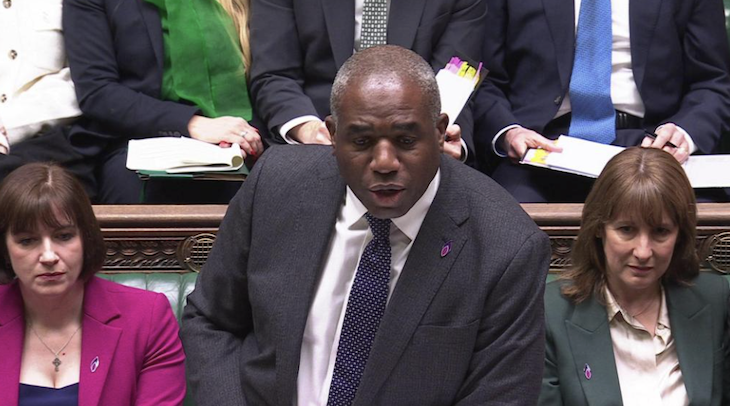
Politicians in France have also endorsed the idea of using the World Cup as a way of punishing Trump. Éric Coquerel, the president of the National Assembly’s finance commission, declared last week that games in the US should be relocated to Canada and Mexico. “Can you imagine,” he raged:
Playing in the World Cup in a country that attacks its neighbors, threatens to invade Greenland, destroys international law, wants to torpedo the UN, establishes a fascist and racist militia in its own country, attacks the opposition…[and] plans to ban all LGBTQ symbols from stadiums, etc.
Monsieur Coquerel has got a little carried away. Trump has not banned LGBTQ symbols from stadiums. On the contrary, a charity-run initiative called Pride House United will “be welcoming LGBTIQ+ fans, athletes, and allies during the 2026 men’s World Cup.”
It is true some aren’t happy. Last month, Seattle announced that the match in their city between Egypt and Iran on June 26 will be the focus of celebrations of the LGBTQ+ community. It provoked a furious backlash from both countries, with Egypt telling FIFA, soccer’s governing body, that such celebrations “directly contradict the cultural, religious, and social values of the region, particularly in Arab and Islamic societies.”
These values were seen during the 2022 World Cup in Qatar, a country where people with diverse sexual orientations are criminalized. During the tournament, the hosts pressured FIFA to ban Western nations from wearing LGBTQ armbands.
As early as 2016, Amnesty International had dubbed the 2022 tournament the “World Cup of Shame,” on account of Qatar’s treatment of the migrant workers used to build the stadiums. A report in Britain’s Guardian newspaper in 2021 estimated that, with over a year to go, 6,500 workers in Qatar had died during construction of the venues.
Despite these concerns there was no clarion call from France and Germany to boycott the World Cup. Nor was there one, incidentally, the same year when Beijing hosted the Winter Olympics. Nine Western nations, among them the US, Canada and Britain, did impose a diplomatic boycott on the 2022 winter games in protest at the atrocities perpetrated by the Chinese regime against its Uyghur Muslims. Germany and France were not among them.
Nor did these countries – or indeed any European nation – show solidarity with Britain during the 2018 soccer World Cup in Russia. In March that year, Russian agents had attempted to assassinate one of its former operatives, Sergei Skripal, in southwest England using the nerve agent Novichok.
As a result, no British minister or member of the royal family attended that year’s World Cup. In June 2018, as the World Cup was in progress, an Englishwoman named Dawn Sturgess found a discarded perfume bottle and sprayed it on herself. It was the exact batch of Novichok nerve agent used by the Russians in the assassination attempt on Skripal. Sturgess suffered a long and agonizing death.
Two weeks later, president Emmanuel Macron flew to Moscow to watch France play Croatia in the final of the World Cup. He popped into the Kremlin for talks with Vladimir Putin and expressed his pleasure at being in Russia.
It is highly improbable that any European nation will boycott America’s World Cup. They wouldn’t dare risk the wrath of Trump or the fury of their fans, who don’t much care for political points scoring. Scoring goals is their priority.



Comments