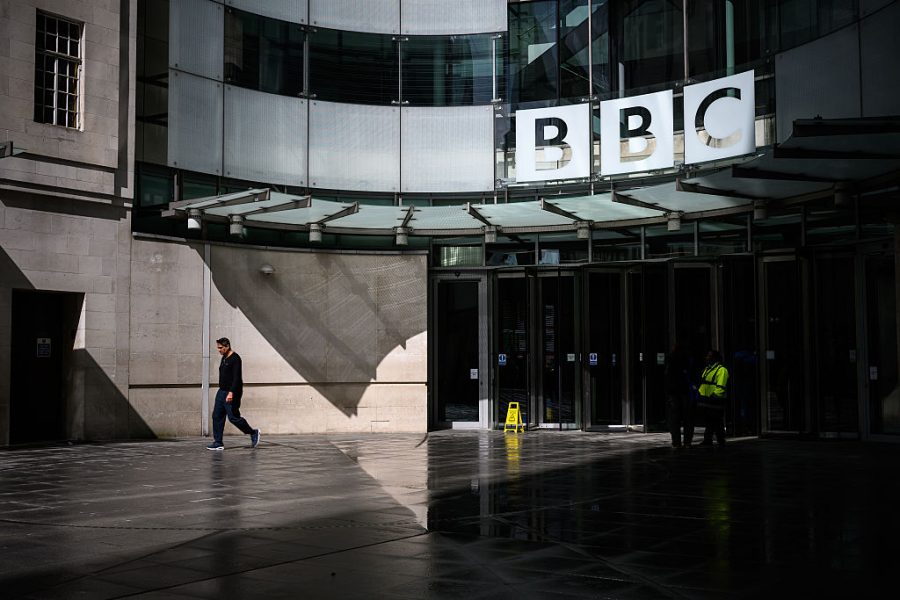
I’m unlikely to be invited to dinner at BBC director general Matt Brittin’s any time soon but judging by the cuts he has announced, it would be salami slices all round for starters. The £500 million savings plan for the corporation, unveiled earlier this month, includes the axing of Radio 4’s The World Tonight and, inexplicably, the station’s Midnight News. Budget-wise, this is like dropping a pint of semi-skimmed from the monthly food shop for a family of six. One prominent BBC lifer is so baffled and distressed by the binning of the flagship bulletin that they have written to King Charles in protest. Credit to Matt for trying, though: things couldn’t carry on the way they were.
The axe (or rather, kitchen knife), however, has fallen in the wrong place. So here are my top six suggestions for saving money at the BBC where it wouldn’t hurt nearly as much. (Bona fides disclosure: I have worked for the corporation, on and off, over five different decades.)
Firstly, while I feel bad advocating that some highly paid news presenters should be dispensed with – some are lifelong friends – the inconvenient truth is that times have changed. We no longer need to pay people huge sums to bring us tablets of stone, Moses-style, from the mountain top. There was an argument for news anchors in the mould of Trevor McDonald in the 1980s when the BBC’s main news regularly attracted 11 million viewers. But that figure is now down approximately 70 per cent, including on catch up. Most of us now get our news online and don’t need autocue readers to help us.
Revolution – not evolution – is required
As for the three million or so who still watch bulletins, that decision is motivated by the anchor as much as the decision to watch England play in the World Cup is determined by the presenter. We tune in to watch England versus Croatia, not – personable though he is – the broadcaster Mark Chapman. News-reading could easily be done by a telegenic reporter on a generous wage of £80,000 a year – one sixth, incidentally, of the public money that paid for Huw Edwards and his mobile phone bill.
I would also scrap half-hour curated bulletins. Some, like BBC1’s one at 1 p.m., are like vestigial organs: there was a need for them once but – with the BBC’s news site, its news channel, and Radio 4 and 5 live – not any more. Keep local TV news, though: it’s what the BBC is for.
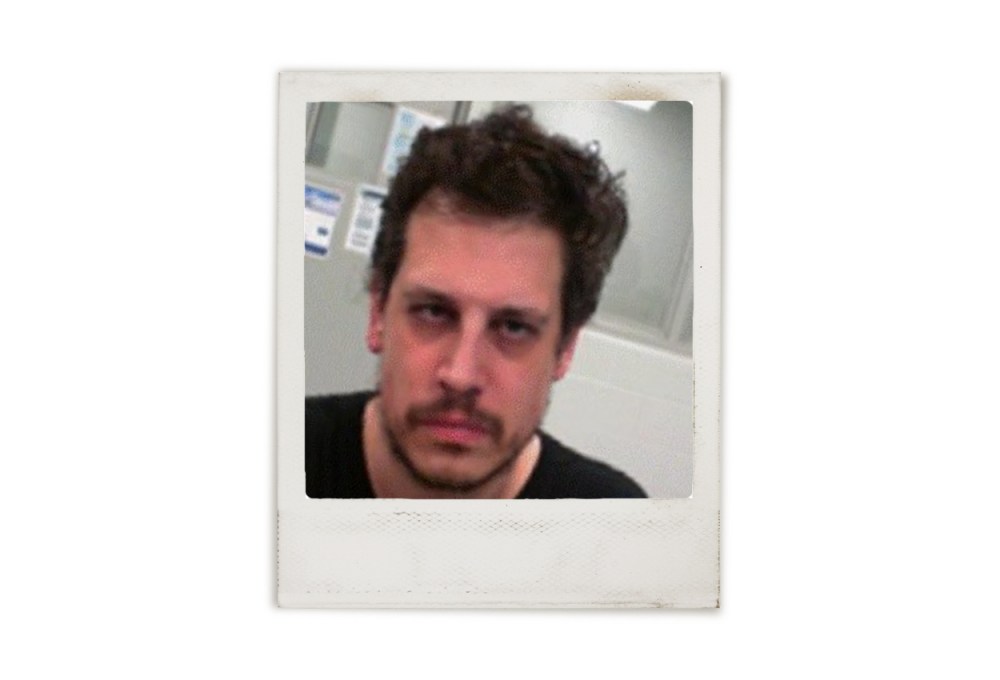
Secondly, I would examine the cost of the BBC’s payroll. To be fair, significant dents have been made here in recent years. After the corporation’s equal pay scandal of 2017, several BBC presenters, including Jeremy Vine, Nicky Campbell and Nick Robinson, agreed to take big pay cuts. But whopping anomalies remain. The late-night weekend 5 Live and Radio Ulster presenter Steven Nolan – whom one BBC lifer on my corporation WhatsApp group hadn’t even heard of – earns just under £410,000 a year.
What makes Nolan’s salary even more egregious is the fact that the BBC can’t even use the market forces defence. Often, in the past, when justifying hefty ‘star’ salaries, it would say words to the effect of: ‘Ah, we have to pay that much, you see, because that is what he/she would get on the open market.’ Capable though Nolan is, I very much doubt he’d get anything remotely resembling half-a-million quid a year were he to suddenly become available.
That figure bears repeating. A BBC presenter who is a household name only in his own house is paid nearly half a million pounds of public money, every year, to present radio programmes listened to in the thousands, not millions. Would the BBC globe stop turning on its axis if he were instead paid an incredibly generous £100,000 a year?
The same goes for the less well-publicised remuneration of part-time contributors like Ian Hislop and Paul Merton, who are each paid up to £20,000 an episode on Have I Got News for You, for a few hours’ work. Because the show is made by an independent company, Merton and Hislop’s salaries are not revealed in the BBC accounts. But couldn’t they get by on, say, half that sum?
Thirdly, I would advise the BBC to follow the model set out by the Dutch. Our friends in the Netherlands have a law called the ‘Wet normering topinkomens’: a pay cap for anyone working in public service broadcasting. It’s currently £225,000 a year. What a great idea. (NB: the Prime Minister of Great Britain earns £172,153).
Next, I’d suggest Brittin makes a statement closure somewhere in the corporation. Forget salami, why not chop off the equivalent of a juicy lamb shank? Instead of saving pennies by shutting down The World Tonight, I would advise that Matt shows that he really means business by closing down a service which adds nothing of note to the cultural life of the nation and whose functions are extravagantly catered for in the commercial sector – like Radio 2.
There are dozens of commercial radio stations churning out the vapid 70s and 80s pop which Radio 2 specialises in. The station also stopped doing its rather good value-added, popular-but-also-public service documentaries about subjects like Benny Hill and George Martin years ago. BBC 3, and the slightly anomalous Asian Network are other candidates. It is essential that the BBC caters to minorities, of course, but can’t it cater to them across its output, rather than arbitrarily singling out sections of society?
Fifth, I’d advise Brittin to get rid of more of the BBC’s unserious, W1A-sounding jobs. I don’t know how many ‘Bitesize Careers Tour researchers’, ‘client success managers’ or ‘content metadata coordinators’ currently work at the BBC but I do know there is still low-hanging fruit in the corporation’s commissioning department. Dozens of people are paid a small fortune every year to decide what programmes to make. Working as one of the corporation’s senior executive commissioning directors, for example, will land you with a tidy pay packet of over £200,000.
Commissioning isn’t rocket science, and moles tell me the job could easily be done by a fraction of the current team. Arts commissioning, in particular, is, I’m told, notoriously bloated. Maybe Matt could commission a study into commissioning?
Lastly, there’s always the option of ripping things up and starting again. As a respected former BBC senior executive texted me:
I’d start with a blank sheet of paper and £5.5 billion and aim to design a world-class 21st-century broadcasting outfit, rather than the other way round. If you did that, you would never, ever say, ‘I know, let’s have four TV channels, endless radio stations, etc.’
In other words, Matt, revolution – not evolution – is required. And if you want to discuss it further, I’m free next week. And I quite like salami.






Comments