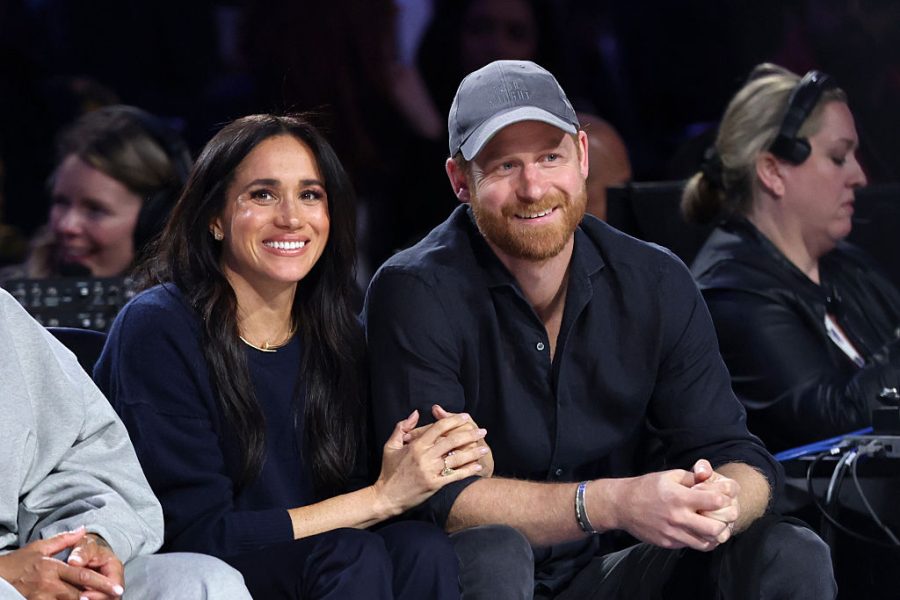
After a period of several months in which attention has been mainly focused not on Prince Harry but on his uncle, Andrew Mountbatten-Windsor, the pendulum looks as if it is swinging back to Montecito all over again. The news over the past week or so has not been good.
Firstly, it was announced that the Sussexes’ much-ballyhooed deal with Netflix is spluttering to a close. Their last few projects have failed spectacularly, chief among them the ridiculed With Love, Meghan.
Secondly, Tom Bower’s latest exposé of all things Brand Sussex, Betrayal, is about to be published. Harry and Meghan have already denounced the book as a ‘deranged conspiracy’, but that hasn’t stopped it selling briskly on Amazon. Thanks in part to the helpful endorsement by its subjects, it will undoubtedly be a bestseller, bought in its tens of thousands by the same people who delighted in Andrew Lownie’s Entitled.
Added to all this, the ever-vexed issue of Harry’s security has arisen again – and it doesn’t look promising for the Duke of Sussex. The mood music a few weeks ago was that Ravec, the royal and VIP committee responsible for assessing security threats to individuals and assigning taxpayer-funded protection accordingly, was minded to decide that Harry and his family should have this protection restored to him. Lest we forget, Harry went through several long, expensive and ultimately fruitless court cases in order to obtain it. It was being briefed to the Mail on Sunday by hopeful insiders that ‘it’s now a formality. Sources at the Home Office have indicated that security is now nailed on for Harry’.
The defence of ‘not being as bad as Andrew and Fergie’ is not going to sway many hearts and minds
Well, things have (apparently) changed. The same sources have twigged that the idea that the British public should fork out for Harry and Meghan to be given this protection is not going to go down well. From a straightforward security perspective, the risk assessment remains the same, but from a political or public relations one, the idea of police officers being drafted in to be the Sussexes’ personal bodyguards is catastrophic. No wonder a source told the Daily Telegraph that:
There is nervousness among certain members of the committee who fear a public backlash. The political side believe there is too much political risk while the police and security chiefs believe that he absolutely must have it due to the extant threat.
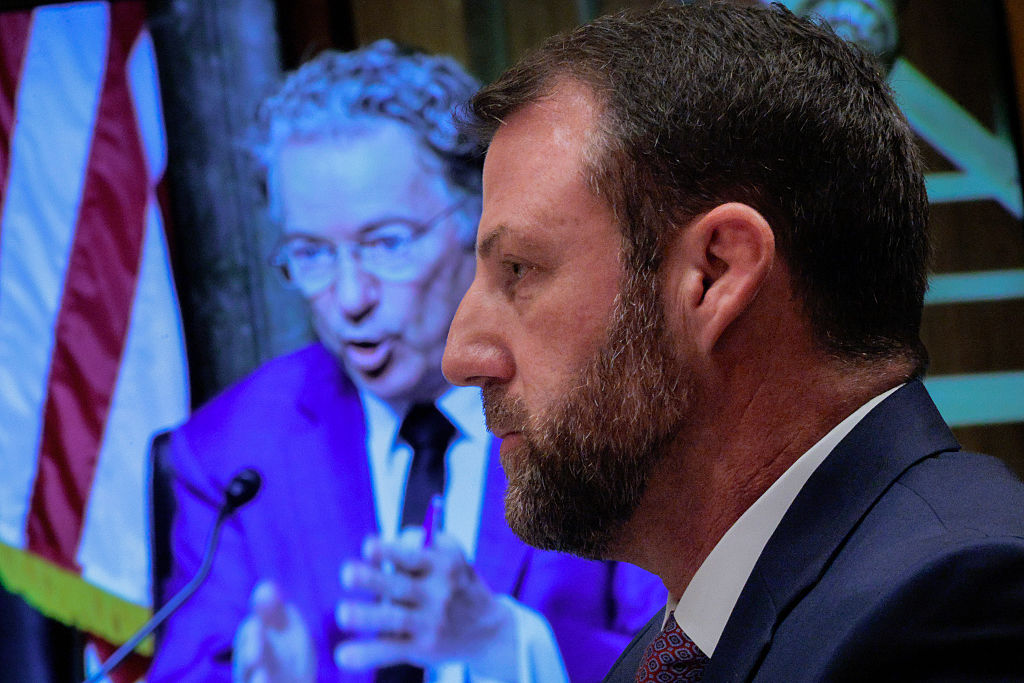
No decision has yet been made; Camp Sussex is making threatening noises about further legal action if Ravec should once again rule against them. Yet even for a serial litigant such as Prince Harry, there might now be a moment of room-reading rather than yet more fighting and fuss. It remains to be seen what the outcome of his privacy intrusion case against Associated Newspapers Limited is. But should he and his fellow litigants lose, it will not only be financially catastrophic but reputation-shreddingly embarrassing, too. In this circumstance, it is hard to imagine the Sussexes ever wanting to return to Britain, regardless of who funds their security detail.
It is saying a lot about the dire situation that the royals currently find themselves in that the best that can be said about Harry and Meghan is that they are not Andrew Mountbatten-Windsor and Sarah Ferguson. Harry has, after all, not spent a considerable amount of his free time consorting with Jeffrey Epstein and Peter Mandelson; Meghan, meanwhile, has been paying for her A-list lifestyle through her own efforts rather than putting out her hand to the British taxpayer and expecting them to cough up. Still, for all that, it is doubtful that the defence of ‘not being as bad as Andrew and Fergie’ is going to sway many hearts and minds.
The big test for Harry in Britain will come next year, when the Invictus Games take place in Birmingham. If, by then, his security has been restored, the privacy case has gone in his favour and the Andrew situation has been resolved in some definite fashion, he might feel that there is a chance that he will once again be welcome in the country of his birth. But if one or all these things do not take place, then he might be forgiven for skipping the event altogether. Whether Britain would be a poorer place for his absence remains, very much, to be seen.

Comments