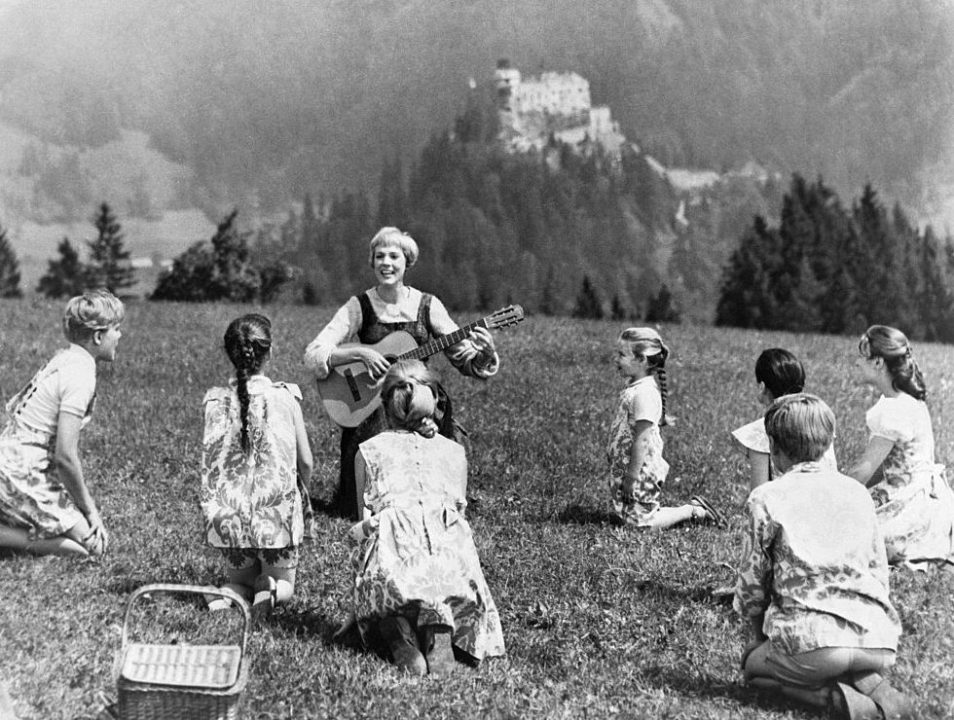
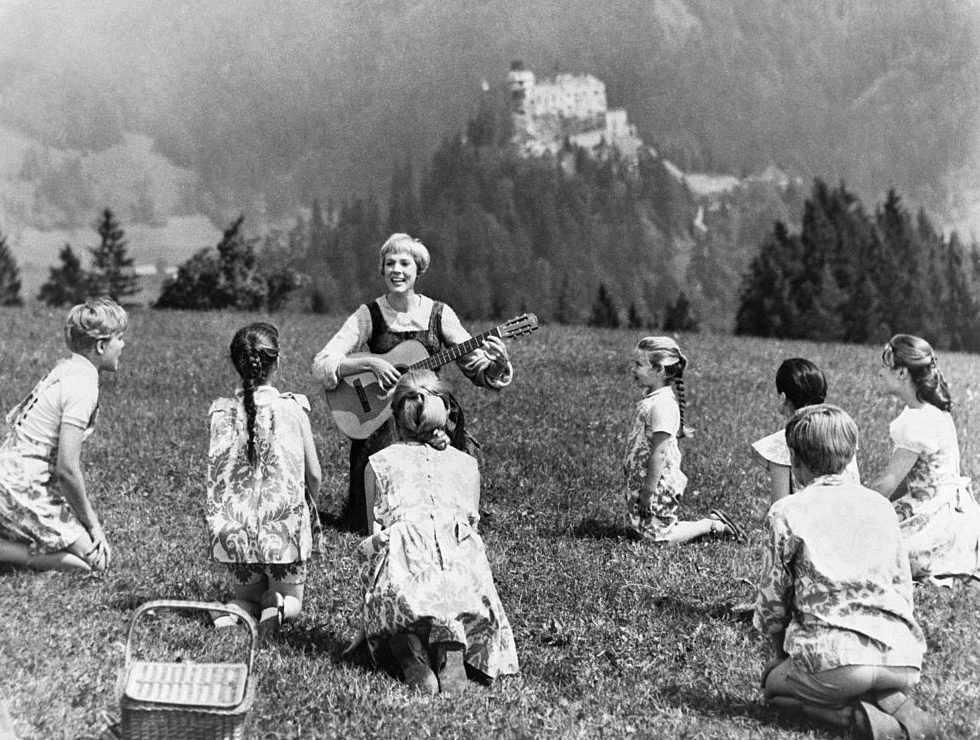
I am not sure why I was chosen to go to Salzburg to cover the opening of the city’s new Sound of Music museum. When I was told, I’d not seen the film. I had a vague idea of what it entailed – Julie Andrews, Nazis, hills – since it’s one of those movies, like King Kong or Alien, that is sufficiently embedded in the cultural subconscious that you feel like you’ve seen it even when you haven’t. Basically, I could hum a couple of the songs.
This museum is a peace offering by a city that, for 60 years, seems to have ever-so-slightly resented the film that made it famous
I did consider going on the trip without watching the film, planning Fear and Loathing in Salzburg, a Gonzo exploration of Austria’s fourth-largest city, desperately blagging my way through press conferences and receptions, hopping from stein to stein as I pretended to know the difference between tea with jam and bread and a lonely goatherd. But I’m too much of a coward. I watched The Sound of Music and fell as hopelessly in love with it as any other viewer who doesn’t possess a heart of stone.
It’s The Great Escape for women, down to the villains and the alacrity with which millions of families up and down the country pick it as their annual postprandial Christmas viewing. The people who love it really love it. They dance their first dance to ‘Something Good’; they quote ‘Sixteen Going on Seventeen’ while up in court; when they list their favourite things, there is no doubt which movie they put at the top. As soon as I posted on Instagram about my travel plans, my Instagram DMs were flooded by female friends suggesting that I was living their dreams. There’s a first time for everything.
It is to enthusiasts like them that this new museum is targeted. It was originally planned to open last year, to coincide with the film’s 60th anniversary last year. But the wrangling over rights has meant that it has arrived a little later than expected. It occupies an old gatehouse in the Hellbrunn Palace – the palatial seat of some 17th-century prince-bishop, round the corner from the house that serves as the home of the von Trapps in the film.
Now, I would be lying if I said it was the most detailed museum I’ve ever visited. They have the whistles used by both Christopher Plummer in the film and Captain von Trapp in reality. There’s a home movie from one of the kids, showing behind-the-scenes clips as Andrews and co. climb every mountain and ford every stream. But not a huge lot else in terms of movie paraphernalia.
To make up for this, one room is devoted to pickings from the hoard of 3,000 objects belonging to one Dutch collector. From soundtracks in Yiddish to painted plates that look almost, but not entirely, completely unlike Andrews and Plummer, it was a testament to what one individual can achieve with deep pockets and a song in their heart. But with a wall taken up displaying his copies of the film on everything from VHS to Blu-Ray, one got the sense that the curators had simply ransacked this chap’s cupboards for material.
The rest of the museum was taken up charting first the development of the film from the original Rodgers and Hammerstein stage musical, to telling the story of the real family von Trapp – the sainted singing sons and daughters of Salzburg whose exploits inspired the whole shebang. Their story is genuinely fascinating, taking in the collapse of the Habsburg Empire, the Wall Street Crash and their journey across the Atlantic. One is not entirely sure what the contemporary von Trapps make of the film and its legacy. It drives interest in the family business – a spectacular-looking hotel and ski resort in Vermont. But as one of the real Maria’s granddaughters explained, they do spend their lives saying ‘Yes, like the movie’ whenever someone looks at their passports.
Nonetheless, if you are a Sound of Music super fan, the museum will be a joy. It might ruin your childhood by revealing that the von Trapps did not get married on the eve of the Anschluss, flee across the mountains to Switzerland – geographically impossible – and that ‘Edelweiss’ is not a traditional Austrian tune. Go and watch the end of the film again. All the extras nominally singing along were locals, most of whom couldn’t speak English. None of them knew the words, so watch them goldfish, opening and closing their mouths to mime along. As a metaphor for the relationship between Salzburg and the film, it’s strangely apt. This museum is a peace offering by a city that, for 60 years, seems to have ever-so-slightly resented the film that made it famous worldwide.
It might sound odd to us, but nobody in Austria has seen the film. Ask cabbies about it and you get blank looks. It’s never on television. As one local dignitary explained, between the 60s and 90s, Austrians were hardly keen to lionise a family fleeing a union with Nazi Germany that most wanted to forget that they might have supported. Salzburg has long been prouder of being the city that produced Mozart. Wandering around the cobbled streets, ducking between the beer halls, one is far more likely to see Wolfgang’s face staring back at you than Maria’s. Indeed, on my only previous visit I’d hopped across the border from Bavaria to enjoy a Mozart concert. But with around 350,000 people visiting the city each year because of the film – with around 70 per cent of visitors from the United States listing von Trapps as their major reason – the film cannot be ignored.
Fortunately, Salzburg is a magnificent place to visit: beautiful, historical and deeply romantic. If Venice is marred by the several million Americans milling around St Mark’s Square and Paris is hampered by the seven-foot-tall African men trying to sell you a plastic Eiffel Tower everywhere you turn, Salzburg is still mostly untouched by globalisation. There is plenty for those who consider the exploits of the von Trapps a little low brow, most obviously the annual music festival.
On our first afternoon we were lucky enough to be shown around by a splendid tour guide called Trudy, who combined a hearty singing voice with an encyclopedic knowledge of the film and city. A friend of mine is considering going to the city on his honeymoon; before Trudy had us jumping up and down the steps of the Mirabell Gardens, I’d recommended her to the happy couple.
Enthusiasts for all things Sound of Music can explore the city by bicycle, accompanied by the appropriate tunes, or venture out into the spectacular countryside. You can visit a new mini-museum that charts the life of the real von Trapps with spectacular alpine views over several lakes, or follow a hiking trail up to where Maria and the children picnicked in the film.
We were lucky enough to spend time with some of the actors who played the children from the film; their continuing alacrity in climbing every mountain, six decades on, put the fitness of this 26-year-old to shame. They were also all lovely – a superb example of how fame can fail to corrupt genuinely affable people. I sat next to the chap who played Kurt one evening at dinner. As happy as he was to talk about his few childhood weeks spent filming, he had swapped acting for a career as a geologist. I now know far more about soil in Colorado than I did when I left Heathrow. An unexpected delight; a good summary of the trip.
All in all, I can heartily recommend Salzburg. I may not know why I was chosen to go, but I’m very glad that I was. It is a city as full of love as the film for which it will always be associated. It has solved its problem with Maria by providing the legions of Sound of Music tourists with exactly the experience they want; I have confidence that the new museum will be a great success.



Comments