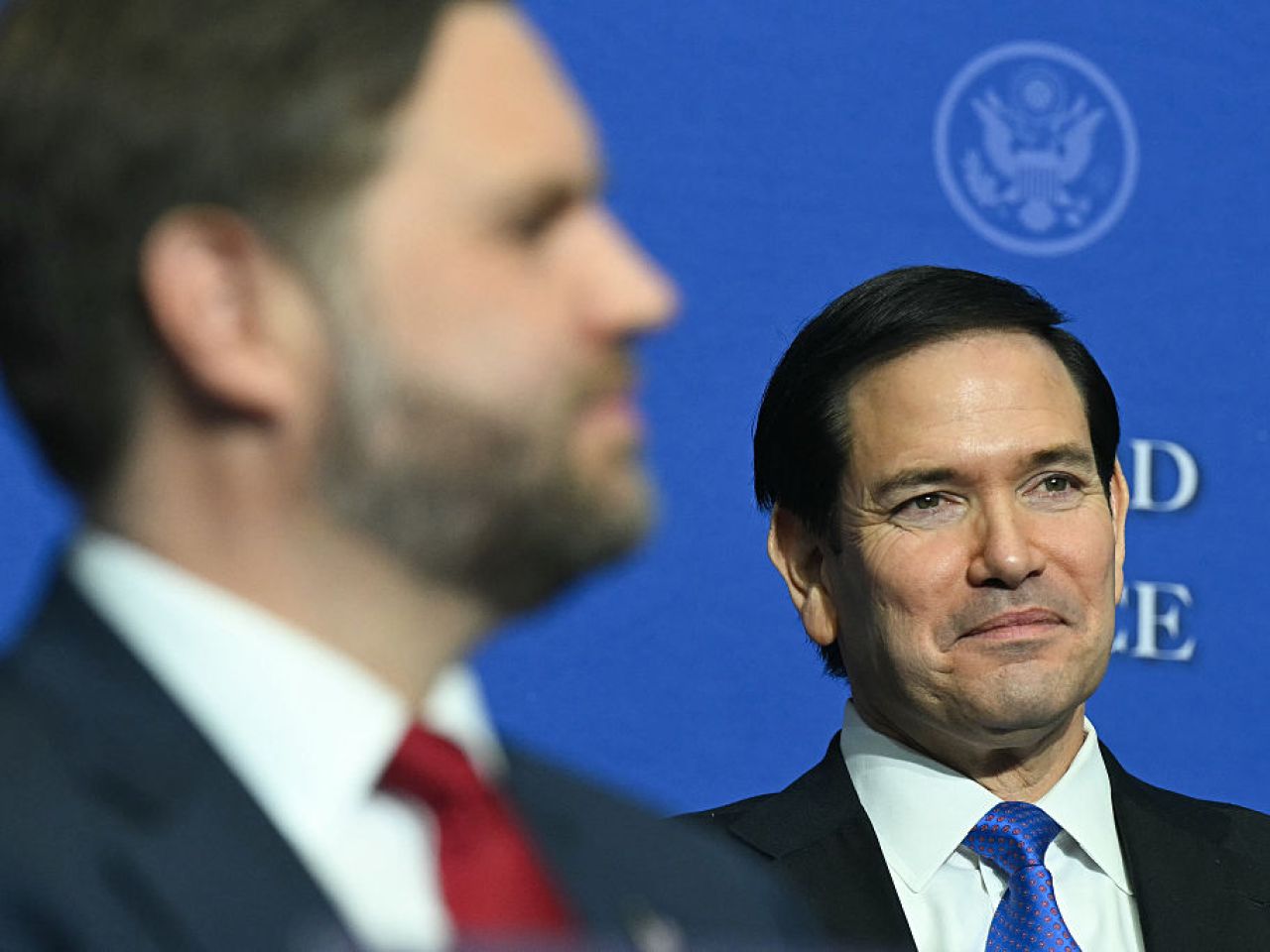


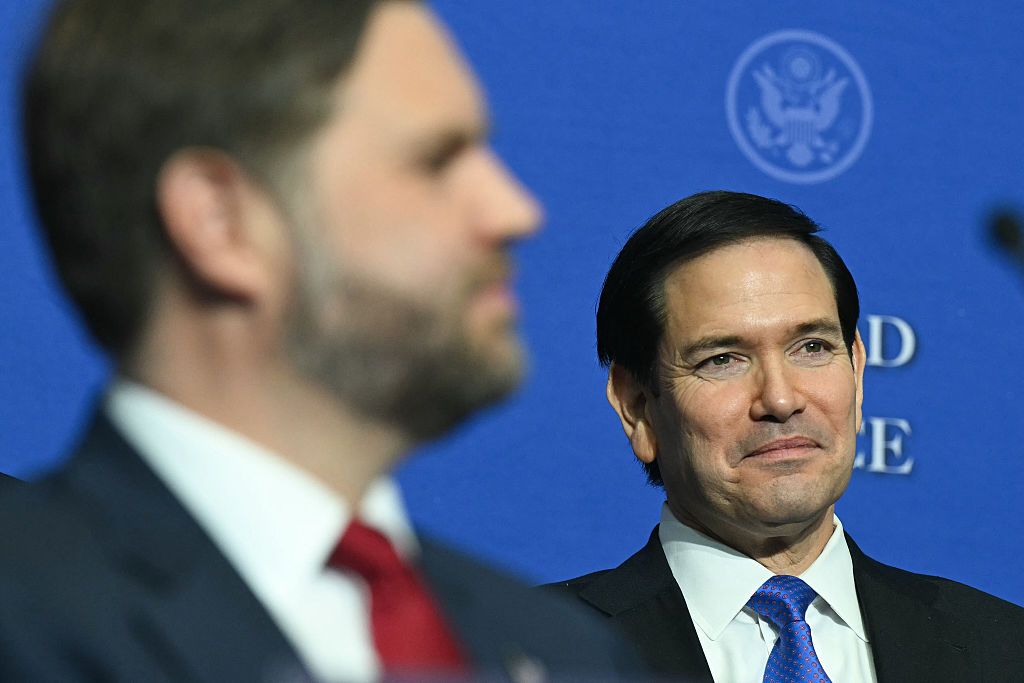
The sort of people who supported Nikki Haley in the 2024 Republican primaries are eager to pit one Trump administration cabinet member against another in 2028. The nominee they want next time is Secretary of State Marco Rubio, but they love him much less than they hate J.D. Vance. What was once a NeverTrump movement is now NeverVance.
The Secretary of State is more pro-war than Vance, given what each has said about the Iran conflict
The movement consists of three elements. The first is the neo-neoconservatives: warhawks with no plausible plan to win in Iran, or anywhere else, but a burning desire to fight anyway. Bonded with them in a Frankenstein-like fusion are those libertarians who care more about open borders and free trade than ending, or not starting, foreign wars. Collectively, the neo-neos and Globalism First libertarians like to be known as “classical liberals” or sometimes “fusionists,” but their DNA derives less from Herbert Spencer or National Review’s Frank Meyer than from the Washington uniparty consensus of the 1990s and early 2000s. That accounts for the third leg of the NeverVance tripod, consisting of yesteryear’s Bush-style Republicans.
This is not a promising base for Secretary Rubio, not least because it doesn’t match his own announced principles. In his final years in the Senate, Rubio defined himself as a proponent of “common-good capitalism,” and as Secretary of State he was pleased to address a celebratory gala for Oren Cass’s American Compass organization – with trade union officials conspicuously among the dinner guests. If latter-day classical liberals find Vance’s economic populism unacceptable, how can they turn deaf ears and blind eyes to Rubio’s populist language and associations? Either they think Rubio is lying to everyone else, or they know they’re deceiving themselves.
There’s no dissembling on one point, however: Rubio is more pro-war than Vance is, given what each has said about the conflict with Iran. Their positioning on foreign policy before they became colleagues in the second Trump administration also suggests this difference. Rubio had a generally interventionist record in the Senate. Vance campaigned for his seat in that assembly as a critic of foreign interventionism. Both men have been changed by experience, first in the Senate and now in the Trump administration, and neither is a caricature – Vance is not an “isolationist” and Rubio is not a mere “neocon.” But if their differences are exaggerated by their supporters and opponents alike, they are nonetheless real. Voters who want to continue the Iran war have reason to favor Rubio over Vance. And those who want to end it sooner, or think it was misconceived from the start, have reason to prefer Vance.
The midterm elections leave no doubt whatsoever where the American public stands on that question. It was an unpopular project when the administration launched it in February, and the war and its consequences for prices were deadly for Republicans at the ballot box in November. Nor does the record of the past 20 years of national elections suggest the American people want a more hawkish candidate. The GOP lost both chambers of Congress in 2006 as well, in another election in which war weighed heavily. The comparatively pro-war candidate for the Democratic presidential nomination two years later, Hillary Clinton, lost to the relatively antiwar Barack Obama, as did the very pro-war Republican nominee, John McCain, in the 2008 general election.
In 2016, Democrats awarded their presidential nomination to the more interventionist Clinton over the less-interventionist Bernie Sanders, and went on to lose the general election to Donald Trump, who ran as a critic of “endless wars.”
George W. Bush was reelected in 2004 in the midst of two wars, it’s true – but both of those wars had been launched while the 9/11 attacks were still fresh in Americans’ memories, and the Bush administration had gone to great lengths to sell the public on the Iraq invasion, which in its first year was far more popular than the Iran war has ever been. But no one today looks back on the George W. Bush years as an example of an activist foreign policy turning out well for Republicans. If the Iranians inflicted an atrocity like 9/11 on America, a hawk such as Rubio might be able to win in 2028, if he and the rest of the administration did not get blamed for allowing such an attack against the homeland to succeed. But under normal conditions, a candidate who supports more war in the Middle East will lose.
Rubio is aware of that, and he also knows the historical odds are against any challenger defeating a sitting vice president who wants his party’s presidential nomination. Rubio has ambitions for the highest office in the land, but he’s also shown a keen understanding of political realities since he went head-to-head with Trump for the 2016 nomination. He’s been loyal and patient, and those qualities have served him well.
If Trump wants Vance to succeed him, Rubio will not run. And if Trump turns on Vance, Rubio may think twice about running in a Republican party whose foreign-policy fractures will make winning in November all the more difficult, especially if an enormously unpopular war Rubio supports is still dragging on. His smarter play is to let Vance take his shot next time while he looks further to the future, either to a place in the Vance administration (perhaps even as VP) or to a 2032 bid of his own if Vance loses, in which case whatever foreign-policy problems the country is facing will have been a Democrat’s responsibility for four years. Who knows – in that scenario, Rubio could even run as the relatively antiwar candidate.
That won’t satisfy the Haley wing of the GOP. But then the “classical liberal” agenda of mass migration, endless war and trading away our industrial workforce doesn’t satisfy the country.



Comments