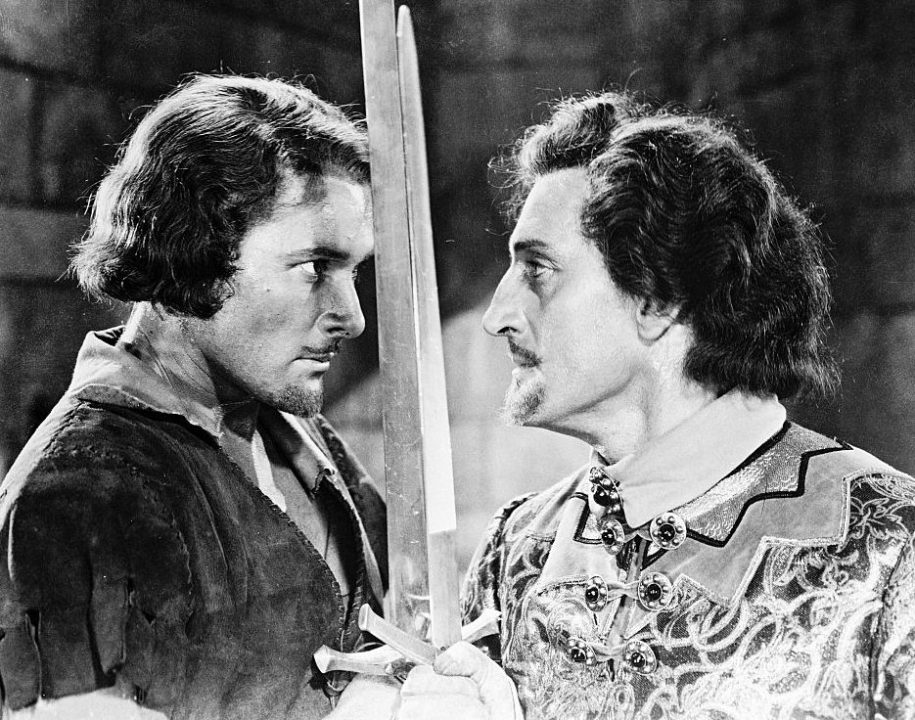
For those of us whose fondest memories of Robin Hood on screen are either Richard Greene appropriately resplendent in green as he rides through an immaculate (and studio-bound) Sherwood Forest or Errol Flynn’s similarly heroic and dashing Robin, our happy associations with the character are about to be sorely tested. Last week saw Hugh Jackman assume the role of the bow-quiverer in the suitably downbeat The Death of Robin Hood, which imagines the legendary outlaw less as the heroic figure of yore, stealing from the rich and giving to the poor, and more as a near-psychotic vagrant who commits horrific acts of violence towards anyone who gets in his way, including women and children.
We loved Robin was because he is the swashbuckling epitome of fun and liberty, rather than some proto-Zack Polanski
If this isn’t enough, Paul Greengrass’s forthcoming Peasant’s Revolt film The Uprising was briefly given the subtitle ‘The Rise of Robin Hood’, bewildering audiences everywhere, until it was swiftly removed from the marketing. For those of us who were expecting the picture to be a fictionalized account of Wat Tyler’s march on London in 1381, this has come as something of a surprise – is its star Andrew Garfield really playing Robin, and is one of the starry supporting cast, including everyone’s favourite actor and wit Tom Hollander, the nefarious Sheriff of Nottingham? – but it is testament to how presentations of the character have shifted ever since the first appearance of Robin in cinema in the 1908 silent film Robin Hood and His Merry Men.
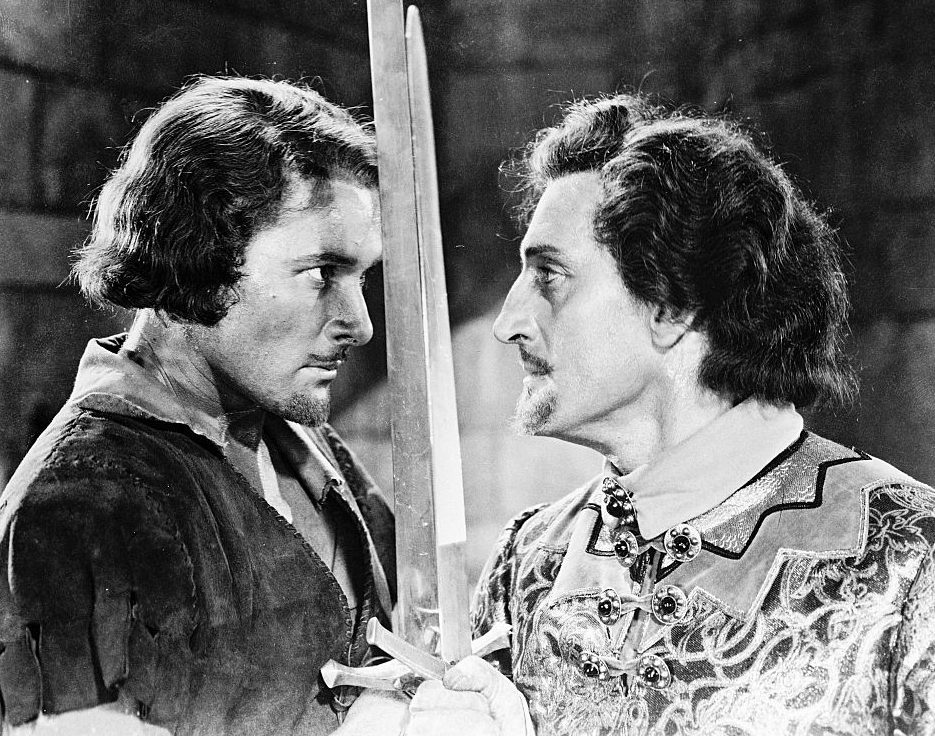
Leaving aside the fact that the character of Robin Hood has long-standing literary origins, with his first appearance coming as far back as Piers Plowman in the 1370s, the definitive screen version of the dashing outlaw came with his depiction in The Adventures of Robin Hood in 1938. Here, Flynn epitomized the twinkly, heroic Robin, as ready with a quip and a chaste kiss for Olivia de Havilland’s decidedly virginal Maid Marian as he was for a spot of athletic swordplay with Basil Rathbone’s dastardly Guy of Gisborne.

The film is rightly regarded as one of the classics of the Golden Age of Hollywood filmmaking – ignore the fact that it was filmed in California, unconvincingly standing in for Sherwood Forest – and it remains a stirring triumph of adventure cinema even today, with death-defying stunts that are a welcome corrective to our special effects-heavy age. As for the acting, contemporary audiences might enjoy Claude Rains’s more nuanced and tongue-in-cheek performance as the villainous Prince John most – he steals scenes every bit as adeptly as he did in Casablanca two years later – but there is something gloriously unselfconscious about Flynn’s brand of hearty heroism that, alas, now seems to belong to a long-distant past.
Its success meant that there were many more attempts to portray the character over the next decades, including Disney’s live-action 1952 The Story of Robin Hood and His Merrie Men and a subsequent 1973 animated version, but for British audiences, it’s the Greene-led The Adventures of Robin Hood that is likeliest to inspire nostalgia, not least for its magnificent theme tune. All together now! ‘Robin Hood, Robin Hood, riding through the glen/Robin Hood, Robin Hood, with his band of men/Feared by the bad, loved by the good/Robin Hood! Robin Hood!’. The series ran for four years, ran for 143 episodes and led to Greene being typecast forever after, much to his chagrin. But for viewers of a certain age, it remains jolly, undemanding entertainment.
However, the idea of the jovial outlaw soon gave way to more complex, brooding portrayals of the character. Some of these – Sean Connery’s weary Robin, growing old but still longing for one last tussle with Robert Shaw’s Sheriff of Nottingham and one last embrace with Audrey Hepburn’s Maid Marian in Richard Lester’s 1976 Robin and Marian – are rightly regarded as classics. Others, such as the instantly dated Eighties television series Robin of Sherwood, where most of the cast look as if they are trying to act in an advertisement for Vidal Sassoon, are not. And then, of course, there is Kevin Costner.
I have a great fondness for Robin Hood: Prince of Thieves, although this is mainly because it was the first properly grown-up film that I saw in the cinema, at the tender age of 9. It was wildly unsuitable – God knows what I thought of the various scenes of hand-severing and attempted rape – but I remember thoroughly enjoying it for Michael Kamen’s stirring score, the thrilling action scenes and, above all, Alan Rickman’s legendary Sheriff, who put every other version of the character to shame with his snarling villainy and perverse one-liners. (‘You. My room. 10:30 tonight. You. 10:45. And bring a friend.’). I was perhaps less enamoured of Bryan Adams’s saccharine but enduringly popular theme song, and the film’s fumbling attempts at wokery did not endear themselves to me even back then. But Kevin Costner’s Robin, American accent aside, was the heroic centre that the film needed, meaning that audiences could enjoy Sherwood Forest’s most famous inhabitant’s adventures all over again.
Since then, matters have gone awry. Russell Crowe attempted to play the character in a Ridley Scott-directed film that audiences couldn’t have cared less about, and Crowe himself stormed out of an interview when his interlocutor suggested that his accent was closer to Irish than the fields of Nottingham. There was a long-running but strangely unmemorable BBC series in the Noughties that might be best remembered for Keith Allen’s sterling sneering as the Sheriff, a dismal Taron Egerton picture from 2018 that limply attempted to draw equivalence between Robin’s service in the Crusades and contemporary soldiers returning from Afghanistan, and a recent TV version with Sean Bean as a less overtly one-dimensional antagonist than before, but which failed to capture the public imagination.
Perhaps it is time, once the Jackman and, perhaps, Garfield incarnations of the character have passed, to get back to a bygone age of Robin Hood. In our increasingly grim and antiheroic world, we could do with the kind of principled escapism represented by the earlier versions of the character. If we were to strip away anachronistic diversity and hand-wringing piety, and return to celebrating the adventures of the best bowman in Britain, it would be something to celebrate.
The reason why we loved Robin was because he is the swashbuckling epitome of fun and liberty, in all its forms, rather than some proto-Zack Polanski. It is time once again to let him and his Merry Men ride free, through the glen, and not be bothered about the tedium of political correctness putting paid to their adventures.




Comments