
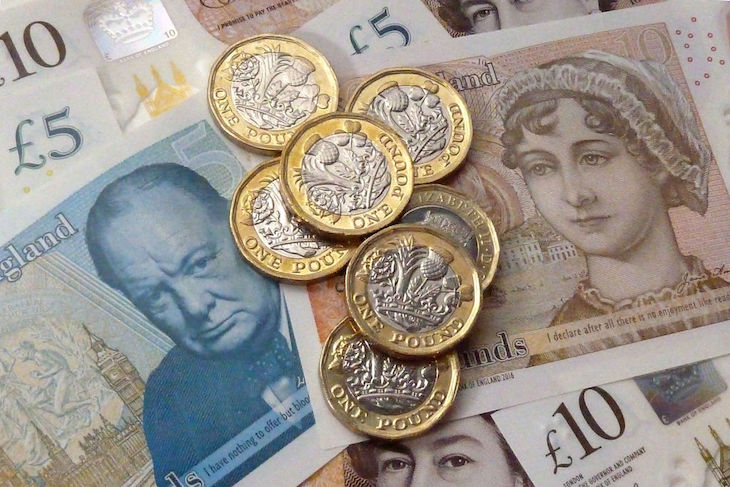
The Bank of England has announced that pictures of wildlife will replace famous faces on our banknotes. A cute kitten, perhaps? Or a puppy doing some tricks? Or, given that China may well have hacked into the system, even a panda bear?
Whichever animals end up making the cut, it’s goodbye to Winston Churchill, Jane Austen, JMW Turner and Alan Turing – and the proud tradition of honouring our greatest Brits. What a travesty.
There is nothing wrong, of course, with wildlife pictures in themselves. But on a bank note? Seriously? In reality, paper money, at least since we came off the gold standard, has always been a bit of a conjuring trick. It is not really worth anything, especially in a country with as much debt as Britain, but so long as everyone accepts it, then it just about works.
Somehow, a red robin is never going to have the same resonance
To give it some extra credibility, central banks have traditionally drawn on important, serious figures from the past. Doing so adds some much-needed gravitas, continuity and permanence to what would otherwise risk looking like little more than a brightly coloured piece of paper. In a country with such a rich history as ours, there is no shortage of candidates: Charles Dickens, George Stephenson, the Duke of Wellington and Elizabeth Fry have all made appearances. Queen Elizabeth II first popped up on a pound note in 1960; throughout the rest of her reign, her face continued to grace our money. When the euro was introduced at the start of the century, the European Central Bank chose a range of classical buildings to adorn them, very deliberately rooting the new paper in the continent’s past.
Somehow, a red robin is never going to have the same resonance. It seems to me that the Bank of England is doing its best to kill off paper money as quickly as possible, so that we can all use cheaper and easier-to-control electronic transactions instead. Replacing traditional bank notes with something that looks suspiciously like an emoji will certainly help accelerate that. Even so, it is still going to prove a huge mistake. Bank notes are fundamentally about trust and faith – and once that is thrown away, it will prove impossible to win it back.
‘The key driver for introducing a new banknote series is always to increase counterfeit resilience, but it also provides an opportunity to celebrate different aspects of the UK,’ says the Bank’s chief cashier, Victoria Cleland. The Bank gathered tens of thousands of responses from people to decide what should be on our money. It found that wildlife has the support of 66 per cent of the public, well ahead of architecture and landmarks on 56 per cent, with historical figures way down on just 38 per cent. That is probably no great surprise. You only have to glance at the most popular videos on YouTube or TikTok to know funny animals are always popular. When the next series of tenners and twenties is issued we can expect owls, squirrels or rabbits on each one.
Replacing people with animals has another upside: when the mob inevitably comes for a famous person from the past, at least the Bank won’t have to worry about reprinting notes with their face swapped for someone more acceptable. Instead, we’ll make do with a cat, dog or red squirrel. Is this really progress?
There was a reason why we had weighty figures from the past on our paper money. The Bank will quickly regret replacing them.




Comments