Home
Andy Burnham, the Prime Minister, announced the end of the pensions triple lock from 2030, when the link with earnings would be broken. Wearing a suit but no tie, he told the Labour party conference: ‘I will make a break with the direction of the past 40 years.’ He said that houses would be confiscated if left unoccupied or if rented out but not well maintained. He said he would ‘repeal Margaret Thatcher’s ideological ban on public ownership of water companies’; he would reduce electricity prices by establishing the Great British Grid, a publicly owned company. He tearfully promised a National Care Service, after a review by Baroness Casey of Blackstock. Ties with the EU would be explored and electoral reform would be in the next Labour manifesto. John Healey, the Chancellor of the Exchequer, promised ‘a new age of industrialisation’, exemplified by the building of a £115 million research ship at Faslane. Diesel prices hit record levels. Household energy prices were expected to jump in January by a typical £276 a year, even with a government cut in VAT. Heathrow expected a third runway by 2039, instead of 2035.
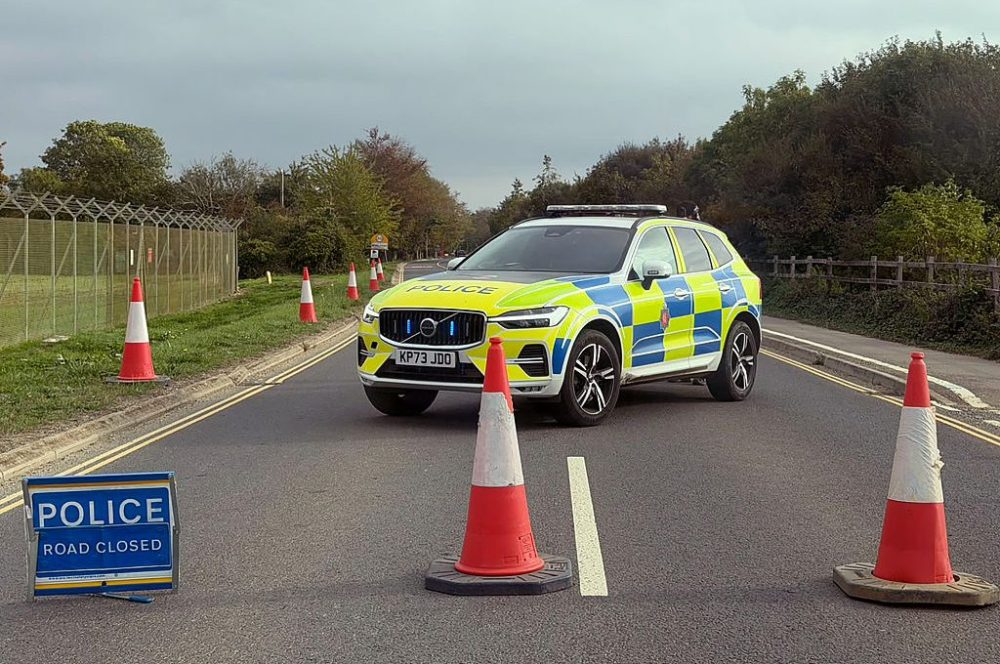
Something odd happened in Gloucestershire. Five men, British nationals from London in their twenties, were arrested on suspicion of preparation of a terrorist act and of offences under the Explosives Act near RAF Fairford, used by the US Air Force for strikes against Iran. Three white vans had turned up in the village of Whelford, where 85 households were evacuated. One of the men had phoned 999. No explosives were found. The men were released on bail. President Donald Trump of America said: ‘We had them under investigation. They were looking to do big damage.’ Marco Rubio, the US Secretary of State, said the incident ‘clearly involves the hands of a foreign actor’.
Michelle O’Neill, the First Minister of Northern Ireland, joined protestors in the Garvaghy Road in Portadown to block Orangemen given permission in an overnight court hearing to march for the first time in 28 years. Sir Chris Bryant, the Northern Ireland Secretary, hurried back from the Labour conference and a stalemate developed. Between pleading guilty on 6 August and being sentenced on 24 September, Zafer Dogan, 32 (convicted of taking thousands of pictures of women and girls before using AI to sexualise the images), was granted bail to the flat (overlooking a playground) where he had committed the crimes. Daniel Thomas, known as Danny Tommo, the anti-migrant campaigner, pleaded not guilty to criminal damage after a video appeared to show him slashing at a dinghy in the Channel. Manchester City arranged ‘sham contracts’ to disguise secret funding of more than £830 million, the Premier League said; the club is to appeal.
Abroad
Saudi Arabia intercepted six ballistic missiles fired by Yemen’s Iran-backed Houthi militia. Yemen’s government forces fought the Houthis around Taiz. Oil prices rose. Mr Trump rejected a proposal by Iran to reopen the Strait of Hormuz. US long-term borrowing costs hit their highest level since 2002. The US banned the import of wine and whey from Canada. Mighty Sparrow, the calypso singer, died aged 91.
Russia destroyed Ukraine’s National Academy of Sciences in the historic heart of Kyiv and hit a data centre, severing internet connection for 100,000 households. Estonia said Russia was behind an arson attack last month on a Tallinn defence company, Milrem Robotics, supplying Ukraine with unmanned military vehicles. Cyber-criminals who hacked the FBI said they had sensitive medical data such as allergies and blood test results for thousands of its special agents. Fatima Ezzahra El Mansouri was appointed Morocco’s first woman prime minister. Eighteen people were killed when eight gunmen stormed a bar near Johannesburg; hours later, ten people were killed outside an entertainment venue near Cape Town.
Pope Leo said Mass for a crowd of 700,000 filling the Place de la Concorde and the Champs-Élysées in Paris. The American archbishop Fulton Sheen (1895-1979) was beatified during a Mass at Peoria, Illinois. In France 400 people were arrested in two days as secondary-school pupils demonstrated against a shortage of teachers. Spain’s coalition government issued a decree banning evictions until 2030, after thousands demonstrated against the eviction of an 87-year-old Madrid woman unable to pay rent rises. CSH




Comments