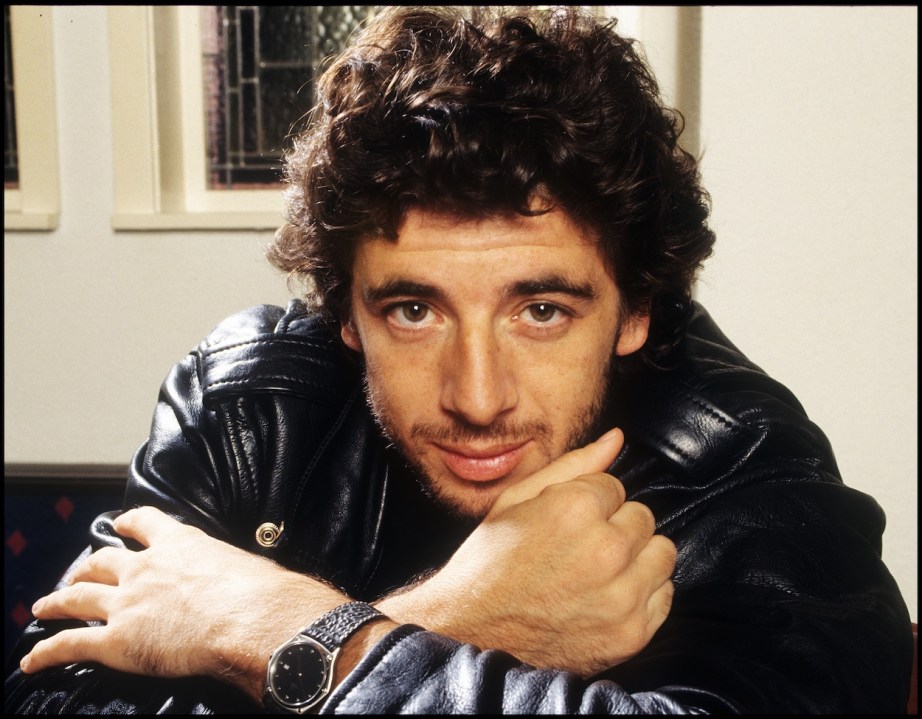
Patrick Bruel was once a heartthrob pop star whose dark brooding looks fuelled a ‘Bruelmania’ fever that swept through France in the 1990s. He sold millions of albums and was one of the country’s most bankable film stars.
Today, Bruel is a different man. Age 67, he has been disgraced by multiple accusations of sexual assault and rape. Yesterday, two new women accused him of sex crimes, bringing the total number of cases to six. Bruel denies wrongdoing.
The first allegations against Bruel surfaced several years ago but were dismissed by French police due to lack of evidence. Other women have since come forward claiming that he sexually harassed or assaulted them. Many cite incidents that stretch back two or three decades, beyond the statute of limitations. French television presenter Flavie Flament publicly accused Bruel of raping her in 1991 under the influence of drugs when she was 16 and he was 34. Bruel acknowledges that he had an ‘affair’ with Flament over a number of years but insists there was never any physical constraint or drugs involved.
As accusations against Bruel accumulated, last month police charged him with rape, attempted rape, and sexual harassment in four cases. He was released after posting bail of €500,000 (£425,000). While he proclaims his innocence, the media storm has destroyed the image of the once-idolised pop icon. Bruel has cancelled scheduled concert tours in France, Switzerland and Quebec.
Patrick Bruel’s disgrace is not the downfall of one man. He is just one male celebrity on growing list of public figures in France – politicians, actors, television celebrities, authors – accused of sexual assault. For many, France’s legendary culture of seduction has been put on trial.
Gérard Depardieu, the monstre sacré of French cinema, was charged after two women working on a film set claimed he had groped them and made lecherous comments referring to their ‘pussy’. Luc Besson, director of the film The Fifth Element, was charged after rape allegations made by Dutch actress Sand Van Roy who played minor roles in two of his films. French actress Judith Godrèche publicly accused director Benoît Jacquot of sexually exploiting her during a six-year relationship that began when she was 14 and he was 39.
In the post-MeToo era, these scandals are a sign that the French are being forced to confront a moral reckoning about their permissive sexual culture. The French have long been accorded an exception française that exempted sexual transgressions from moral reproach. Since the notoriously depraved Bourbon court, the sexual conduct of French elites has been indulged, even condoned, in a society where it was accepted that private vices should not be held up to public scrutiny. Louis XV, notorious for his libidinal excesses, had numerous mistresses and kept his own hand-picked harem in a royal brothel near the Versailles Palace. Casanova wrote his scandalous memoirs in French. The Marquis de Sade’s fetish for sexual tortures gave us the word sadism.
The French Revolution decriminalised sodomy and prostitution, unleashing a culture of sexual licentiousness in Paris that continued throughout the Belle Epoque. In the mid-nineteenth century, Paris was known as the ‘brothel of Europe’. A century later, the surrealist movement in France venerated the Marquis de Sade for his rebellion against established morality. Feminist icon Simone de Beauvoir wrote a sympathetic essay about Sade. Her interest in the ‘divine marquis’ was not surprising given her own dangerous sexual proclivities. She and Jean-Paul Sartre pursued an elaborate polyamorous lifestyle which involved the sexual seduction of adolescent girls. Beauvoir was fired from a high school teaching job for seducing one of her underaged female pupils.
Sartre and Beauvoir’s sexual conduct was vindicated in the post-May 68 counter-culture era of revolt against conventional morality. In the 1970s, intellectual and artistic elites in France formed a sexual aristocracy that challenged repressed bourgeois attitudes towards sex. The era’s motto was ‘il est interdit d’interdire’ – it is forbidden to forbid. Sexual prohibitions were cast off in the name of emancipation. There was nothing scandalous about mature men seducing adolescent girls. The waif-like gamine as object of desire – from Jane Birkin to Vanessa Paradis – was pervasive in French pop culture iconography. Film directors such as Eric Rohmer and Claude Miller revealed an obsession with the sexual awakening of teenage girls.
France’s culture of seduction resisted the wave of MeToo morality. Famous actresses in French cinema – including Catherine Deneuve and Fanny Ardant – criticised MeToo as a puritanical ideology imported from America that was influencing a younger generation in France. The liberty to seduce, they argued, is ‘essential to sexual freedom’, even if it involves importuning women. Brigitte Bardot came to Gérard Depardieu’s defence, remarking that all he did was ‘grab a woman’s buttocks’.
‘Feminism isn’t my thing,’ said Bardot. ‘Personally, I like men.’
Depardieu could also count on support from French president Emmanuel Macron, who was under pressure to strip the actor of his Légion d’Honneur. Macron infuriated French feminists when, on the contrary, he declared that he was a ‘great admirer’ of Depardieu. ‘He makes all of us in France proud,’ said Macron. ‘I never participate in a witch hunt. I detest that.’
‘Feminism isn’t my thing,’ said Bardot. ‘Personally, I like men’
Depardieu’s friends in high places did not help him in court. He received a suspended 18-month sentence and was ordered to pay financial damages to the two women who accused him of sexual assault on a film set. Depardieu immediately appealed the sentence. Luc Besson, for his part, claimed that he had a consensual two-year relationship with actress Sand Van Roy. All charges against Besson were eventually dropped.
Patrick Bruel, who has not been convicted on any charges, also insists that his relationships with women accusers were entirely consensual. His lawyer claims that women accusing him of rape today used to send him sexually charged text messages. One woman, says Bruel’s lawyer, promised to drop her allegations if Bruel paid her a large sum of money and bought her a luxury apartment in Paris or New York.
The accusations against Bruel have become politicised. Bruel, whose real is Maurice Benguigui, is Jewish and has long spoken out against anti-Semitism. Far-left activists have posted fake images of Bruel arriving in court with the head of a well-known Jewish association in France, implying that he is supported by a ‘Jewish lobby’. Right-wing leader Marine Le Pen, for her part, has refused to comment on the charges against Bruel. She stated that he ‘should not be condemned professionally and socially before the judicial system renders a verdict.’
Bruel, meanwhile, is fighting to repair his tarnished reputation. Besides his cancelled concert tour, he pulled out of his performance in a play, Deuxième Partie, at the Edouard VII Theatre in Paris. He may never, as the play’s title suggests, have a second act. Many believe it’s curtains.





Comments