
Parliament is pointless without debate. It is there in the definition of the word itself: the Old French parlement derives from parler, to talk or discuss. Parliament is a forum in which our elected representatives debate how we live as a society and a nation. It has not been as effective or interested in that central purpose as it should for some years. This week, however, a House of Commons select committee drew a line in the sand and prevented debate being further marginalised.
Being in the Chamber and participating in the main business of the House should never be seen by MPs as ‘wasting’ their time
In December 2024, the Procedure Committee began an inquiry into whether parliament should adopt ‘call lists’, which would mean MPs could apply before a debate to speak, and a running order would then be produced ahead of time.
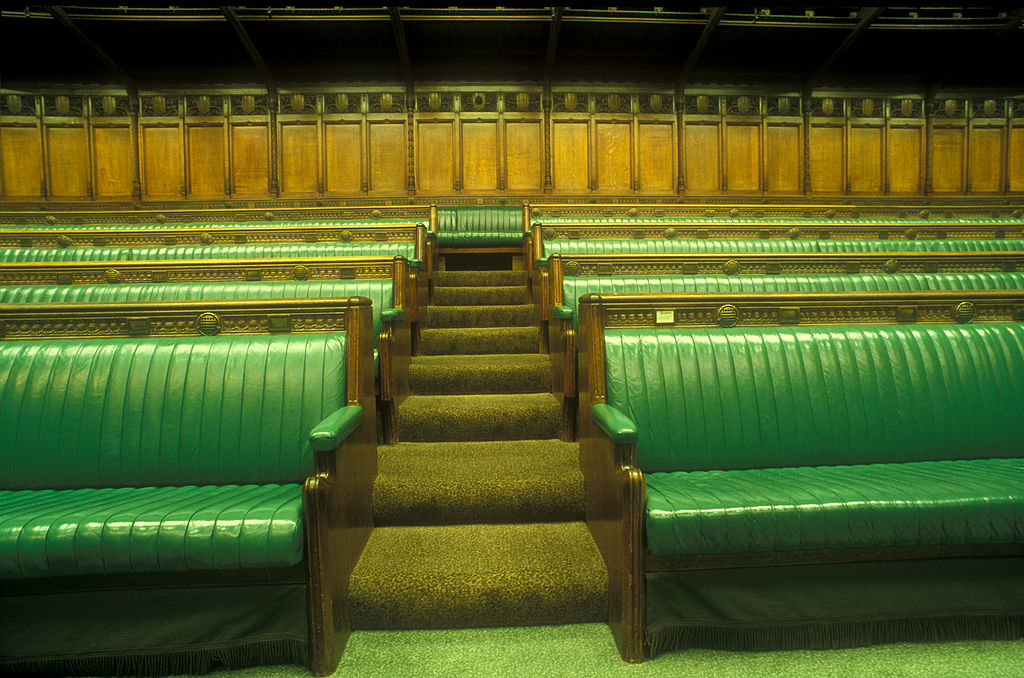
Currently, an MP who wants to participate in a debate is encouraged to inform the Speaker of the House in advance, but he or she must be present in the Chamber and stand between each individual contribution to ‘catch the Speaker’s eye’. The Speaker then has total discretion in choosing whom to call and when.
The arguments in favour of call lists are that they would let MPs know when during the debate they would be called, allowing them to use their time more efficiently. Instead of waiting in the Chamber, they could devote more time to activities beyond their primary responsibilities, such as in meetings of the House and its committees.
Having worked as a clerk in the House of Commons for more than ten years, and spent many hours watching the business in the Chamber and in committees, I have thought a great deal about how well the House works. For that reason I submitted a memorandum of evidence to the Procedure Committee’s inquiry. I was and am vehemently opposed to introducing publicly available call lists, and am delighted – though slightly surprised – that the committee’s report has reached the same conclusion, declaring that its ‘key recommendation is that call lists should not be published.’
There are a number of reasons why I think call lists would be damaging and unhelpful, but at the core of this are two essential and intertwined elements which go to the heart of Parliament’s function.
The first is that MPs’ desire for greater predictability and precision about when they are likely to be called only makes sense if, reducing it to its bare bones, the intention is to allow MPs to spend less time in the Chamber. The committee said plainly that, ‘several Members told us that they felt that they often “wasted” significant periods of time waiting in the Chamber to be called.’
Being in the Chamber and participating in the main business of the House should never be seen by MPs as ‘wasting’ their time. It is the fundamental reason they are there – it is their purpose as representatives of the British electorate. It is alarmingly blinkered and egotistical that some MPs clearly see participation in parliamentary business as being solely when they themselves are making a speech or answering a question.
If MPs think that taking part in a debate is making a speech and then keeping any additional time spent in the Chamber to a minimum because it is ‘wasted’, they have misunderstood the concept of a debate. It has to be a dynamic exchange of views, in which participants listen to other contributions, react to them, challenge them or perhaps find themselves adapting their own positions. You simply cannot do this if your ideal is to go into the Chamber, deliver the speech you (or ChatGPT) have written in advance, then leave. That is not debating: it is mechanical, intellectual preening.
If an MP wants to take part in a debate, the default expectation should be that he or she will spend the vast majority of the debate in the Chamber. They should listen to and consider each contribution and tailor their remarks to what has been said before. I understand very well from long experience that Members of Parliament have many other demands placed on their time. Those must be secondary to engaging in parliamentary debate and scrutiny.
The Procedure Committee report helpfully examined the experiment of call lists during the Covid-19 pandemic, when the House met virtually or in hybrid form. ‘It provided a useful insight into how it changed the dynamics of our debates… we do not believe it was conducive to high quality debate.’
Parliament is the foundation of our representative democracy, and debate is the foundation of Parliament. The more that debate and the exchange of ideas is circumscribed, the more our political system is stultified and reduced to ritualistic performance. Whether they understand that or not, a number of MPs are actively seeking to accelerate that process.
Obviously the Procedure Committee’s recommendations against call lists will not by themselves create a vigorous, lively and assertive legislature. But if the committee had reached the opposite view, it would have given Parliament’s fading into irrelevance added momentum. Its Chair and members deserve recognition for taking this modest stance. Let us hope it is the first step of many.




Comments