When I was newly qualified, hospitals were as desperate to fill sudden gaps in their rotas as they still are today. When I had a gap between posts I found it easy to pick up short-term work. Frankly, it was hard to avoid. Lacking a reputation as a positively catastrophic young doctor, I was promptly press-ganged into whatever gaps I was too slow to refuse.
Despite never having worked in an emergency department, I was asked to cover the first three days of the academic year, when the new juniors had arrived but were off being trained. I didn’t know how to stitch, how to deal with fractures or sprains, how to cope with most of what came through the front door of the small English hospital where I happened to find myself.

None of this proved a problem. I had a medical degree, which I vaguely recall as a long period of fallow time punctuated by hard-won training in various sports, and I had a couple of years’ experience on the wards. What made emergency department work possible was that I had something more – I had the help of the nurses.
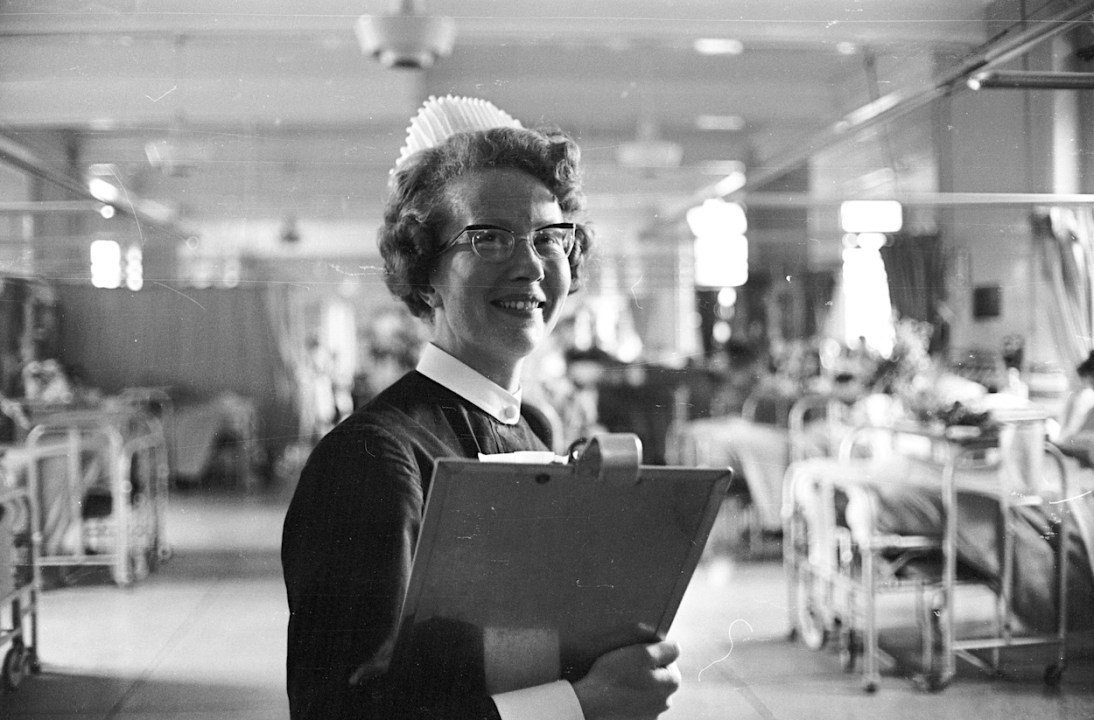
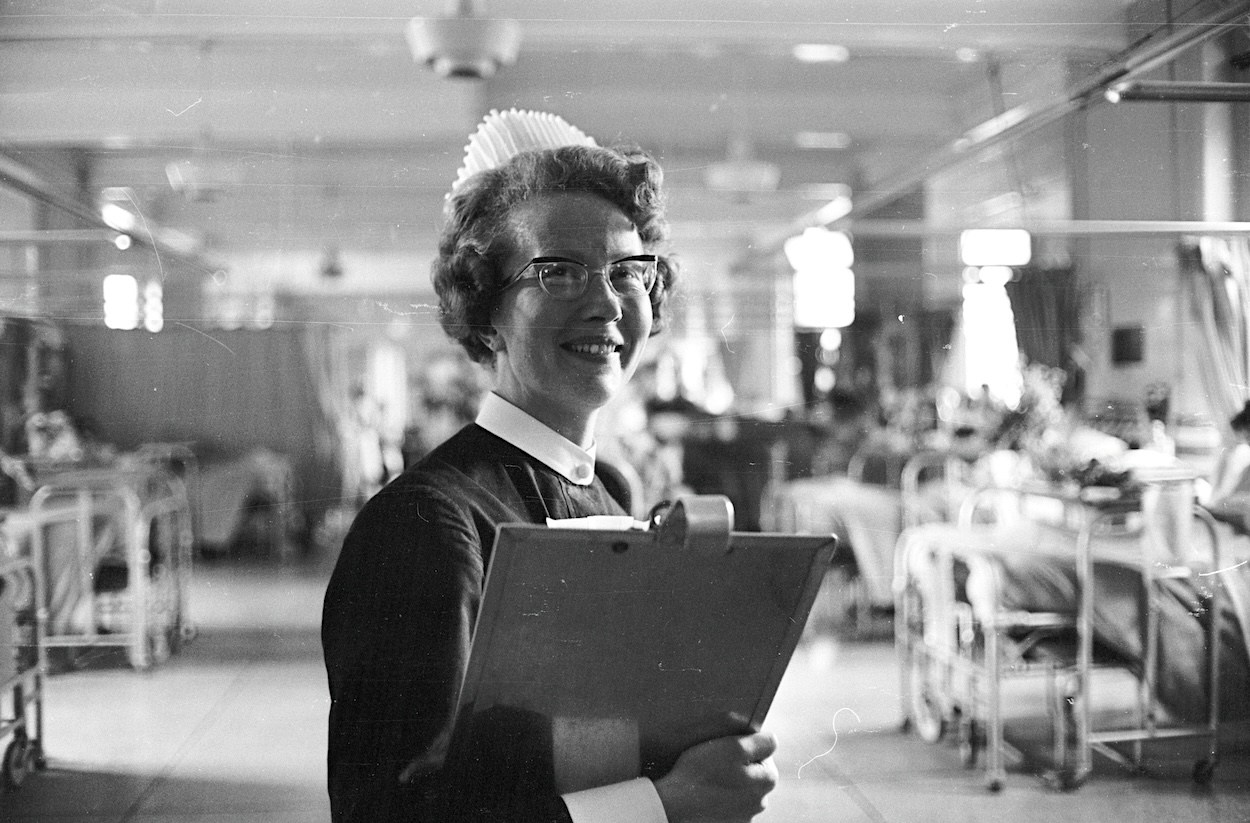
In that department there was a large group of older nurses who had been there for most of their careers, and a constantly changing group of younger ones acquiring experience while they decided where they were heading. They could not have been more helpful. Within a short time of my arrival the nurses had put up a picture of a Smurf in the main office, its different body parts labelled with the types of sutures (5-0 for the face) I should be using to close wounds. They talked me through fractures and sprains and dislocations. They were as adept with technical knowledge as with hospital procedures, and which members of staff to be wary of. Three days later I found I was enjoying it all so much that I agreed to stay on.
Concerned at the ‘degreeification of the world of work’, Kemi Badenoch has suggested that a Conservative government would look at removing the requirement for nurses to have a degree before entering the profession. The requirement is relatively recent. Degrees became possible in the 1960s, but were exceptional. From the 1980s nursing schools began shifting out from the hospitals and becoming parts of nearby universities. Only in 2013 did it become a requirement throughout Britain that new nurses had a degree.
Degree entry wasn’t a recognition of a change that had already happened. Before the requirement came in, the majority of nursing students – 85 per cent in England – were doing diplomas. Modern medicine, regulators said, required nurses to be more qualified, better educated – to have, like everyone else, a degree. Now the Royal College of Nursing is appalled by Badenoch’s plans. ‘All the evidence shows,’ they have said, that ‘nurses being degree-level educated improves patient safety outcomes.’
Perhaps it says something about the quality of degree-level education that good evidence doesn’t say what the RCN claims. Observational studies show that degree-level nursing is associated with better outcomes – but correlation is not causation, and poor academia, of which there is much, ignores that distinction. The evidence showed that hospitals employing more graduate nurses had better outcomes than those employing fewer. That level of evidence would not, on its own, establish that a new drug saved lives. Why should we accept it as proof that nursing degrees do? Statistical adjustments can’t tell us that hospitals favouring graduates weren’t different in other important ways from those that didn’t. Even a degree cannot always teach people to recognise the weaknesses of evidence they happen to like. When the Royal College of Nursing points out that its members are highly skilled and essential, it is stating a truth worth remembering. When it insists on making an undergraduate degree the only acceptable qualification, it is empire building.
You can have all the human qualities required to be an excellent nurse without being good academically, or wanting to spend three years at university acquiring hefty debts. And you can excel at coursework without having any of the sense, the spirit or the industriousness that characterises a good nurse. Degree apprenticeships already exist, and concede that you can learn while you earn. But they still end in a degree, and nobody has shown that they must. A degree is not an absolute requirement for nurses trained abroad, whose competence we are willing to assess by other means.
Nurses with academic gifts deserve to be supported and encouraged, and no one is suggesting we should get rid of nursing degrees; but it is odd that we moved to exclude those whose gifts were more practical than academic, at least during their early professional years. Few of the nurses who spotted I didn’t know how to suture had a degree – but they knew enough to help someone who did.






Comments