Rudolf Nureyev was no doubt a phenomenal dancer and an electrifying personality – nobody who saw him on stage could deny it. Those who knew or collaborated with him also remarked on his fierce intelligence, insatiable ambition and inexhaustible energy. Alas none of these great qualities made him a good choreographer and he lacked the humility to recognise that.
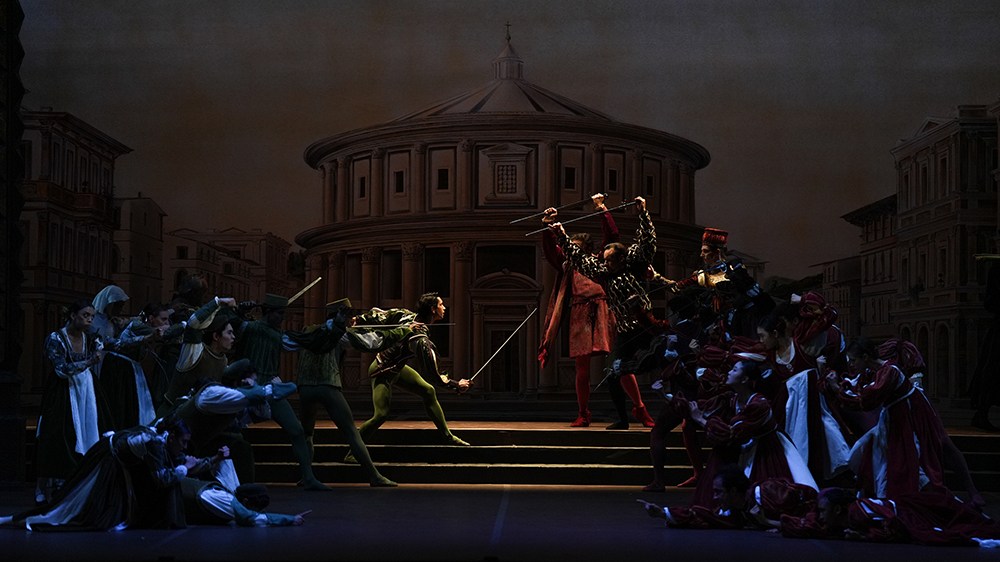
His version of Romeo & Juliet, commissioned by London Festival (now English National) Ballet in 1977, provides stark evidence of his overreach. The odds were always against it: there was stiff competition not only from the film of the original 1940 setting of Prokofiev’s score by Leonid Lavrovsky, but also sensitive productions by Frederick Ashton, John Cranko and Kenneth MacMillan – the latter a mainstay of the Royal Ballet’s repertory.
It’s an irresistibly charming show that gives simple pleasure of an all too rare kind
Nureyev’s egomania shows in his determination to do everything differently (who needs a balcony?) and give the role of Romeo that he created for himself prominence at every possible juncture – notably in an opening solo that doesn’t establish the character’s personality or situation so much as showcase a succession of almost perversely difficult steps.
Nureyev was particularly fixated on avoiding any accusation of plagiarising MacMillan’s version, which he had performed for more than a decade. But MacMillan crucially knew the value of simplicity, of stillness; Nureyev’s invention in contrast is needlessly hyperactive, overloading every scene with gratuitous detail and what my university tutor called ‘half-baked bright ideas’, such as the beggar woman who drops dead after Romeo tips her or having the randy Nurse cavorting with a boyfriend. The lengthy attempt to mime the business of Friar Laurence’s message going astray en route to Mantua will be simply baffling to anyone without an intimate knowledge of the play.

Given that he was someone so anxious to escape the dead hand of Soviet culture, Nureyev seems oddly in thrall to the heavy-handed stylistics of the Bolshoi tradition of dramballet, with its taste for clunking symbolism (four figures in sinister black, dicing with fate), melodramatic ham (the meal made of Mercutio’s and Tybalt’s brawl) and gymnastic horseplay (strapping lads preening their masculinity in the Verona marketplace). What gets lost in all this is what motivated MacMillan’s vision so powerfully: the sense of Juliet the ingenuous child forced by circumstance into lonely adulthood. Any psychological realism has been sacrificed to superficial theatrical effect.
Despite all these flaws, English National Ballet has continued to present this production successfully for the past half-century, and several major companies in Europe have adopted it too. This latest revival has been scrupulously rehearsed by coaches including Manuel Legris, who danced the role of Romeo under Nureyev’s direction. It looks good: Ezio Frigerio’s sets and Franca Squarciapino’s costumes, drawing on early Renaissance models, remain very handsome.
The opening night cast matched ENB’s leading principals, who didn’t radiate much romantic rapport. Emma Hawes is a supremely competent dancer, but her Juliet is too hard-edged and decisive, lacking in vulnerability, shyness, tendresse – to be fair, Nureyev has given her no help in these respects. As Romeo, Aitor Arrieta makes a much stronger impression, although he seemed happier larking with the boys than smooching with his lady love. Fleet of foot and classically proportioned, he coped elegantly with all the choreography’s demands. Among the rest of the cast, James Streeter should be singled out for his bullish Tybalt. The orchestral playing was dodgy.
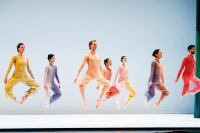
I had much more fun at The Brown Suite, a slick and sassy dance spectacular based on soul standards by James Brown, Etta James and Sam Cooke. There’s a thread of narrative to it, setting the scene in a Harlem night club where the couplings and uncouplings are variously amorous, comic, poignant and pugnacious, but what matters is the marvellously exuberant dancing of a cast of seven, inventively choreographed by two of their number, Nahum McLean and Darius Drooh.
Unpretentious and blessedly brief, it’s an irresistibly charming show that gives simple pleasure of an all too rare kind.





Comments