
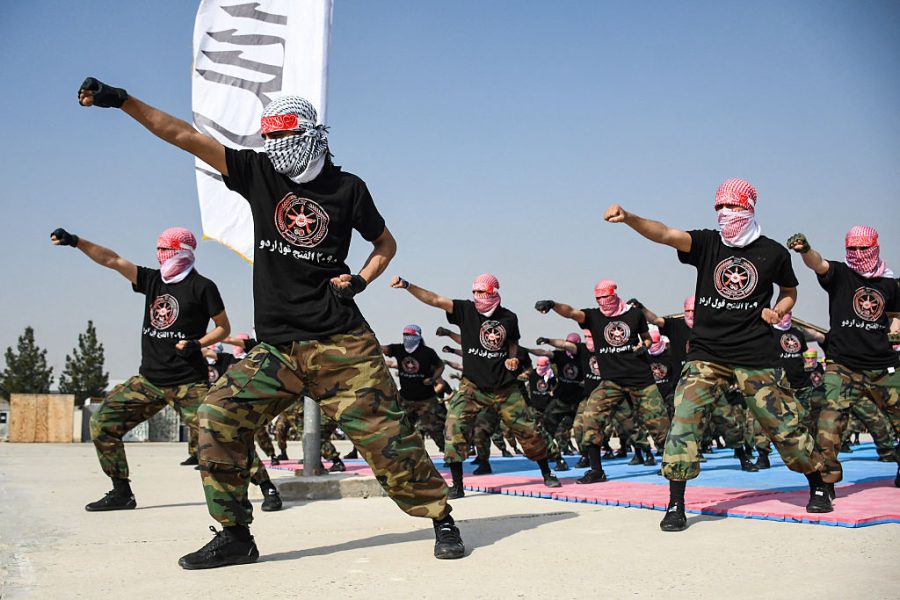
The US-Israeli attack on Iran presents an opportunity to get rid of the Taliban in Afghanistan. If there is a collapse of central authority in Iran, tens of thousands of Afghan former soldiers living in exile there could use the power vacuum to mobilize, return home and fight against the Taliban. There are several resistance groups who have advanced plans to fight but need a reliable haven outside the country to launch attacks inside Afghanistan. Iran, which has a 600-mile border with the country, could be the launchpad they need.
This represents a unique opportunity for Afghanistan, as for the first time the country faces conflict on both sides. While on its western border, it is watching the life-and-death struggle of the Iranian regime in its clash with Israel and America, on its eastern border it faces a significant escalation of its conflict with Pakistan. Along with the most serious border clashes since the Taliban took power in 2021, Pakistan has launched air strikes on Kabul and Kandahar.
Regime change in Afghanistan is more urgent than ever
The conflict emphasizes the moral bankruptcy and failure of Pakistani policy in the region. For more than 30 years, since the Taliban first emerged in the deserts of southern Afghanistan, the terror group had been armed and trained by Pakistan, who also educated generations of fighters in extremist madrasas. But the Taliban turned on their patron after they had been supported to retake Kabul in 2021. Rather than becoming the compliant client expected by Islamabad, the Taliban instead supported militant groups fighting against the Pakistani government – most notably the Tehrik-e-Taliban Pakistan (TTP). It was the upsurge in TTP attacks inside Pakistan, causing multiple deaths, that led to the significant escalation in the conflict between the two nations last week.
Afghan resistance groups opposed to the Taliban may need Iran as a safe haven because of the proven unreliability of Pakistan. Pakistan has formed an anti-Taliban armed militia, the so-called Afghanistan Independence Front, but it has no support inside Afghanistan, and looks like a spoiler to muddy the water for other more legitimate groups. Because of Pakistan’s track record in supporting Islamist militias – not just in Afghanistan but also in India – no credible opposition group will trust it for support.

The conflict between Pakistan and the Taliban in Afghanistan has been simmering for months. The border is closed for trade and Pakistan has forced hundreds of thousands of Afghans back across it, many of whom had been living in exile for decades. They face appalling conditions on their return, and the Taliban have done nothing to support them with housing or basic healthcare, showing that they have no interest in governing the nation beyond exerting their will by violence and increasing repression against women.
A new penal code enshrines inequality in the eyes of the law. Women have no rights, and male Afghans are divided into three classes, with the mullahs, of course, at the top. Husbands are licensed to beat their wives, only facing sanctions if there is a serious wound or bones are broken. Restrictions on women working have been tightened.
And at the same time as enshrining misogyny in law, the Taliban is allowing more than 20 jihadi military groups to train in Afghanistan, including al-Qaeda. This makes regime change in the country more urgent than ever.
This time, opposition groups who want to restore equality, democracy and women’s rights recognize that they will not have international support. The policy of western governments, including the UK, is not to support armed resistance or even peaceful opposition groups, because the priority is engagement with the Taliban to secure access for humanitarian aid. It is a short-sighted policy, with no strategic vision for a different future for Afghanistan, instead condemning the people of the country to continuing misery, alleviated by the trickle of aid that gets in.
Wars take unpredictable courses, and a general breakdown of control in Iran might have a silver lining for the Afghan opposition. President Trump signaled his desire for regime change in Iran. His actions may have consequences for a regime beyond its borders.



Comments