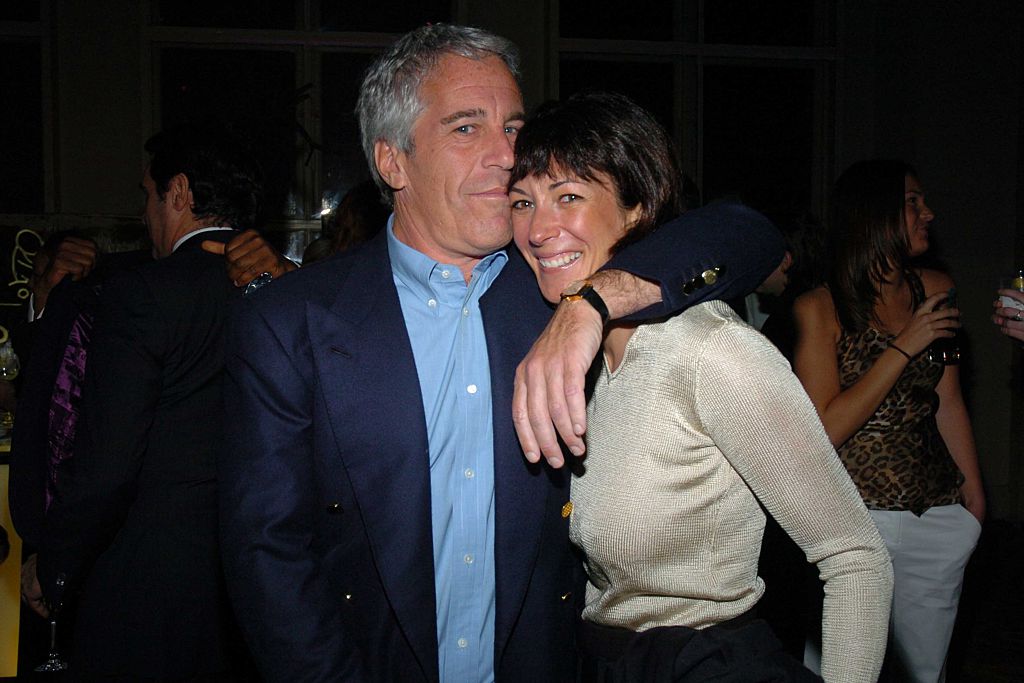
My family name has become a byword for scandal. My father, Robert, went from press baron to tabloid monster within weeks of his death in 1991. My sister Ghislaine, convicted in New York three decades later for sex-trafficking offenses linked to Jeffrey Epstein, became the algorithmically optimized villain of the online age.
Last week’s arrest of the former Prince Andrew shows how fully a newer system has taken hold: one in which guilt is first declared on the homepage and only later, if at all, tested in court.
Old protections – the presumption of innocence, etc – become threadbare once a story enters the global content mill. Defendants are no longer chiefly subjects of legal process. They are raw material for clicks, outrage and political theater.
Law is meant to cool passions. The modern content economy is designed to inflame them
When my father fell from his yacht off the Canary Islands, Fleet Street’s knives were already out. Years of aggressive takeovers and bullying of journalists had made him a convenient hate figure. The discovery of a hole in his companies’ pension funds confirmed the caricature of “Captain Bob” as a crook. Yet the story was still mediated through recognizably legal machinery. The Serious Fraud Office investigated. A criminal trial followed that saw my brother Kevin and I acquitted alongside colleagues. Inspectors from the Department of Trade and Industry then produced lengthy reports.
By the time Ghislaine was indicted in New York in July 2020, the distinction between the media and the courtroom had blurred. Federal prosecutors announced the charges in a Department of Justice media room next to a blown-up photograph of Epstein and my sister, with earnest talk of “justice for survivors.” Trial was still 18 months away but the performance suggested that the important verdict had already been delivered.
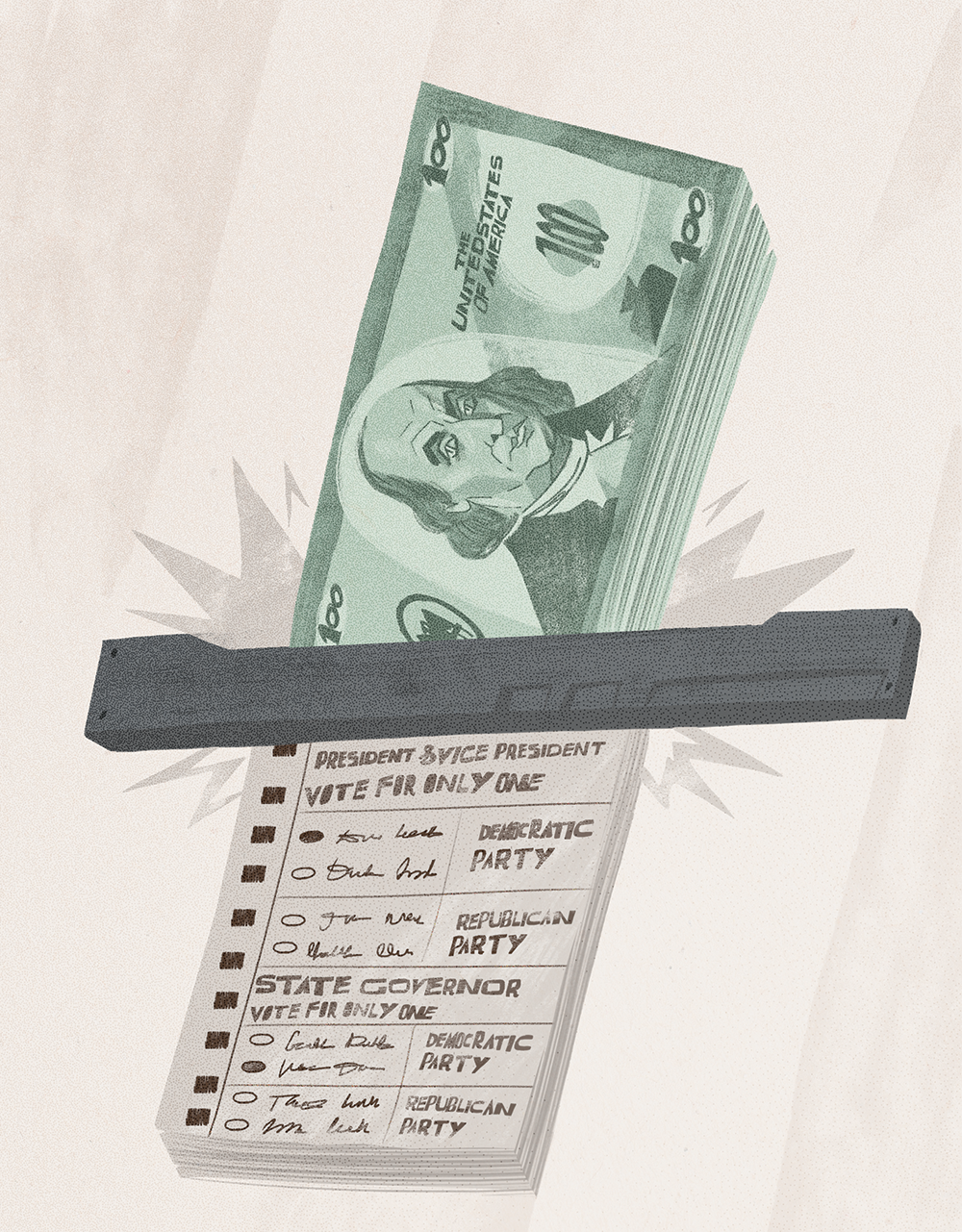
A 24-hour cable-news and podcast ecosystem hungry for narrative filled the gaps between hearings. Sketch artists and court reporters recorded what happened in the courtroom proper. The real show, however, was outside: live-tweeted commentary, nightly “explainers” and viral clips of lawyers emerging to deliver polished lines. Cameras are still banned in America’s federal courts. That does not curb the theatrics. The trial is no longer the main event. It is one act in a longer serial whose plot is written as much by producers and influencers as by prosecutors and defense counsel.
My father was cast as an ogre of London’s financial world: greedy, bullying, foreign, Jewish, insufficiently deferential to the establishment he sought to join. My sister became something else: a digital-age Myra Hindley, a single face through which the internet could explore and monetize disgust. From the moment of her arrest my sister was almost never described as “the accused.” She was Epstein’s “madam,” his “fixer,” the “face” of an evil network. Viral posts pushed bogus “co-conspirator” lists, dressed up as court documents. Conspiracy theories about missing “client lists” flooded social feeds, even though no such list formed part of Ghislaine’s criminal case.
The logic of trial by media has migrated into politics, too. When my sister invoked the Fifth Amendment before the House Oversight Committee this month, members treated a core constitutional safeguard as if it were proof of guilt, asking “Who is she protecting?” and hinting at a cover-up. More strikingly, the Attorney General, Pam Bondi, during a televised appearance before the House Judiciary Committee, said that Ghislaine would “hopefully die in prison.” This is not the language of a justice system committed to impartial process. Law is meant to cool passions. The modern content economy is designed to inflame them.
In England and Wales, contempt-of-court and sub judice rules place real limits on what may be broadcast or printed once proceedings are live. Prosecutors and police are expected to avoid grandstanding in ways that might prejudice a jury. Editors who overstep risk prosecution. In the US, the First Amendment affords far wider latitude. Prosecutors now habitually hold press conferences to announce charges in which suspects are paraded in language and imagery designed for television. Cable hosts and podcast pundits discuss guilt as if they were jurors in a drama series. Judges occasionally rebuke such behavior. They rarely stop it.
What has changed is that American norms have appeared to trump British safeguards. When my sister was arrested, the rhythms of American crime coverage – leaks, press conferences, talking-head panels – set the tone for reporting far beyond Manhattan. The idea that her charges might have been stayed in London because of prejudicial publicity looked quaint in a world where the internet had already convened a global jury.
The temptation to see this as a simple morality play – privilege brought to book – is understandable but corrosive
Enter Andrew Mountbatten-Windsor, formerly HRH Prince Andrew. Last week, police arrested “a man in his sixties from Norfolk” on suspicion of misconduct in public office linked to his association with Epstein, and searched properties in Norfolk and Berkshire. He has since been released under investigation. No charges have been filed. The former prince has long denied all allegations of criminal wrongdoing. Yet in narrative terms the verdict was rendered years ago, after his calamitous Newsnight interview.
Images of police activity at Wood Farm on the Sandringham estate of Andrew’s discreet transfer into custody and his conspicuous exit from Aylsham police station were instantly packaged for social media. Britain does not habitually stage the American perp walk. This came close: a royal, already disgraced in the court of public opinion, framed through the lens of humiliation.
The temptation to see this as a simple morality play – privilege at last brought to book – is understandable. It is also corrosive.
Epstein-related stories offer a perfect cocktail for the digital economy: sex, money and conspiracy, replete with presidents, royals, politicians, ambassadors, financiers, academics and billionaires. It is unsurprising that some of the most-shared posts have been those least tethered to any court record.
Nor is the potential for distortion confined to newsrooms and social-media platforms. The Epstein Victims’ Compensation Program and related settlements have disbursed more than $170 million, with an additional $35 million proposed as of this month, while the wider universe of claims against Epstein’s estate and associated entities is now often put at close to $1 billion. On standard contingency fees that implies hundreds of millions of dollars flowing not only to claimants but also to the lawyers who represent them. That does not discredit any individual accuser. What it does mean though is that money sits very close to the construction of the “truth” the world is encouraged to consume.
Social-media algorithms amplify posts that generate strong reactions, including moral anger, as “viral outrage” providing an opportunity for virtuous single shares or comments. In this environment my sister’s trial was not just a legal proceeding but a rolling plebiscite on privilege and impunity. The defendant is not a person. She is a prop.
Reputation once shredded is hard to repair. My father was never tried, let alone convicted. Yet the inspectors’ report, published after the criminal trial, was damning about his conduct: he was “blameworthy” in ways that did not map neatly onto criminal charges. In the public mind, he is now remembered chiefly as a crook, not as the decorated soldier, outstanding publisher and entrepreneur he once was. For my sister, the problem is sharper. She was convicted after a widely covered trial. The appeals that followed have been technical and unglamorous. They do not compete with the vivid story the internet has already told.
Her most recent petition, filed in December 2025, together with some 1,000 pages of supporting evidence, argue that her trial was unfair and constitutional safeguards were brushed aside. No one can begin to understand her defense without reading that petition. It has been largely ignored because it jars with the clickbait narrative. Even if the federal court currently considering it orders an evidentiary hearing, the reputational ratchet will barely move.
Andrew now confronts the same mechanism at an earlier stage. If no charges are brought, many will assume a cover-up. If he is charged and acquitted, that outcome will struggle against years of prior certainty. Only a conviction would align law and narrative – yet even that would be consumed as spectacle rather than the solemn act it should be.
Lawyers and academics have proposed remedies. Judges could exercise tighter control over pre-trial publicity. Police and prosecutors could be given clearer rules on public comment. Juries could receive stronger directions to disregard media coverage, backed by practical steps such as stricter sequestration in high-profile cases. Legislatures could explore “right to be forgotten”-style tools for those acquitted or whose convictions are quashed.
Such efforts face structural obstacles. Courts move slowly. Newsrooms and platforms move at the speed of the algorithm. A prosecutor who refuses to grandstand or an editor who declines to speculate, risks being out-competed by less scrupulous rivals. Attempts to regulate platforms trigger free-speech worries. A healthier system would restore distance between accusation and conviction, confine performance to the courtroom and remind people that outrage is not itself a form of justice. The question raised by the stories of Epstein, Ghislaine and Andrew is whether such a system is still politically, culturally or commercially possible.
For now, the answer is bleak. We no longer simply read about trials; we binge-watch them. We no longer merely await verdicts; we perform them. The algorithm is judge, jury and publisher. Everyone watching imagines themselves part of justice. In fact, they are part of the show.


Comments