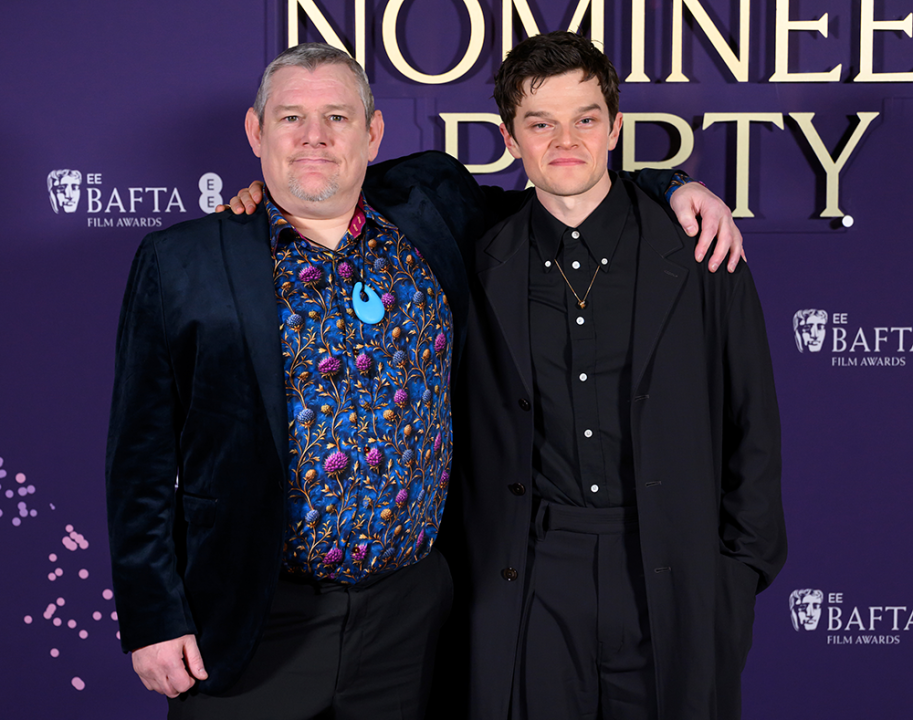


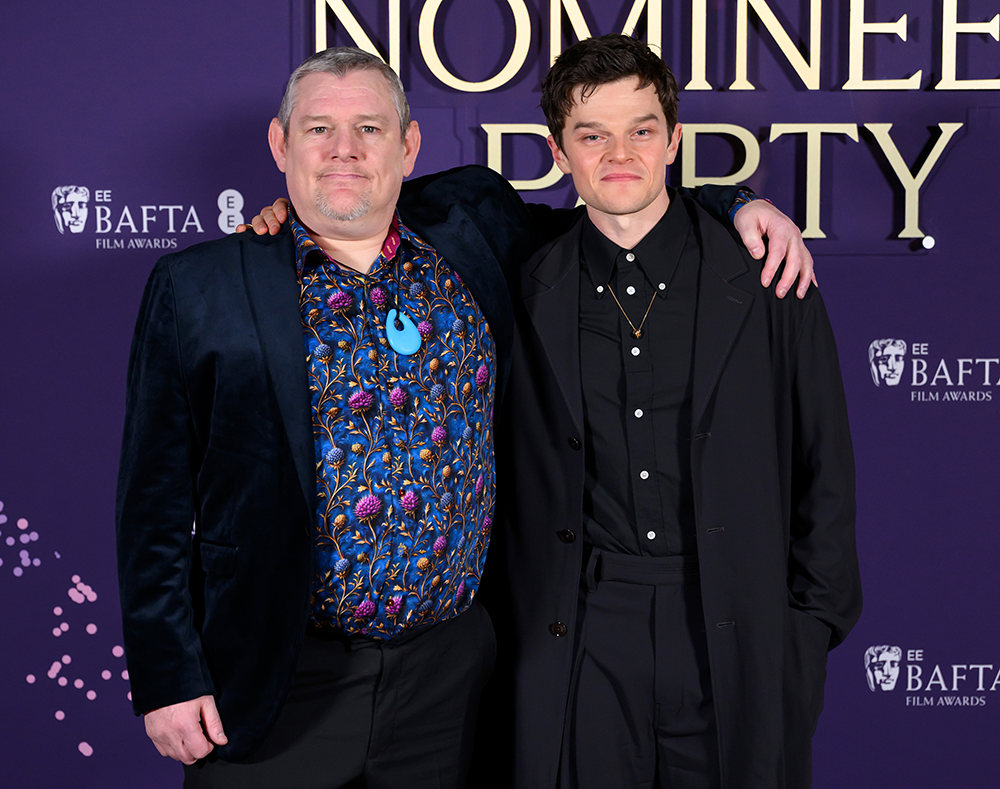
Sometimes things work out much better than one could have imagined, as if God, looking down, had decided that for whatever reason, a favour should be dispensed in my direction, a blessing. Perhaps occasioned by my diligence and faith, perhaps not. It is impossible to explain these benedictions. Sufficient to say that on Sunday night, at the Baftas in the Royal Festival Hall, the angels looked kindly upon me.
I go to this bun-fest every year, dressed appropriately in a dinner jacket and a cummerbund, patent-leather dress shoes and a bow tie. I ought to point out that I do not receive an invitation to this glittering event: no, I gain entrance through what is commonly known as ‘gatecrashing’. And I do so in order to scream vile abuse at whichever leftie luvvie has enraged me during the preceding 12 months. This is the consequence of a neurological condition with which I am afflicted – no, sorry, of which I am a survivor – called Chronic Late Development Conscious Coprolalia (CLDCC) and which I will explain in greater detail later.
I like to scream vile abuse at whichever leftie luvvie has enraged me during the preceding 12 months
Anyway, having inveigled my way in – never much of a problem, just remember to look smug all the time – I was seated centre-left, perhaps 40 yards from the stage, when the compère for the evening, the truly awful Alan Cumming, started to speak. Still seated, I bellowed out: ‘Cumming – you self-important, preening, hideous, unnatural, waxen-skinned spaffgoblin…’ and waited for what usually happens, which is to be grasped under the arms by burly security personnel and rapidly escorted from the building. But it didn’t happen. Quite a lot of people in the audience looked at me in disgust or disquiet, and in fact a security guard did begin to make his way over. But he was stopped by a colleague who said (and I heard him: ‘No, best leave it, Nusrat. I think he’s here with… um, you know… that small party of mentals. Apparently they can’t help it…’ And his colleague, still looking at me with grave suspicion, paused and then retreated back to his vantage point in the aisle.
Wow, I thought, is this for real? I screamed out ‘Arse badger!’ as a kind of test – and the bouncers remained resolutely where they were, although some nearby attendees made their objections to this crass homophobia very volubly. Then when two black people were on stage, somebody some distance away shouted out the ‘n-word’ and Mr Cumming, the compère, explained to the audience that within the throng tonight was someone who, er, lived with Tourette syndrome and that shouting out taboo words was a frequent neurological tic experienced by some sufferers, and that no offence was intended and it was hoped we could all be inclusive and not judgmental.

Well, what a fucking result. The rest of the evening went like a dream, because whenever I shouted out my abuse, people in the audience near me just smiled indulgently, or even patted my back. In fact, when Olivia Colman – a fine actress incidentally, but totally deranged – ascended the stage and I shouted out ‘Perpetually smirking overrated haggard keffiyah-clad herring-stench dunkbucket’, the young woman seated next to me, who I believe had been nominated for a best supporting actress award but had sadly failed to win, offered me one of her pistachio-flavoured chocolates. What a night.
The only problem being that, au contraire Mr Cumming, I did mean it. All of it.
That’s the only real difference between my affliction, CLDCC, and classic Tourette’s. Both derive from a dysfunction in the basal ganglia of the brain’s hemispheres – the cerebellum’s gatekeepers, if you will. In Tourette’s the taboo words pour forth, probably from the limbic system, immediately, perhaps in response to a tension which has built up in a matter of seconds, as a kind of tic. My affliction is different. I read what these idiots have said, such as Olivia describing herself as a gay man, and the phrases fester in my limbic system for ages and a reaction only later pours forth. And while I cannot control what I am saying, it would be disingenuous to pretend that it wasn’t intended. The words of hatred tumble out and there is no stopping them. Regular readers of my column may have noticed that exactly the same affliction bedevils my writing, for which I can only apologise.
Anyway, I filled my boots. It was only later, watching the news, that I realised a hell of a furore had occurred. Not over what I had said, but regarding the chap who really did have Tourette’s and who used the n-word. Some complained that the BBC should have edited the word out of their broadcast, much as they edited out my shouted observations. But whatever, suddenly that fabled intersectionalism – all together against straight white able-bodied oppressive hegemony! – did what it always does, and dissolved very quickly. The black comedian Jamie Foxx suggested that, contrary to scientific opinion, the man who shouted the n-word had meant it. Dawn Butler got herself involved, as you might have expected. And a black bloke called Jonte Richardson, who advises Bafta resigned, saying: ‘When an organisation like Bafta, with its own long history of systemic racism, refuses to acknowledge the harm inflicted on both the black and disabled communities and offer an appropriate apology, remaining involved would be tantamount to condoning its behaviour.’
Harm, my bottom. Systemic racism, my bottom. Grifting – yep, of course, plenty of grifting. Plenty of confected offence taken with enormous amounts of pleasure, so that you might wonder if that too is a neurological condition rooted in the basal ganglia, a kind of tic which sufferers find impossible to resist. I hope Mr Richardson changes his mind and attends next year’s awards ceremony along with everyone else, because spurred on by my 2026 triumph, I shall be there in my dry-cleaned DJ and with my chaotic limbic system ready for action.
Watch Rod Liddle discuss on Spectator TV:



Comments