To mark the celebration of the Annunciation (‘Lady Day’, 25 March), a friend sends me an image of her favourite picture of the angel’s appearance to the Virgin Mary – a painting by the African-American artist Henry Ossawa Tanner, who worked mostly in France in the first decades of the last century. Mary is a very young Middle Eastern peasant woman, shrinking into the rumpled sheets of a bed roughly screened off from a plain stone domestic interior, as a blinding pillar of light hovers in the foreground. As my friend said, it shows not the serenity of many images of the event, but an acute apprehensiveness. This may be good news but it is also, quite simply, terrifying. Nothing is going to be the same again.
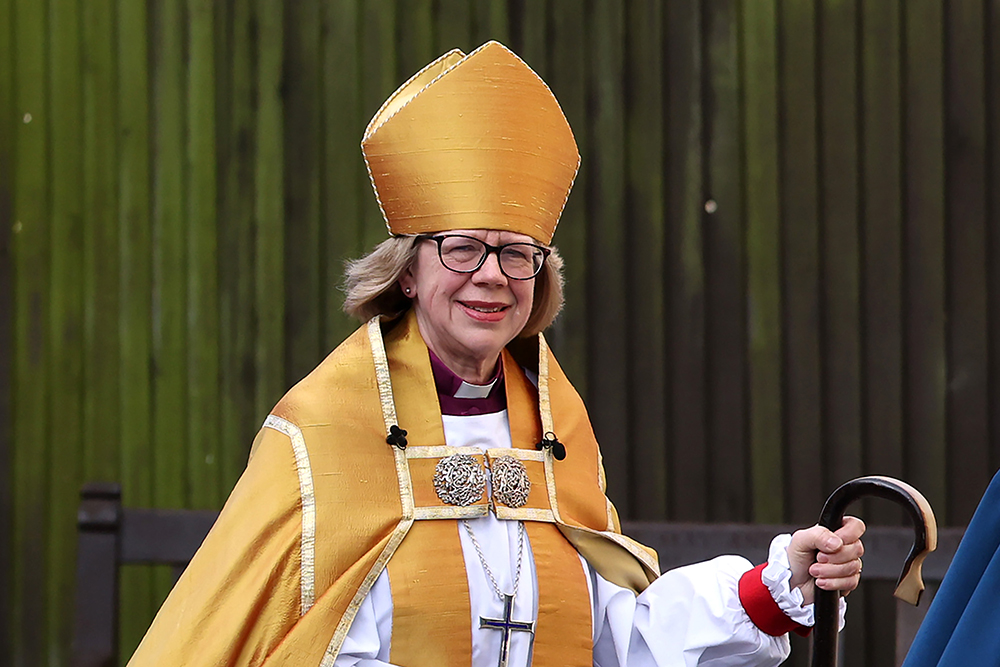
Sarah Mullally was installed as Archbishop of Canterbury on 25 March. The ceremony was – appropriately – joyful and splendid. But I would guess that Sarah is feeling just a bit of that never-the-same-again apprehension. Now you are Out There. You’re responsible for something happening that is in every way beyond you. You will be exposed to unrealistic expectation and unreasonable attack. You know you are going to fail in all sorts of ways. And you need to know that the weight and importance of what is put into your hands is such that it will survive your failures. I hope there will always be people around to tell Sarah this. And I think with some concern about what it’s like for those starting out in exposed positions who don’t have anything or anyone to give that assurance. What is it like to be a politician who doesn’t or can’t believe in grace of some sort? Something to think about when we pray for our leaders. What happens when the obsession with never being seen to fail becomes a total, suffocating imprisonment? Take a look at the White House, maybe. And some other corridors of power across the world.

At the beginning of the week there are a couple of phone calls from media outlets wanting a comment on the burning question of what Prince William thinks of the Church of England. The prince’s comments seem to me to be candid and realistic – implying some recognition that trying to hold certain positions without an awareness of grace, and the freedom this offers, is going to be more or less impossible. Around the time of the Coronation, there were some sneers and grumbles about the ceremonial anointing. But there is a clear message there about the risks of status and influence without the knowledge that not everything is about you; that what you hold and represent has more resources than you alone.
A couple of times during the week I find myself listening to people who are trying to manage fear – fear of awkward and unwelcome responsibilities, fear of age and incapacity, fear of the collapse of the institutional frameworks for their lives and labours (in the Church, in higher education, in the creative arts), fear of attack because they belong to minorities of one sort or another (news of the assault on the Jewish volunteer ambulance service in north London began the week on a dark note). Some fear is irrational; some fear is a perfectly appropriate reaction to what’s out there. When we hear words like ‘Fear not’ in a religious setting, as in the story of Mary and the angel, it’s not a cheery assurance that there is nothing to worry about (there’s plenty). It’s a challenge: you feel and acknowledge fear – but what actions are possible for you? What is there apart from fear in your imagination? It’s where the left-field worlds of faith and creativity come in, to suggest that our environment is not as fixed and stifling as it seems. Fear isn’t everything. Take it seriously; don’t let it be the only thing you take seriously.
It might sound odd to approach Easter thinking about fear. But it’s striking that the earliest gospel finishes by telling us that the women who came to the tomb of Jesus and found it empty initially ‘said nothing because they were afraid’. Nothing is going to be the same again: being afraid is the most natural reaction. We are all on the back foot: the ‘cultural Christian’, who likes to have a little bit of Christian decor in the house; the Christian nationalist, who wants non-Christians to know their place; the liberal Anglican, who wants everyone to feel comfortably at home. If what is said to Mary and what is done on Easter Day are indeed world-changing matters, we do well to be apprehensive. Only then can we begin to see just what we are to be thankful for. Release. Transformation.


Comments