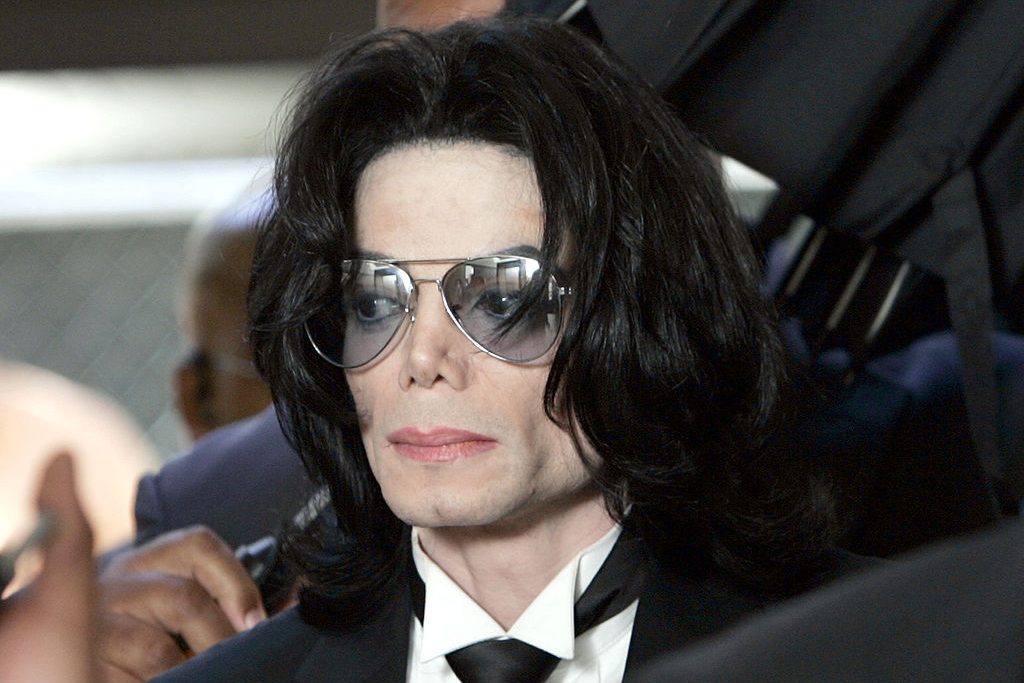
If you’re planning on making a biopic of a major musical figure, you would be advised not to miss out various rather vital aspects of their life. For instance, Bohemian Rhapsody dealt – if at times obliquely – with Freddie Mercury’s homosexuality and AIDS. The recent Bruce Springsteen film Springsteen: Deliver Me From Nowhere attempted to tackle his mental health difficulties and near-breakdown.
Neither film was perfect, but they were at least made with reasonably good intentions. That is rather more than can be said for Antoine Fuqua’s Michael Jackson biopic Michael, which opens in US cinemas this week and has been greeted with disbelief.
The main objection is that the film refuses to acknowledge that Jackson was a deeply troubled man, who is widely believed to have engaged in acts of child molestation. While he was acquitted after a trial in 2003, the various financial settlements that Jackson paid out to accusers – all the while publicly denying any wrongdoing – suggests a man with a guilty conscience and deeply suspect behavior that he was desperate to hide.
Any halfway honest and representative biopic would have this as a vital part of the story, but Fuqua’s film simply ignores it altogether. According to advance reviews of the picture, Jackson – as played by his nephew Jaafar – was a near-Christlike figure. He suffered at the hands of his brutal father Joe, but went on to become the King of Pop. First alongside his brothers in the Jackson Five and then as the biggest solo star of his time.
His interactions with young fans are shown to be wholesome and worthwhile. His private zoo, Neverland, simply a place where he and these not-at-all-suspicious child pals can play and frolic – innocently! – together. And this is before you factor in the other inanities of the film, which include a heroic presentation of Jackson’s manager John Branca and the omission of his sister Janet, who declined to be involved.
Michael is still expected to be a box-office success. Thanks in large part to the keen fanbase who made the earlier Jackson documentary This Is It, cobbled together after his death in 2009, the highest-grossing non-fiction feature in history. And the film recreates some of his most famous live performances with energy and style. The same people who were thrilled by Bohemian Rhapsody’s climatic Live Aid set-piece will go away happy. Yet the question of why it has chosen to omit such vital, indeed crucial, aspects of Jackson’s life is murky.
It has been suggested that the original cut of the film had an entirely different third act, which dealt with the 1993 allegations against Jackson, and tackled his public downfall with a degree of honesty. However, Michael had to jettison all the sexual molestation material due to a clause in a settlement with one of his accusers, Jordan Chandler, that bars any representation or discussion of him in a film. Instead laudatory footage was reshot, at a cost of as much as $15 million, which saw its original release delayed by a year. The world has now had a chance to see the finished product, and it has not gone well. The main response has been understandable mystification at the whitewashing – if you’ll pardon the unfortunate pun – of such a complex, troubled man.
If the film is the hit it’s expected to be, it might spawn a sequel that will deal with these issues, which would probably be a joyless experience to sit through. (Does anyone actually want to see the behind-the-scenes creation of “Earth Song?”) But the director has not helped himself by suggesting that the complaints against Jackson might have been baseless and instead influenced by racism and greed.
In a New Yorker interview, Fuqua said that “When I hear things about us – black people in particular, especially in a certain position – there’s always pause.” Addressing the allegations, he remarked that “sometimes people do some nasty things for some money.” This is a novel take, given the five separate accusers and Jackson’s own admissions of sharing his bed with children. But it is one that seems wholly in keeping with a film that offers all the grit and investigative curiosity of The Sound of Music.





Comments