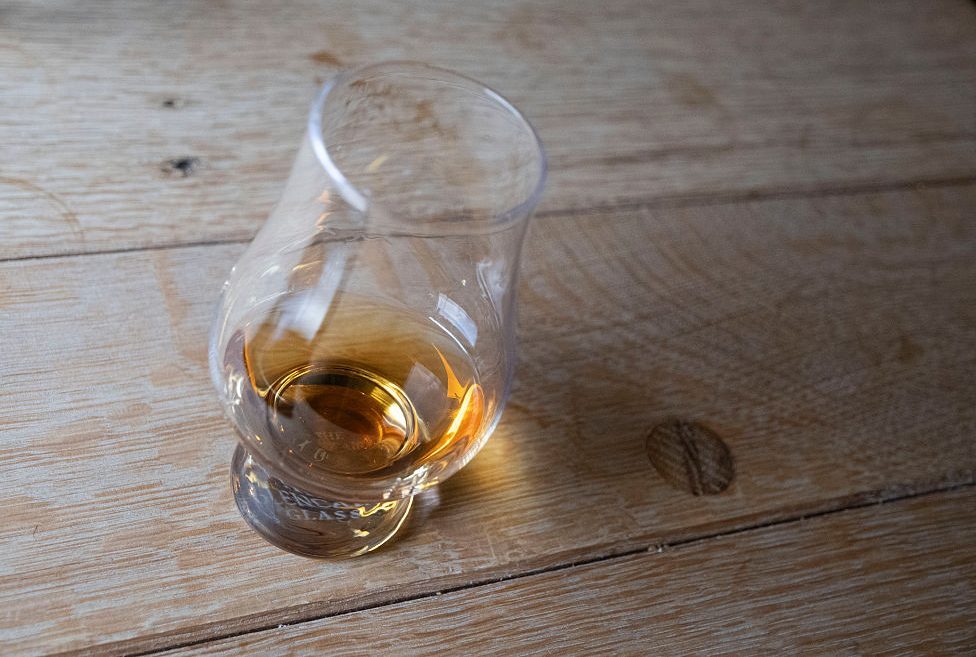
Not since the Battle of Bannockburn in 1314 have tensions between Scotland and England, ‘the auld enemy’, been so high. Forget the Border Reivers of the early 1600s, or the disgruntlement that followed the Treaty of Union a century later. As Mel Gibson might have hollered in Braveheart, ‘They’ll never take our freedom!’ But their whisky might still for the taking unless it puts up a strong defence.
There have been Irish whiskies for centuries. Even Welsh ones. For all that the brown nectar is revered, it’s always had a secret life as a rough-and-ready kind of hooch too. But earlier this month, English whisky – a phrase which until recently sounded self-contradictory – was officially recognised, securing protected Geographical Indication status. Like the Cornish pasty or the Melton Mowbray pork pie, but more sustaining. But the Scots are not mad about the idea, arguing that it undermines the definition of single malt that their industry has built and protected for generations – and which habit and stereotype, rather than reality, position as the best-in-class product.
The current state of affairs is confusing for producers and consumers alike
Even if their complaints might sound rather like those of a very big industry trying to keep down some small craft producers who likely won’t compete with them for many, many decades (if ever), you can see their point. From the Scots’ viewpoint, it just looks like the Sassenachs are getting an easier ride. Why so? Because while Scotch has to be mashed, fermented and distilled on site at the same distillery, English whisky only has to be distilled at a single site. That means makers can get their malted barley from any certified external source, which makes producing at volume theoretically easier. They say you should add a little water to your whisky to bring out the flavours. But this seems a dilution of the definition too far, even if that’s already the standard for whisky produced in the US, Ireland or Australia, and is the one that French makers are aiming for too.
The Scots are, characteristically, being rather dourly taciturn on the subject, with the Scotch Whisky Association saying only that the looser arrangement for English whisky ‘breaks the crucial connection with single site and place’. It’s all about the terroir, don’t you know. It argues that English whisky should be called ‘English Malt Whisky’, to distinguish it from any product that might claim to be a ‘single’ malt whisky. Like allowing your foe to regroup before routing them once again, the Scots have stated their willingness to give the English a grace period to sort their labelling out. The English Whisky Guild, its forces assembled south of the border and looking slightly worse for wear after a heavy night, has rejected this proposal.
To non-whisky drinkers, all this may have something of the People’s Front of Judea and the Judean People’s Front about it. And it only gets more so. DEFRA has further weighed in to say the English producers could use the term ‘single malt’ even if they were producing in ways not consistent with the now-approved English whisky GI specification – by, for example, not using copper stills. As the Scotch Whisky Association has pointed out – and you may need a stiff drink to wrap your head around this – a DEFRA spokesperson has told one English producer that while it won’t be able to call its product ‘English single malt’ any more, it could call it ‘English whisky’ or ‘single malt whisky’, just not ‘single malt English whisky’. Clear?
But hang on. Some English producers – the likes of Liam Hirt, founder of Bristol’s Circumstance Distillery and the leader of the rebellion – are now also questioning the definition of Single Malt English Whisky. He argues that to insist that English whisky be distilled in copper stills is to make English whisky fit into the Scotch whisky model rather than to recognise the whole point of the GI exercise: that English whisky is not Scotch whisky, that it has its own history and traditions and now spans a landscape of some 70 diverse producers (there were only 46 just three years ago). The situation is, says Hirt, like trying to make the English wear kilts. His objections have so far fallen on deaf ears.
There’s a tribunal to discuss all this pencilled in for next February, when, like so many cabers, the whole idea of an English GI may be tossed away. In the meantime, there may be a rare hint of agreement between the English and Scots here, aside from the fact that nobody seems to really love this new GI definition, that the current state of affairs is confusing for producers and consumers alike. How is a man of refined tastes going to be able to settle down in his slippers of an evening and know with any certainty exactly what he’s drinking?
How can he be anything but offended at the risk of discovering that contact with copper has or has not played its part in the production of his tipple? That it may be single or malted, made on one site or many, English or Scottish, or some mysterious combination thereof, and that not knowing comes at huge detriment to his ability to get slowly soused in good conscience? It’s all too much. Perhaps he could appeal to HMRC’s Spirit Drink Verification Scheme for clarity. Or, better still, have another drink.
Therein may lie the bigger point. Isn’t all this a storm in a cut-glass tumbler, albeit a bewildering one? To some, the whisky world is one of craft and connoisseurship. But for many others, whisky, whether Scottish or English, is a brown spirit of hugely enjoyable aromas, flavours and – in sufficient quantities – effect. That’s about as far as their interest goes. It says something that the world’s biggest producer of whisky by volume is now neither Scotland nor England but India.
Hang on. It says somewhere in the small print on this bottle that actually Indian whisky is often distilled from molasses and not grain. So it’s not whisky by legal definitions at all. Sure tastes like it, though.






Comments