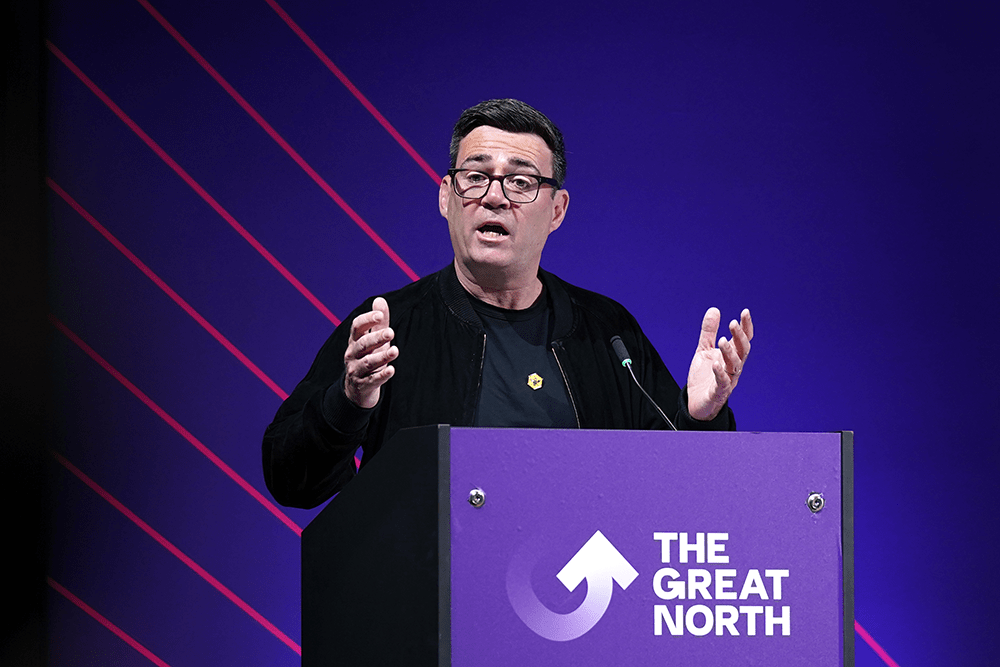


Already heard enough of ‘Is Manchesterism a thing and did Andy Burnham invent it?’ I’m afraid you’ll hear a great deal more between now and the Makerfield by-election – and long afterwards if Burnham wins the seat and the subsequent Labour leadership contest. So here’s a reminder that he defined Manchesterism in an interview last year as ‘consensual, business-friendly socialism that seeks to retake public control of all essential services’ – though in nine years as Greater Manchester’s mayor he achieved that latter objective only to the extent of imposing integrated fares and timetables on privately run buses.
My own definition of Manchesterism, in response to his, was ‘manoeuvring shamelessly for power on the strength of other people’s achievements’. Those others were the leaders of the conurbation’s boroughs, businesses and universities: the catalysts that drove them were the 1996 IRA bomb, the 1998 arrival of Howard Bernstein as chief executive of the city council and the 2002 Common-wealth Games. Socialism contributed far less to their project than pragmatic co-operation. As a frequent visitor, I watched them in action and came to know some of the players during the decade before Burnham landed from Westminster in 2017.
Detractors dismiss the city’s positive aura as an image created by skyscraper schemes that did nothing to alleviate a shortage of social housing. Others now say the prosperity itself is a mirage, the claimed 3.1 per cent regional growth rate being ‘a statistical mistake’. But let’s give Burnham as much credit as he’s due. When I met him early in his mayoralty, I observed how plausibly upbeat he could be: boosterism is no bad thing when there’s substance behind it, even if built by others. And when I lunched this week with Manchester business owners, none said bad words about Burnham’s legacy.
Strolling to the rendezvous (the buzzing Piccolino Caffé Grande, since you ask) along Corporation Street, where the 1996 bomb went off, the vitality was palpable. Likewise civic pride in Albert Square, where the great Victorian town hall is wrapped for a £500 million refurbishment but the statues of city fathers stand proud. Does Burnham deserve a plinth? No, but let’s agree he’s been an effective PR man for the progressive place he had the political luck to inherit.
Farewell to Halifax
The West Yorkshire mill town of Halifax lent its name in 1853 to the institution that became Britain’s biggest building society. Demutualised and turned into a bank in 1996, it mutated into the aggressive mortgage-lending side of the Halifax-Bank of Scotland combine that crashed in 2008. Gordon Brown then leant on Lloyds Banking Group to mount a rescue and Lloyds subsequently took a taxpayer bailout – but both HBOS brands lived on.
Now Lloyds is poised to abolish the Halifax name as part of a rationalisation that includes continuing branch closures. A matter for regret? Only in the nostalgic sense in which we regret the disappearance of any familiar high-street name – from WHSmith, now floundering as ‘TGJones’, to the 33 Russell & Bromley shoe shops shuttered last month. The fact is that the profit-seeking building society demutualisations of 30 years ago (leaving Nationwide as the only major survivor) demolished a valuable pillar of Britain’s social and financial fabric: the Halifax fascia disguising Lloyds operations was no more than a sad reminder.
Shrinking list
Commenting year after year on the Sunday Times Rich List has not made me rich but nor has it made me bitter. I respect entrepreneurs who make honest fortunes, I’m intrigued by what makes some gilded dynasties thrive while others dissipate, and I don’t resent superyachts or stately homes, though I prefer to see capitalist rewards recycled as game-changing philanthropy.
The Rich List still tells a few uplifting stories, but they’re progressively harder to pick out among what I called last year ‘a drab parade’ of billionaires from elsewhere of whom I’ve never heard (almost half of this year’s top 100) or with whom I would hesitate to step into a lift. The most eye-catching new entry, in sixth place with an £18 billion crypto hoard, is Nigel Farage’s Thailand-based benefactor Christopher Harborne. By contrast, a tally of names I actually admire reaches double figures only by including long-time anti-heroes of this column such as Mike Ashley, Sir Richard Branson and Sir Jim Ratcliffe.
The accompanying editorial speaks regretfully of shrinkage in billionaire numbers, many choosing to abandon a Britain that’s no longer the relatively tax-friendly model of civility and family safety it once was. The loss of trickledown contributions from a departing coachload or two of super-rich in dark glasses is no big deal; their belief that the way of life which attracted them here has been taxed and tarnished beyond recognition is much more to be regretted.
Who wants to be a trillionaire?
Meanwhile, the combined fortunes of the UK’s richest 250 are roughly equal, at $1 trillion, to those of just four remarkable but unlovable American tech-bros: Elon Musk of Tesla, Larry Ellison of Oracle, Mark Zuckerbook of Meta and Jeff Bezos of Amazon. If his SpaceX rocket venture debuts on the Nasdaq market next month, as currently indicated, Musk could become the first person on earth to be worth a notional trillion all by himself.
That will keep him in funds to carry on losing quixotic lawsuits like this week’s tilt against OpenAI and its founder Sam Altman, the latest in a string of cases that have gone against Musk. No doubt he’ll also carry on flinging online insults at anyone who irritates him while leading the strange private life revealed in Walter Isaacson’s excellent 2023 biography – and offering a consoling example to the rest of us of the disconnect between wealth and contentment.





Comments