When the world thinks of Palm Beach – and it does more and more because Donald Trump has his home and his club there – the world tends to think of a sybaritic sunshiny town of palm trees, sandy beaches, rich old people, easy living, bland blondes, Range Rovers, Porsches, Bentleys and Bugattis as far as the eye can see.
This is not wrong but, as ever in real life, there is a little bit more to PB than that. The underlying truth is that there are two Palm Beaches, not one, and their interaction is what drives a lot of activity here.
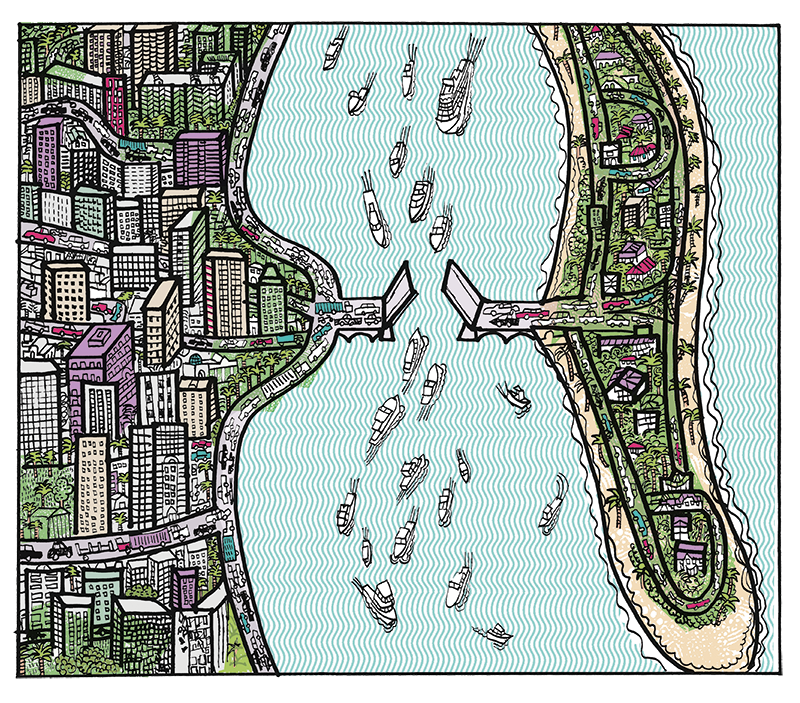
Palm Beach proper – traditional Palm Beach – is an island, a narrow sliver of land 12 miles long and barely half a mile wide: you can walk from the Lake Worth Lagoon, which separates it from the mainland, to the Atlantic Ocean in seven or eight minutes, no more than four blocks. This is a small town of 9,200 people and roughly 9,000 living units, mostly attractive architect-designed houses with substantial wooded gardens and a few apartment blocks, none more than five stories high, and no skyscrapers. The average house or apartment is, according to official figures, occupied by one person only, with an average age of 68 – widows and widowers are by no means unknown. These are unusual demographics by any standard. Strict, self-imposed rules mean that the area is unlikely to change.
As ever in real life, there is a little more to Palm Beach
Across the lagoon, reached by just three drawbridges, is West Palm Beach, a totally different entity altogether, though it likes to pretend that “the Palm Beaches” are kissing cousins.
Unlike Palm Beach Island, which cannot expand (and which does not want to expand), West Palm Beach likes to claim that it is the fastest-growing city in North America. This rapid expansion began during the pandemic, when New Yorkers and others in the northeast discovered that, in addition to much better weather, income tax, sales tax and property taxes in Florida are roughly half those further north. One calculation has it that a reasonably prosperous family on an annual income of $250,000 can save $70,000 a year just by moving south. These new arrivals might explain why the district fell to the Democrats in a special election last month.
The population of West Palm Beach, average age 40, is 133,000, up from 117,500 at the time of Covid – but the increase has been more radical than those figures show. The city, capitalizing on the changing psychology brought about by the pandemic, has deliberately styled itself like a new Wall Street South and made the most of the fact that Forbes magazine identified some 65 billionaires as living in the area, seeking to attract, in particular, venture capitalists, and founding a new Vanderbilt University campus of some size, which specializes in artificial intelligence, physics, mathematics and computer studies – the intellectual/cultural life of the future.
West Palm Beach, Fort Lauderdale and Miami now form themselves into a self-styled “Gold Coast,” and local businesses have put up $10 million in seed funding designed to attract “founders, investors and leadership talent… The goal is to make the region synonymous with innovators and entrepreneurship, and high-growth companies… where the next generation of American start-ups can scale.” Unlike Palm Beach island, West Palm Beach is in a hurry.

All well and good, you might think. And indeed it is. But there are two shadows. One concerns those three drawbridges that connect the two Palm Beaches. The crucial element here is that they are drawbridges. The bridges are raised – the central one on the hour and half hour, the other two on the quarter hours – when boats need to go through. So at least one bridge is up a lot of the time.
The boats take priority, according to the law, and the average time the drawbridges are raised while the boats pass through is 12 minutes. Given that the cars on Palm Beach island do tend to be sizable Range Rovers and the like, the lines of cars building up over those 12 minutes can be considerable, and in late afternoon in particular, when construction trucks are on the move and garden staff are knocking off, the whole central area of the island is totally gridlocked, sometimes for up to two hours. This is not popular. The problem is now so bad, and so potentially dangerous, that the local first responders have adopted a new kind of vehicle for fire and rescue – smaller and more agile golf-cart-sized cars to wind in and out of gridlocked traffic. They can even use the sidewalks.
This situation has not been helped by the effective closure of the most southern of the three bridges, together with the only north/south thoroughfare of the island, this by the security services, on account of several security lapses at Mar-a-Lago, the President’s home and club, which is cheek-by-jowl with the southern bridge. These closures funnel traffic into the center of the island, adding to the pressure.
But on top of all this, the long-term problem is the appetite of the newcomers in West Palm Beach for the amenities of Palm Beach island – its beaches, its luxury shops, its clubs and its restaurants, the opportunities to mingle with the superrich and not a few celebrities that live here – fueling tremendous cross-bridge traffic at all times. According to a study conducted earlier this year, more than 37,000 vehicles cross the three bridges into Palm Beach Island every day – that is, four times the local population.
Parking places are not completely saturated yet, but on a narrow island it’s perilously close to the limit, and with new restaurants opening up almost weekly, the time cannot be far off when it will be impossible for these restaurants to satisfy the town council that they can operate efficiently. In applying for permission to open a restaurant, potential owners already have to show not only where the valets will park customers’ cars, but what routes they will take between the restaurant and the parking location, so as to avoid congestion. In the past two years, average parking fees have gone from $5 to $20, while the wait for valets to retrieve a car is now in the region of 15 minutes.
But, still, the demand for entertainment properties on the island continues to snowball. The latest stylish newcomer is reputed to be Robin Birley, the English owner of several clubs, including 5 Hertford Street and Oswald’s in London, and Maxime’s in New York. Birley is understood to be partly financed by the Reuben brothers, Britain’s second-wealthiest family, who have just opened the Vineta Hotel in Palm Beach, with assistance from the staff at the Eden Roc Hotel in the south of France. The new hotel is designed by Tino Zervudachi, also from London.
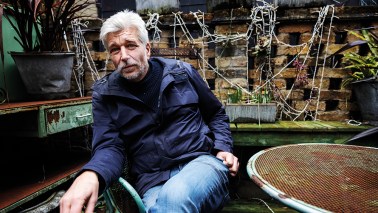
Birley is much more low-key, sophisticated and stylish than the President (and then some)
Birley told me he didn’t want to discuss his future plans, which is fair enough, but at the same time is not a denial that PB is in his sights. The Reuben brothers have bought other properties on the island, one a former Saks Fifth Avenue department store, which is centrally located. It has a loggia balcony that would make an ideal restaurant or club.
The idea has also been floated that Birley’s club, if it happens, will be a rival to Trump’s own Mar-a-Lago – but this is hardly likely. Mar-a-Lago is a political power-house – how could it not be? But Birley is much more low-key, sophisticated and stylish than the President (and then some), so his club – if his others are anything to go by – will be much more discreet.
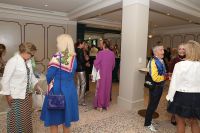
PB already has one English-style nightclub, the Carriage House, modelled on Annabel’s in London (which was started by Birley’s father, Mark). There is also Club Colette, a popular rendezvous for the many charity evenings that make up the PB high season, and which is said to be for sale. Club Colette, as it happens, is also known for its ferociously efficient valets (who operate from memory, not by numbered ticket), so if that club changes hands it won’t add to the parking burden.
But there is no question that traffic, parking, and even luxury valet parking, are becoming a problem on the island. These niggles are beginning to chip away at the sunshine town’s fabled quality of life.


Comments