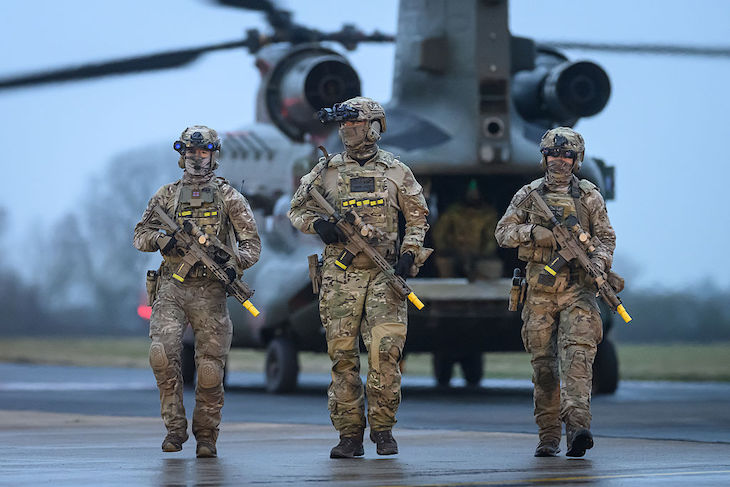
The United Kingdom’s armed forces have long made an indispensable contribution to the defense of the free world. They are widely respected for their professionalism, discipline, and fighting spirit, and they remain central to the multinational coalitions that Western democracies must form and sustain in an increasingly contested security environment. I was privileged to serve with “Brits” on innumerable occasions throughout my 37 years in uniform, including in Cold War Europe, Bosnia, Iraq, and Afghanistan – and, in the latter two, to have them under my command. They were consistently magnificent.
Getting the balance right is essential if the UK is to remain a military power of consequence – and a reliable ally – in an increasingly uncertain world
The strength and effectiveness of the British military is thus not simply a national concern. It is a matter of importance for allies and partners as well. That is why I offer my thoughts here, and any development that risks undermining UK military effectiveness should be examined with care.
One such development, to which Policy Exchange first drew public attention, is the growing tension between the legal frameworks governing armed conflict and the realities of modern military operations. In particular, the increasing application of European human rights law to overseas military operations has introduced a degree of uncertainty that carries real implications for how British forces operate in the field.
This is not an argument against the rule of law. British service personnel, like their counterparts in allied militaries, are rightly required to comply with the Law of Armed Conflict. These rules are essential. They reflect both moral obligations and hard-earned practical wisdom about how wars should be fought.
The challenge arises when different legal regimes, developed for different contexts, are applied simultaneously to military operations. The Law of Armed Conflict is designed specifically for the conduct of hostilities. It recognizes the realities of combat, including the need for rapid decision-making under conditions of uncertainty. Human rights law, by contrast, is designed primarily for peacetime governance. It operates with different assumptions, standards, and processes.
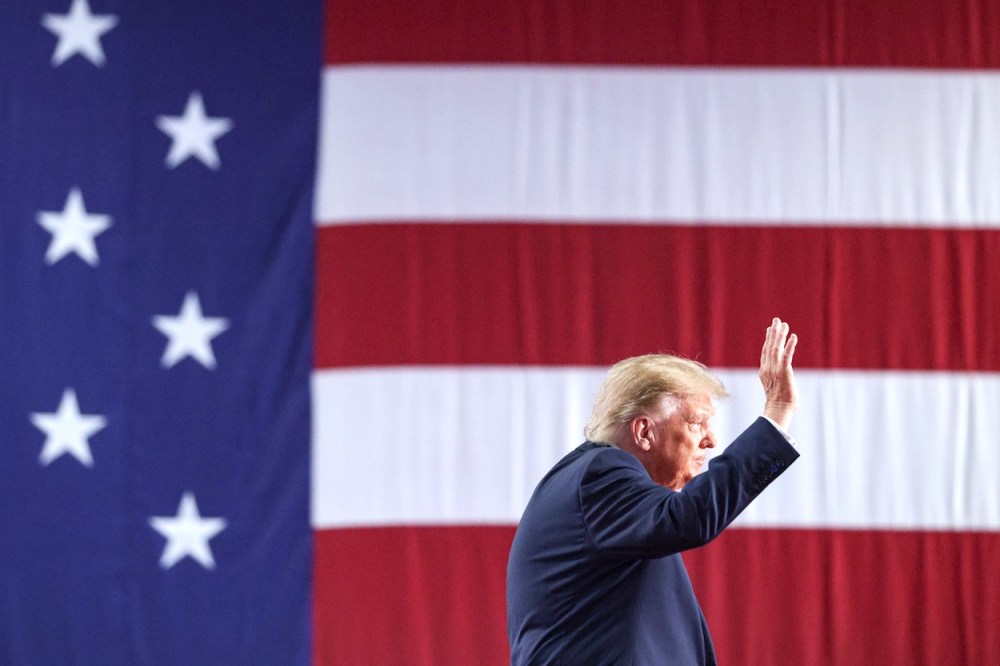
Over the past two decades, the extension of human rights law to overseas operations has blurred the distinction between these frameworks. This has created a more complex legal environment for commanders and those they lead. Decisions made in the heat of combat may be subject to scrutiny years later, often in contexts far removed from the conditions under which they were taken.
The result is not simply legal complexity. It can affect behaviour.
Commanders who know that their decisions may be examined long after the fact, under standards not designed for the battlefield, may approach those decisions differently. That is understandable. But in certain circumstances, hesitation or second-guessing can carry operational cost. In high-intensity conflict, the margin between success and failure is often measured in seconds and meters.
The experience of recent decades has also demonstrated the strain that repeated investigations can place on those who have served. Many British personnel who were deployed to Iraq and Afghanistan – including some who served under my command – have faced cycles of inquiry and reinquiry over extended periods. Regardless of the ultimate findings, the process itself can impose significant personal and professional burdens. It can also affect the broader relationship between society and its armed forces, as well as the confidence of those in command that their actions will be judged fairly and in context. I have watched this with growing concern.
A related issue arises in the handling of legacy cases from earlier conflicts, including those in Northern Ireland. Few would argue that serious wrongdoing should go unaddressed. Accountability is essential to maintaining the integrity of any military institution. At the same time, the prospect of reopening cases decades after the events in question, often with limited new evidence, raises difficult questions about fairness, proportionality, and the broader impact on those who served. I saw the toll this took on a decades-retired leader from Northern Ireland with whom I interacted and for whom I had enormous respect.
These issues are not unique to the United Kingdom. Other democracies have grappled with similar challenges as they have sought to reconcile legal accountability with operational effectiveness. The United States, for example, has generally maintained a clearer distinction between the Law of Armed Conflict and domestic constitutional protections in the context of overseas operations. That distinction has helped preserve clarity for commanders while still ensuring accountability through military justice systems.
The United Kingdom now faces choices about how best to strike this balance.
The objective should not be to weaken legal oversight, nor to exempt military operations from scrutiny. Rather, it should be to ensure that the legal frameworks governing those operations are coherent, predictable, and suited to the realities of combat. Commanders and their personnel must be able to act decisively when required, with a clear understanding of the standards by which their actions will be judged.
This is especially important in the context of future conflict. The character of warfare is evolving. Operations are becoming faster, more complex, and more distributed. Coalition operations require interoperability not only in equipment and doctrine, but also in legal and decision-making frameworks. If one nation’s forces operate under significantly different constraints, that can complicate integration and reduce overall effectiveness.
Operations are becoming faster, more complex, and more distributed
Again, none of this diminishes the importance of international law. On the contrary, adherence to lawful conduct in war remains a cornerstone of military professionalism and legitimacy. But it does suggest that legal frameworks must be applied with an appreciation for operational context and strategic consequence.
Ultimately, the question is not whether the United Kingdom should uphold the rule of law. It must. The question is how best to ensure that its legal architecture supports, rather than inadvertently constrains, the effectiveness of those it asks to serve. The maximalist approach championed by the UK’s Chief Legal Advisor to the Government does not appear to meet this challenge. Given that, it appears to be time for Britain’s political leaders to engage in serious statecraft and to debate and resolve the issue of international law in the national interest.
Britain’s armed forces have earned their reputation through generations of disciplined service under demanding conditions. Preserving that effectiveness in the years ahead will require not only investment in capabilities, but also careful attention to the institutional and legal frameworks within which those capabilities are employed.
Getting that balance right is essential if the United Kingdom is to remain a military power of consequence – and a reliable ally – in an increasingly uncertain world.




Comments