
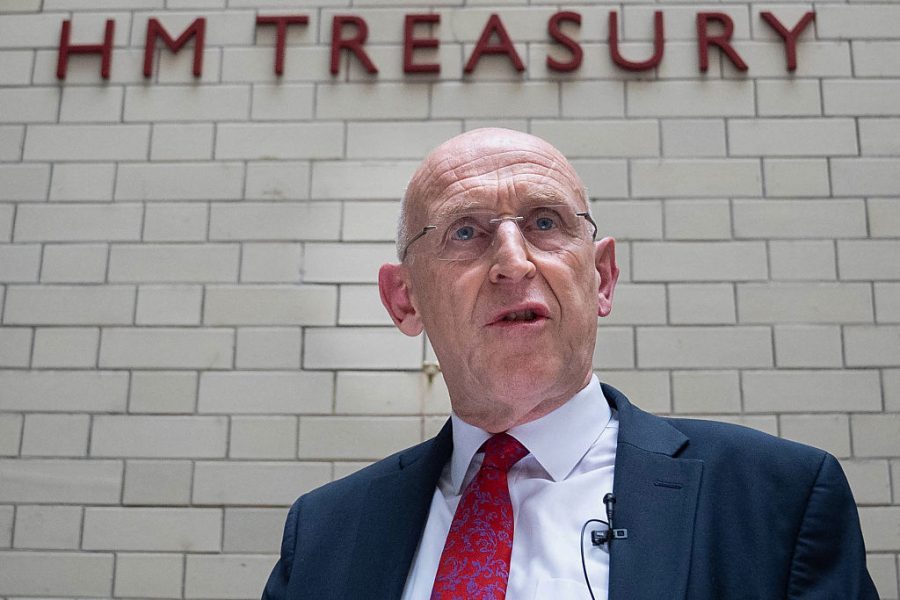
Sir Keir Starmer’s premiership was already in crisis on 11 June this year when John Healey submitted his resignation as Defence Secretary. A quiet, unshowy, widely liked and respected Yorkshireman who had spent most of the past 25 years on Labour’s front bench, Healey had applied himself seriously to the defence brief, shadowing it for four years before being appointed to lead the Ministry of Defence in 2024.
Healey resigned because he took the view that the Defence Investment Plan (DIP), the dreadfully delayed document which would set out the financial implementation of last year’s Strategic Defence Review, was simply inadequate. It did not provide for defence expenditure to rise quickly enough to match the threats facing the United Kingdom.
In particular – and this became the symbol of the three-way dispute among Healey, Starmer and then-Chancellor of the Exchequer Rachel Reeves – Healey believed it was vital to set a target of spending 3 per cent of GDP on defence by 2030. The final draft of the DIP did not include this commitment. Healey believed that its absence undermined the government’s obligation, along with all its Nato allies, to spend 3.5 per cent of GDP on core defence capabilities by 2035, with another 1.5 per cent dedicated to wider security and resilience.
Integrity is perhaps the most valuable currency politicians possess
Healey’s resignation was dignified, but the letter he wrote to Starmer was quietly, savagely damning. It blamed obduracy by HM Treasury, but weakness on the PM’s part:
You have been unable, and the Treasury has been unwilling, to commit the resources that the nation needs to defend the country at this time of rising threats.
Even more damagingly, Healey charged that Strarmer knew he was doing the wrong thing.
I am certain that a headmark date for 3 per cent of GDP on defence in 2030 is what Britain must set… You know what defence needs… Without a DIP that meets the moment in this way, I am being forced to make decisions that would reduce the readiness of our Forces and increase the risk to personnel on operations, and could make the country less safe.
Remember that tone, and remember too that Healey is the first defence secretary ever to resign over a substantive issue of policy. While the blow to Starmer’s leadership was not the single, fatal one, the Prime Minister announced his departure 11 days later. He formally resigned on 20 July and Andy Burnham saw the King to kiss hands and assemble a new administration.
One of the surprises of Burnham’s cabinet was that Healey was appointed Chancellor of the Exchequer. It was a neat response to a number of internal factional challenges, but it also seemed a good fit: Healey is hugely experienced, had been a junior minister at HM Treasury (admittedly between 2002 and 2007) and carried weight in Whitehall.
For defence observers, however, the key point was obvious: now that he was controlling the purse strings rather than asking for money, surely Healey had a golden opportunity to put right the wrong which had driven him from office? As Chancellor, he could now enable the government to set that ‘headmark date’ of 2030 to reach an expenditure level of 3 per cent of GDP?
Healey has failed the test. In his first Budget, on 28 October, he will allocate additional resources to defence, plugging the worst gaps in the DIP, but he will not set a date for reaching a spending level of 3 per cent. In a damage-control interview with the Times on Monday, the Chancellor explained that everything was in hand:
For the first time at the Spending Review, we will set out a clear path about how we will meet that Nato commitment in 2035: 3.5 per cent of GDP… we will fully meet our commitments to our allies. And as part of setting out that clear path, we will set that target date for 3 per cent.
There have been serious accusations of hypocrisy, inconsistency and careerism thrown at Healey. He denies them and implies they are unfair. But he cannot hide from the truth, which is this: three months ago, the failure of the DIP to include an interim target of 3 per cent was so serious and damaging that Healey could not remain in office. Now, he will set a date for a target of 3 per cent (not necessarily 2030) at the Spending Review, likely to be announced in October or November 2027.
These two approaches are not just different but irreconcilable. If delaying even the setting of a date for more than another year is acceptable, Healey’s resignation was completely unnecessary. On the other hand, if he was right to resign rather than endorse a policy which left the UK unsafe and service personnel at risk, it is absolutely unconscionable for him to stay in office now. Yet Healey is trying to pretend that nothing substantive has changed and that everything is fine.
Few politicians realise it, but integrity is perhaps the most valuable currency they possess. Healey could try to explain it through changing circumstances, information he has now but did not have 12 weeks ago, or simply by saying he made a misjudgement. Voters would likely give him the benefit of the doubt.
What voters hate is being taken for fools. Integrity can lose its value faster than a stock market crash, and it rarely, if ever, recovers. Healey the Defence Secretary would still have walked out of cabinet because of the decisions made by Healey the Chancellor. This is the blackest of marks against the reputation of a politician who has enjoyed unusually high respect and affection across the spectrum. Will the real John Healey please stand up?






Comments