
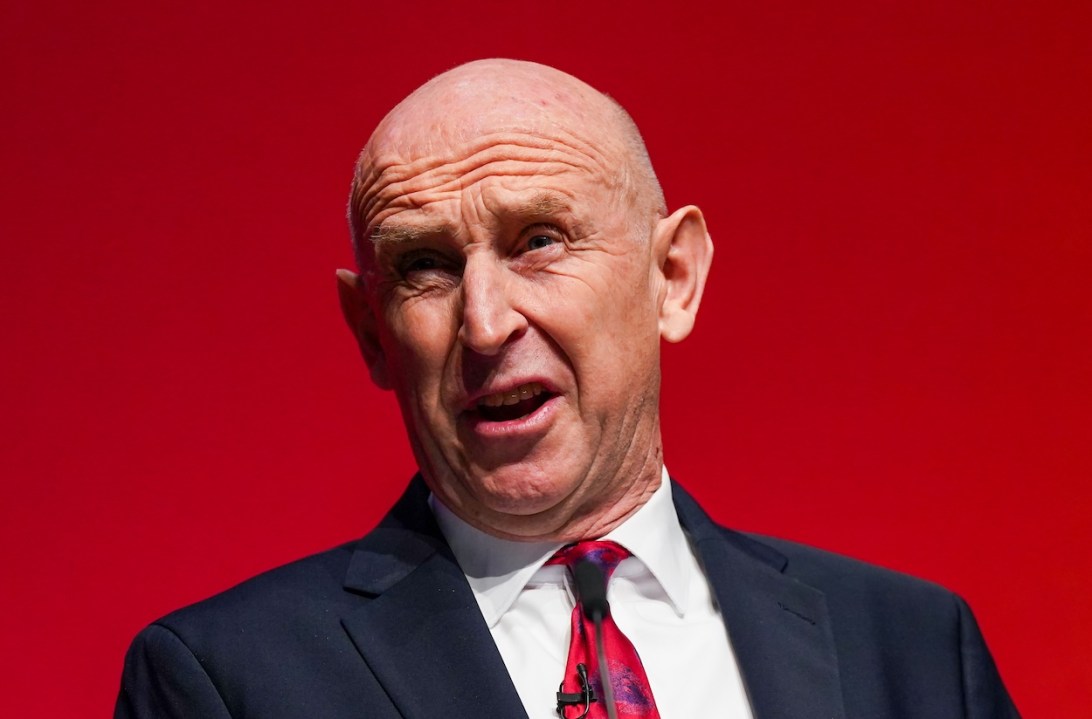
The run of good economic news has come to an end. A double whammy of releases from the Office for National Statistics (ONS) make clear the problems John Healey will have to overcome at his first Budget next week.
Inflation sped up to 3.5 per cent in September which while expected by economists was higher than they’d predicted. The previous figure was 3.1 per cent and the increase was driven by motor fuels as diesel hit its highest price in four years.
Worryingly, core inflation – which strips out volatile food and energy costs – also rose from 2.6 per cent to 2.8 per cent. Services inflation was up too, hitting 3.7 per cent. The only good news came in food and drink prices, with the food and non-alcoholic beverages section of the ONS’s ‘basket of goods’ remaining flat at 1.3 per cent. That’s thanks to the supermarkets not yet passing on increased production costs.
With the trajectory for inflation firmly remaining an upwards one and energy price rises inevitable it now seems near certain that the Bank of England will raise interest rates when they meet next month.
Also released this morning were the latest figures on the public finances. They’re bleak. The national debt has passed £3 trillion for the first time and borrowing continued to surge.
In September alone we had to borrow £25 billion to keep the show on the road – with nearly £11 billion of this going straight on debt interest. The September figure was higher than a year ago thanks to inflation-linked spending shooting up faster than the government's income.
More problematic for Healey is the fact that while borrowing in the financial year so far is lower than the same period last year it is higher than what had been forecasted by the Office for Budget Responsibility. He may have to fill that gap next week.
Responding to the figures, the Chancellor correctly blamed price rises from conflicts in the Middle East and Europe, and pointed out that the government has just approved Jackdaw. He continued: ‘In my Budget next week, I will keep up this momentum. Maintaining our fiscal discipline and drive for growth in every postcode, while giving businesses and families some breathing space.’
But governments trying to give us all breathing space is half the problem. If businesses are left alone and not taxed or regulated to death then they can get on with producing growth. But all too often when our political leaders mention breathing space they mean bailouts and support schemes that need paying for down the line. Trouble is, with annual debt interest payments set to remain above £100 billion for the foreseeable, any new support can only make things worse.






Comments