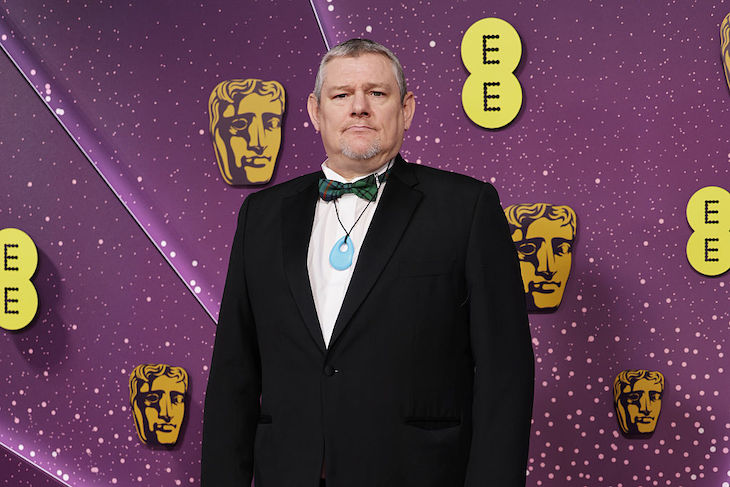
Those like me who live with Tourette’s Syndrome look up to John Davidson. The actor and activist’s biopic, I Swear, has shed some much-needed light on the condition. Unfortunately, the backlash against his appearance at the BAFTAs ceremony last weekend shows that plenty of people remain ignorant about Tourette’s.
Davidson should never have felt the need to apologise in the days after the ceremony
During the awards ceremony, Davidson shouted a tic while the two stars of Sinners, Michael B. Jordan and Delray Lindo, were on stage. The word he used was deeply offensive. But here’s the thing: Davidson didn’t mean what he said, and he couldn’t help it. Yet that didn’t stop people piling in against him.
Celebrities, and one or two MPs, rushed to make assumptions. Jamie Foxx asked, ‘Out of all the words, you could’ve said Tourette’s made you say that?’ Davidson ‘meant that’, he concluded. Wendell Pierce said that it was “infuriating” that the “first reactions” from the incident weren’t “complete and full throatted [sic] apologies” to Jordan and Lindo. Such accusations stem from the assumption that either Davidson is racist or his tics were racist. Neither is true.
What has unfolded since the incident has left people with Tourette’s feeling saddened and let down. It has revealed the lack of tolerance and empathy for those with visible neurological conditions.
According to Tourette’s Action, over 300,000 adults and children are living with the disability in the UK. Up to 85 per cent of people with Tourette’s will also experience co-occurring conditions which may include ADHD, OCD and anxiety. The largest misconception about Tourette’s is that everyone with the condition will swear or say socially inappropriate and derogatory remarks (Coprolalia), however this only makes up 10-30 per cent of people with Tourette’s. Both Davidson and I are in that 10-30 per cent, to differing degrees.
Ever since my diagnosis as a young boy, coping with the disability has been a daily mental battle. Not only do you have to wrestle with the urge to carry out tics on an around-the-clock basis, but you have to cope with the odd looks you get from strangers on the tube, out in the street, or in bars, cafes and restaurants. Work, too, is regularly impacted. In my role as an chief of staff to an MP, struggling with concentration and information processing due to my tics is a regular occurrence. It is because of these daily struggles that mental health in people with Tourette’s erodes to worrying levels. According to Present Suicide, people with the condition are four times more likely to die by suicide than those without.
Like everyone with the condition, my tics get much worse when I’m anxious, restless or (conversely) in comfortable surroundings. Some days are better than others. During a few episodes in my flat, I have shouted similar phrases to those from Davidson last week. However, unlike the reaction from certain public figures, my friends, colleagues and family are fortunately very accepting and supportive.
Working in politics has only strengthened my resolve to spread awareness about both Tourette’s Syndrome and neurological disabilities more generally. The reactions at the BAFTAs to Davidson’s tics has demonstrated the need for much greater awareness and support. It’s rather ironic that Davidson’s biopic was nominated in a total of five categories and won two BAFTAs that night. Perhaps his critics should give the film a watch.
Some good could still come from this unfortunate row. Ministers could use what happened at the BAFTAs to generate better public awareness for neurological conditions through schools and public health campaigns. More tailored support would also be useful. I was lucky enough to receive specialised support through the NHS as a young child and fully funded support at university. It changed my life.
Over the years, government funding for such support has dwindled. This, of course, is rather self-defeating. If we want to get people with disabilities off a life of welfare and into the dignity and fulfilment of rewarding jobs suitable to their needs fully funded support is vital. I, for one, wouldn’t be where I am in my career today if it wasn’t there for me when I needed it most.
Davidson removed himself from the auditorium in the end, choosing to watch the rest of the BAFTAs from a private room. He should never have felt the need to apologise in the days after the ceremony. My message to him and everyone else living with the condition is this: don’t give up. Keep raising awareness, even if this simply means being open and transparent with friends and colleagues. Some day, society will understand. But this year’s BAFTAs has highlighted that we’re not quite there yet.



Comments