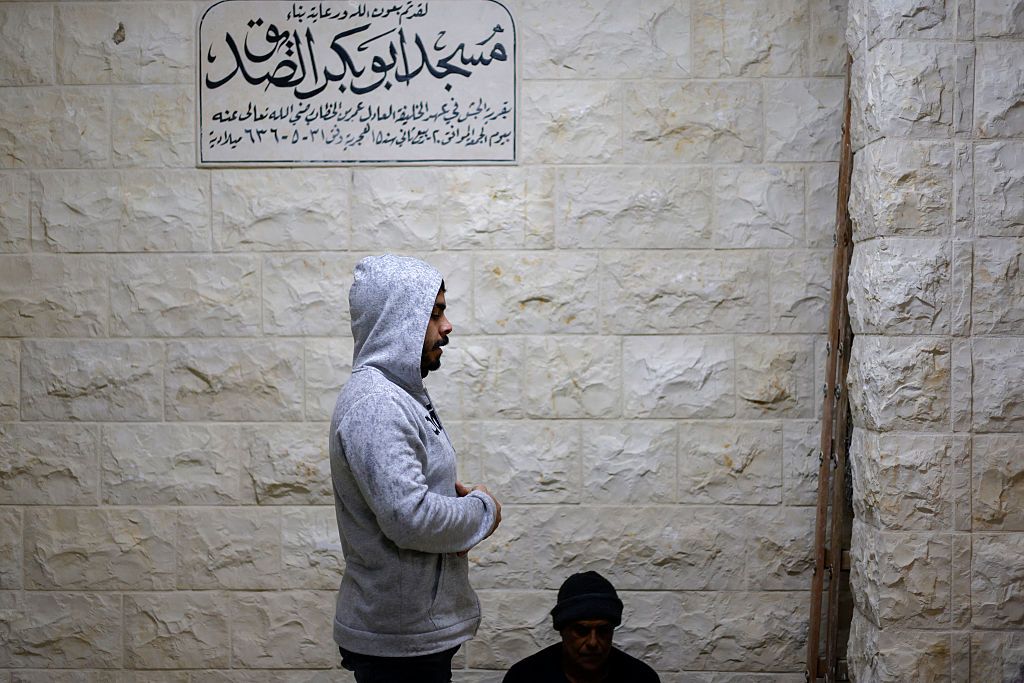
As Israel prepares for its election on October 27, the most consequential in decades, I find myself missing my late friend Khamis Abulafia. Khamis was a scion of the famous Jaffa Abulafia dynasty. The fifth child of his parents, he was named for the Arabic word for five. The Abulafia bakery, overlooking Clock Tower Square, is a local landmark – and a symbol of co-existence, closing each year for eight days on Passover, when Jews are forbidden from eating leavened bread. Khamis was a beloved figure in Jaffa, a bridge between its Arab and Jewish inhabitants. He had his own radio show and frequently appeared on television, commenting on Arab affairs. I always valued his insight and understanding. Sadly, he died during the Covid pandemic.
This time round Arab voters could be kingmakers in the Jewish state’s fissiparous parliamentary system
What would Khamis think of the likely impact of the elections on Israel’s Arab minority? This time round Arab voters could be kingmakers in the Jewish state’s fissiparous parliamentary system. Parties only need 3.25 per cent of the vote to gain seats in the Knesset. With all the ongoing furore about the nature of Zionism and Israel’s existence as a Jewish democracy, it’s often forgotten – or simply not known – that around 21 per cent of its population are Muslim, Christian and Druse Arabs. The picture is mixed. Arab families are much more likely than Jewish families to live in poverty. Yet at the same time a thriving middle class is advancing through the professions, including politics, diplomacy, medicine, law, the civil service and increasingly, the military. Lt Col. Ella Waweya, known as ‘Captain Ella’, the Arabic language spokeswoman for the Israel military, is a popular public figure.
Some polls show Benjamin Netanyahu’s Likud winning again as the largest party to lead a right-wing coalition. Others predict victory for a broader grouping including the centre-left, led by Gadi Eisenkot, a former chief of staff of the Israeli military. Currently there are ten Arab members of the Knesset (MKs). Five represent Ra’am, a pragmatic, conservative Islamic grouping and five sit for the Joint List, a more hard-line coalition of left-wingers and Arab nationalists. Arab MKs occasionally represent mainstream Zionist parties. Polls currently give Ra’am and the Joint List between 13 to 15 seats, enough to swing the result either way. But the outcome will not only be based on electoral mathematics.
Both Eisenkot and Netanyahu have ruled out a coalition with the Arab parties. The overwhelming majority of Arab Israelis were as appalled and shocked by the October 2023 terror attack as their Jewish counterparts. Arab soldiers and police officers died or were greviously injured battling Hamas terrorists. Arab medics treated the wounded. But the initial wave of national social solidarity faded away within a few months. Instead, October 7 has left a legacy of mistrust among many Jewish Israelis. Right-wing MKs have attacked Arab politicians as traitors – accusations which they strongly reject and decry as incitement. The key difference is Arab society’s attitude to Israel’s ongoing conflicts, says Dahlia Scheindlin, columnist at Haaretz newspaper and public opinion expert. ‘They are diametrically opposed to the war in Gaza and with Iran and Hezbollah. They just want these wars to end.’
The security situation of Israel’s Arab minority has significantly worsened since Netanyahu appointed Itamar Ben-Gvir, leader of the far-right Jewish Power party, as national security minister. The Arab community is plagued by organised crime gangs and record levels of homicide, with 252 murders in 2025. The police often show little interest in catching the killers. Adalah, an Israeli Arab rights group, says hundreds of people have been arrested over social media posts. Many were simply expressing sympathy for the victims of the war in Gaza. In September, the Central Elections Committee banned both main Arab parties from standing. The Supreme Court quickly overturned the ruling. ‘We have to use our political power in order to basically block the deterioration of the situation,’ said Yousef Jabareen, leader of the Joint List. Arab society is united over the need to end Ben-Gvir’s control over domestic security. ‘They want Ben-Gvir out. They think this right-wing government is a threat to themselves and to life in Israel,’ says Dahlia Scheindlin.
Yet there are glimmers of hope and useful precedents. In 2021 Ra’am joined a coalition government, breaking a decades-old taboo – on both sides. Arab politicians had long preferred to stand aside from the messy business of Israeli coalitions. This summer Ra’am sent further shockwaves through Israeli politics. In a risky but imaginative move, it gave the number two spot on its party list to Yoav Segalovich, making him almost certain to be elected. The Jewish centrist politician and former deputy security minister is an expert on combating crime in the Arab community. His appointment was welcomed by both Jews and Arabs as a positive step towards developing a new Israeli politics – one built on shared concerns and societal issues and not divided by religion and ethnicity.
My friend Khamis would have likely approved of Ra’am’s move. Khamis was proud of his Israeli and Arab heritage and identity. He was also a political realist. ‘I believe a journey of 1,000 miles starts with a single step. I support the Jewish people’s right to live here, but they have to understand, and to believe that I have the same right,’ he once told me. In the 2015 elections Benjamin Netanyahu warned that ‘the Arabs are voting in droves’. He later apologised. Hopefully that turnout will be even higher on October 27.
Adam LeBor is currently writing The Promised Land: The Modern History of Israel.



Comments