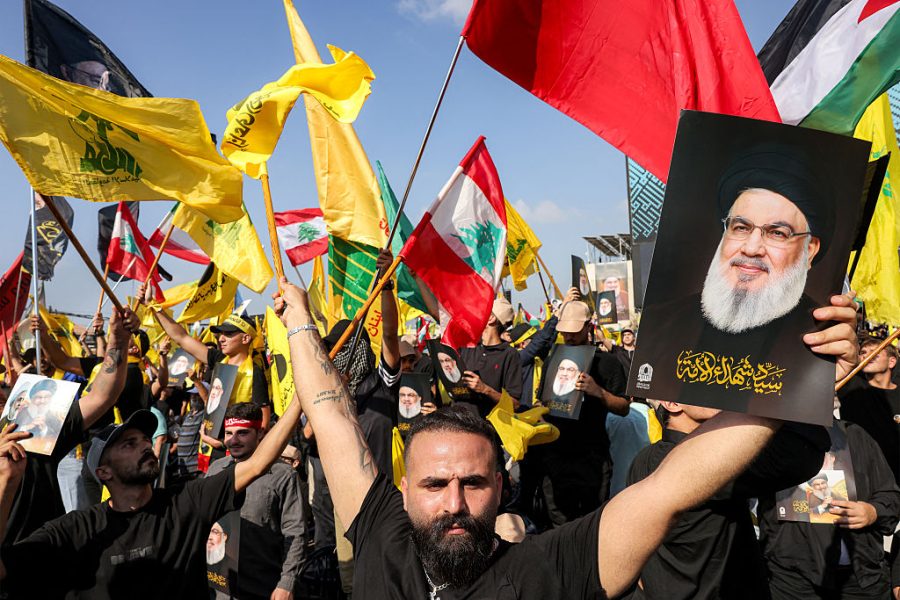
Israeli aircraft struck targets in Lebanon on Monday. Hezbollah and Hamas military infrastructure was targeted in the Hezbollah heartland of the Beka’a, and in Hatta and Aanan villages in the south of the country, according to a Israel Defense Forces (IDF) spokesman. The Israeli strikes came days after the expiry of the 31 December deadline set for the Lebanese Armed Forces (LAF) to complete the disarmament of Hezbollah south of the Litani River. This runs according to the terms of the ceasefire agreement which ended the last war between Israel and the Iran-supported Shia Islamist militia in November 2024.
The LAF has predictably failed to complete its mission. No one in Israel expected otherwise. Hezbollah’s current leader, Sheikh Naim Qassem, warned on 15 August that the group ‘will not surrender its weapons while aggression continues and occupation persists’. Rather, he said, the movement would fight any attempt to enforce what he referred to as an Israeli-American project to ‘hand over the country to an insatiable Israeli aggressor’.
A further round of hostilities between Israel and Hezbollah in Lebanon is a near certainty
This is a fairly blunt warning of civil war. No one expected the Lebanese government of president Joseph Aoun and prime minister Nawaf Salam to take any action that might cause the Hezbollah leader and his patrons in Iran to act on the threat. Predictably, they have not done so.
The ceasefire agreement calls for Hezbollah’s disarmament to take place in four phases defined geographically: south of the Litani, from the Litani to the Awali river further north, Beirut and its environs (encompassing the Hezbollah stronghold of the Dahiyeh, in the southern part of the city) and finally the Beka’a. Implementation of the agreement has stalled in its first phase.
This is not, or not only, because of a lack of will on the part of the Lebanese government, which understandably fears a lurch into civil war. The failure also derives from a lack of means. It is a little stated but widely known fact that the instrument available to the state in any potential clash with Hezbollah, namely the LAF, is not fit for this particular purpose. The reason for this is not military hardware. A common estimate holds that Lebanese Shia constitute roughly 50 per cent of the LAF’s rank and file soldiers and 30 per cent of its officer corps. An army of that composition would fall apart if ordered to fight the Shia Islamists of Hezbollah, many of whom would be kinsmen of the LAF’s Shia soldiers.
Given this, the stipulations of the agreement are, to put it bluntly, a dead letter. The actual available choices in Lebanon are that Hezbollah will be permitted to gradually re-arm, or that Israel will prevent it from doing so.
Hezbollah was very seriously damaged in the war of 2024, and is far from recovered. Its path to rebuilding is far from clear. The loss of Syria represents a strategic, not a tactical, defeat for the Iran-led regional axis. Arguably, this was its only strategic defeat as opposed to a setback in the regional war of the last two years.
The main victim of this defeat other than the former Syrian dictator Bashar al-Assad is Lebanese Hezbollah. The arms route from Iran to its Lebanese client militia ran through Iraq and Syria. The road from the Albukamal border crossing between Iraq and Syria and then across the Badia desert to western Syria and Lebanon was Hezbollah’s vital artery, bringing it the weapons and materiel needed to sustain its war against Israel. This artery is now severed. The Beirut port and the Rafik Hariri international airport cannot fill the gap in its entirety, and neither can Hezbollah’s domestic weapons production capacities, considerable though these are.
This does not mean that Hezbollah’s failure to recover its strength is inevitable. But it does mean that anyone wanting to keep the movement weak is starting out from a fairly advantageous position in which the movement currently finds itself at a very low ebb.
The main strategic lesson that the Israeli defence establishment has learned from the 7 October massacres is that Israel cannot afford to complacently allow Islamist militias which have seized control of land on its borders to arm themselves to the teeth, in the belief that deterrence will work against them. The alternative to this strategy appears to be an activist, militant approach in which Israel will, where possible, acquire physical, territorial assets to serve as a buffer zone between the area controlled by its enemy and Israeli civilian communities. Israel will also maintain an ongoing, open-ended military campaign to disrupt and degrade its enemy’s attempt to build its strength, with the intention of inflicting permanent damage.
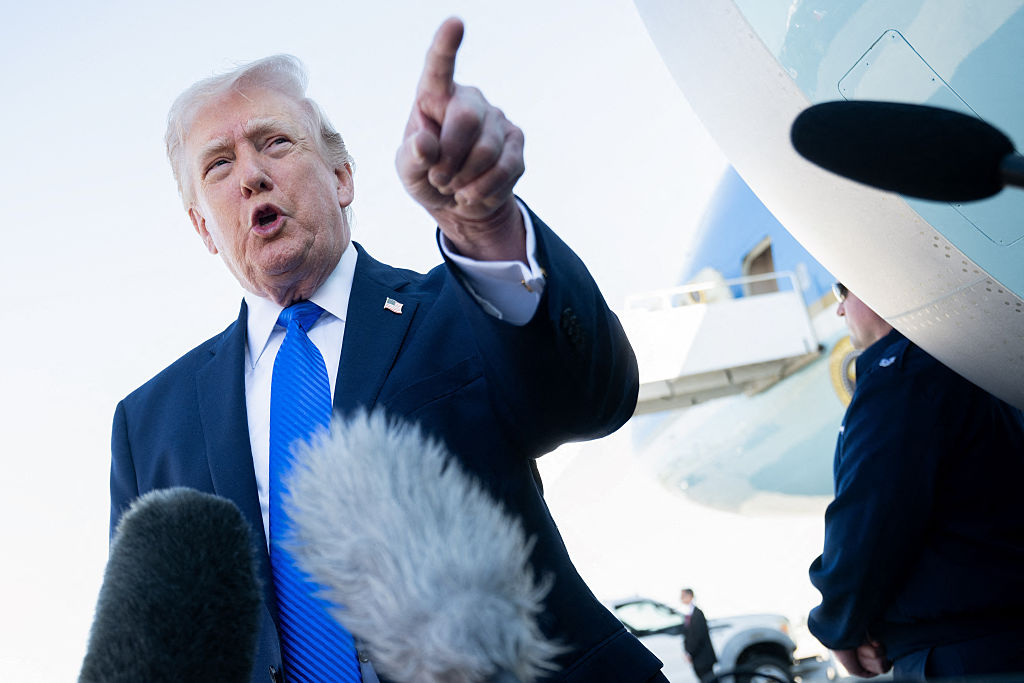
This strategy might be thought in some ways to contradict the apparent preferences of the US administration of Donald Trump, which formally supports the current Syrian and Lebanese governments and wants to implement its 20-point plan in Gaza. But in practice, prime minister Benjamin Netanyahu’s recent visit to Washington appeared to indicate that Israel possesses an area of manoeuvre within which it can pursue its preferred strategy, without incurring the disapproval of the American president.
The question, of course, is the size of this area. At what point might Israeli efforts to keep its Islamist enemies distant and weak come to be seen in the eyes of Washington to be interfering with its own preference for industrial quiet in the Levant?
Keeping this area of manoeuvre as spacious as possible is currently the chief task of Israeli diplomacy and statesmanship. An article on the regional news website al-Monitor by well-connected Israeli journalist Ben Caspit this week suggested that Trump gave Netanyahu ‘guarded approval’ for action against Hezbollah should the LAF fail to disarm the group (as it will). How much approval, and for what, Caspit does not detail.
An additional notable aspect of the post-7 October Israeli ethos is a distrust of the old idea of ‘mowing the lawn’, according to which Israel will take open-ended but calibrated military actions to keep hostile entities at an acceptable level of weakness. This was precisely the approach which demonstrably failed in 2023. Instead, Jerusalem now wants the physical removal, or at least the permanent weakening, of its enemies.
Hezbollah committed 1,920 violations of the ceasefire in 2025, in the framework of its efforts to rebuild its strength, according to a figure issued by the IDF and published widely in Israeli media. Israel responded with 380 attacks on personnel and 950 attacks on targets. This level of Israeli activity is in the longer term unlikely to be sufficient to permanently keep Hezbollah at the level of weakness that it currently occupies, let alone weaken it further. This means that a further round of hostilities between Israel and the battered, but still standing, terror group in Lebanon is a near certainty. The only remaining question concerns its timing.


Comments