
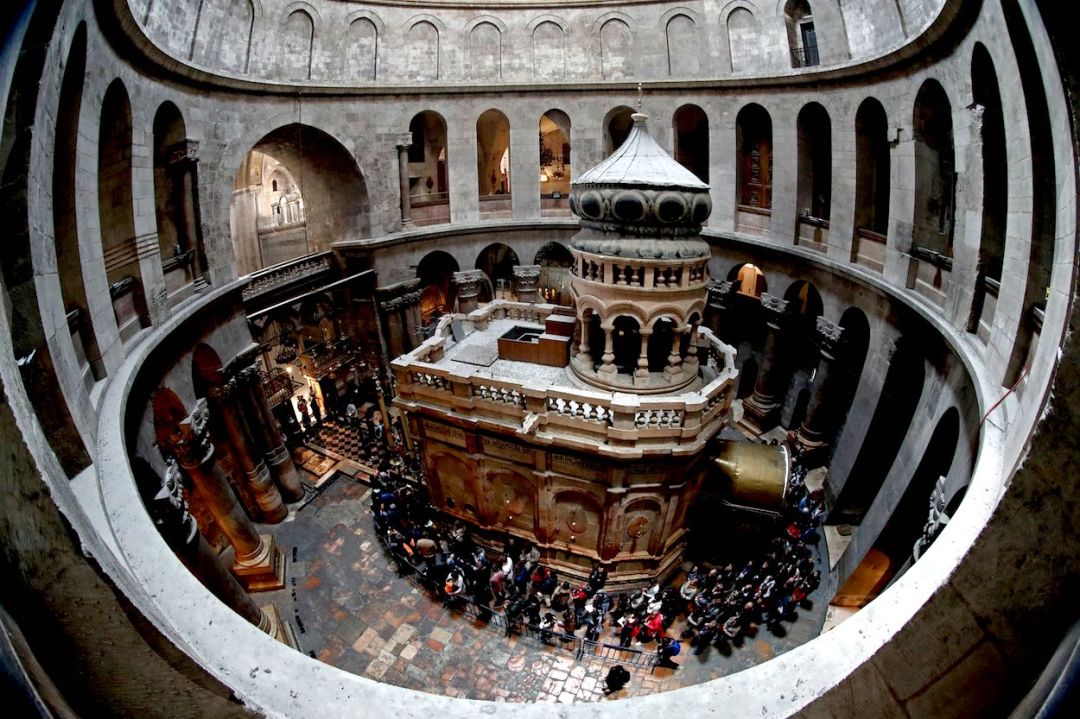
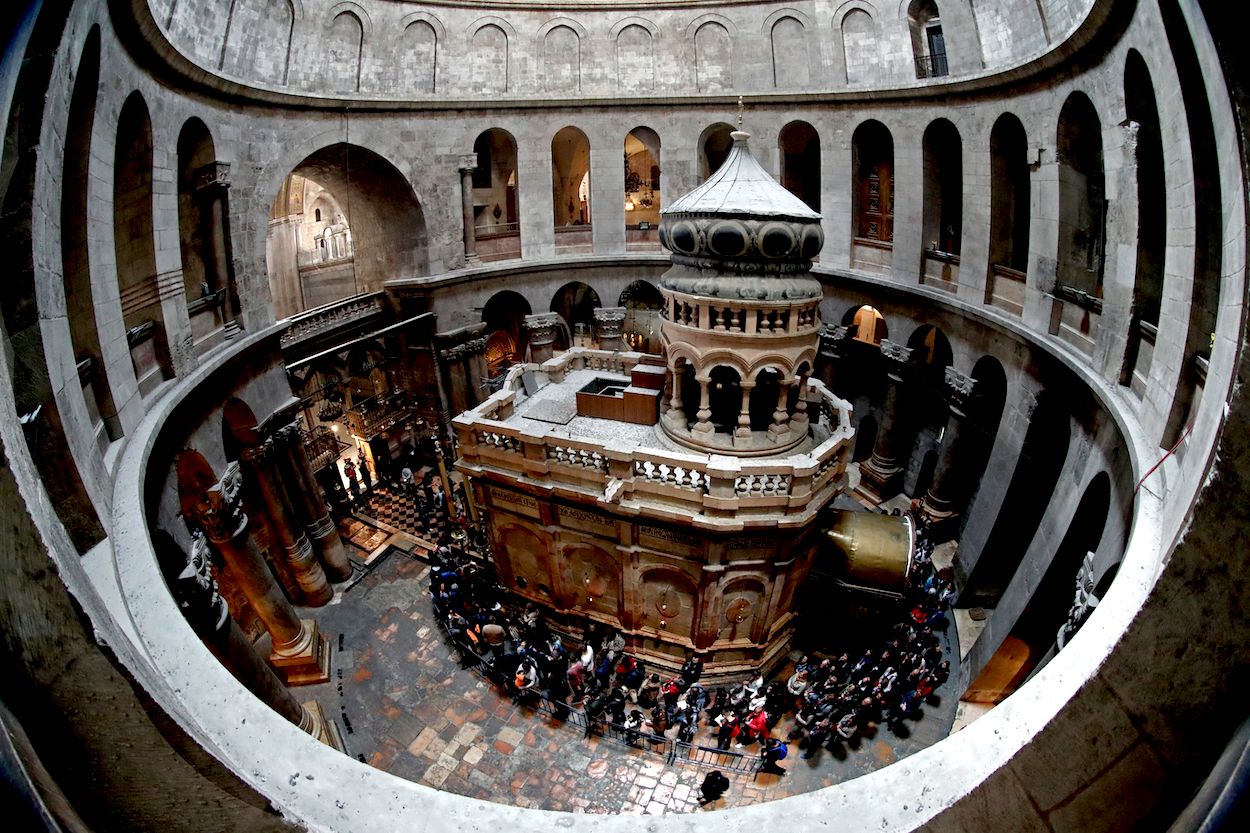
Sometimes it’s a wonder Israel can stand with all the self-inflicted gunshot wounds in its feet. Israeli police placed their country in the eye of a diplomatic and religious storm by accosting their most senior Catholic clergymen as they made their way to pray at the Church of the Holy Sepulchre. Religious gatherings have been restricted during the ongoing war with Iran, which has repeatedly targeted built-up civilian areas including Jerusalem. Cardinal Pierbattista Pizzaballa, the Latin Patriarch of Jerusalem, and Father Francesco Ielpo, Custos of the Holy Land, were prevented from accessing the Holy Sepulchre on Palm Sunday, the day when Christians mark Jesus Christ’s entry into Jerusalem. The story quickly gained momentum and drew criticism of Israel from top clerics and world leaders.
Israel needs a new approach to relations with Christians, one that goes beyond forging alliances with born-again evangelicals in the United States
The Israeli side of the story is that this was a case of overzealous policing by officers who interpreted the wartime restrictions too stringently. Religious sites such as the Holy Sepulchre cannot be brimming with worshipers given the grave risk to life should Iran land a direct hit, but a few prelates entering the building to recite prayers should not have met with the response it did. While Israel-averse Catholics on the left and right have read more sinister significance into the incident, the swiftness of the remedial action taken and the seniority of the government personnel involved points to a genuine case of plod cock-up rather than a planned and deliberate slight.

The Times of Israel reports that, following late-night interventions from Prime Minister Benjamin Netanyahu and President Isaac Herzog, arrangements have been made for the Catholic Church to celebrate Mass and arrange prayers throughout Holy Week, with services livestreamed for Israeli and Palestinian Catholics to follow at home. The emphatic nature of Netanyahu’s order – he instructed the police to grant the Cardinal “full and immediate access” to the Holy Sepulchre – is an indication that the government realizes the seriousness of this as a diplomatic incident.
In the past 24 hours, I’ve seen Israelis on social media allege that that His Eminence is a pro-Palestinian partisan, pointing for example to his wearing of the keffiyeh on occasions. As a lowly member of the faithful, it is not for me to question how a prince of the Church goes about his ministry. Wearing a keffiyeh during public appearances might well bond the cardinal with his Palestinian flock, though it must be stressed that this is no mere garment. The keffiyeh is a highly politicized symbol of Palestinian resistance to Israel. It is analogous to a priest who ministers to gays and lesbians wearing a Pride flag over his clerical clothing. Even if intended as a gesture of empathy or solidarity, it would nonetheless signify sympathy for, or at least a willingness to be associated with, a contentious ideology.
Yet none of this alters the profound misjudgment of the Israeli police officers in barring the Cardinal from the church, and on the first day of Holy Week no less. Israel is the Jewish state, but it is also a state of all its citizens – including Catholics. While the Church has bristled at the restrictions on wartime gatherings, it complied with limits during the Covid-19 pandemic. The Mass is the most perfect communion with the Almighty this side of death. Every day that the faithful are denied the opportunity to celebrate the sacred mysteries is a separation from Christ felt as keenly as sin itself. Forbidding physical attendance at Mass can only be justified when doing otherwise would put human life in likely and severe danger. When the state is at war and its capital a key target for the enemy, this condition is surely met.
Nevertheless, this incident should serve as a wake-up call for Israel to improve its relations with the Catholic Church and other Christian denominations. There is already enough of a wedge between the Jewish state and the ecclesiastical leaders of its Christian citizens, whether Christian anti-Semitism (of which the Catholic Church has more than its fair share), attacks on Christians by Jewish extremists (which are on the rise), or the generally pro-Palestinian stance on the Middle East conflict taken by the non-evangelical churches. There is no need to push people further apart and cause unnecessary pain, upset or insult. Something as simple as better education on Christian beliefs, customs and obligations would greatly improve the services rendered by state employees such as police officers.
In truth, though, Israel needs a new strategic approach to relations with Christians, one that goes beyond forging alliances with born-again evangelicals in the United States and impersonally managing potential communal flashpoints inside the country itself. Of course Jerusalem has objections to the pronouncements of some Christian churches which seem to focus on denouncing Israel and only occasionally tossing in a passing reference to Hamas to give the appearance of even-handedness. Wise leadership and nuanced diplomacy exist to navigate such concerns. In its relations with the Church, as in so much else, that is what is lacking in Israel: leadership.




Comments