
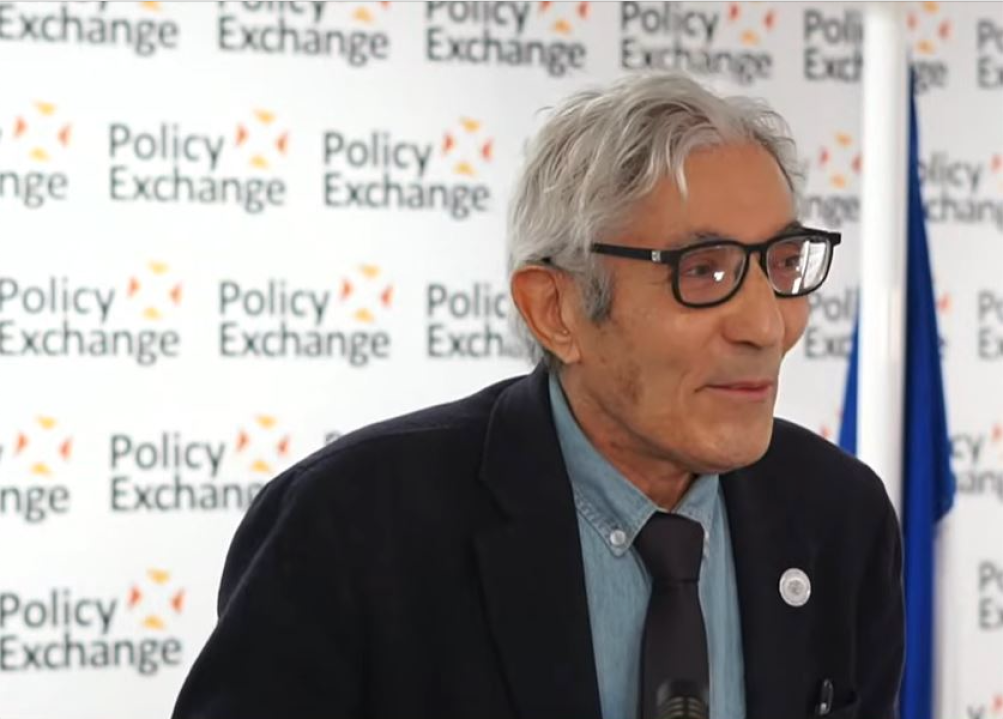
I asked the novelist and dissident Boualem Sansal, recently released from Algerian prison, how he would like to be remembered. He did not hesitate. Not as the French Salman Rushdie – to whom he is often compared – but as the Algerian George Orwell. Orwell was not just a novelist but a prophet, who saw how a peaceful society could morph into a system of oppression. ‘Every day in Algeria,’ Sansal told me, ‘is like Nineteen Eighty-Four.’
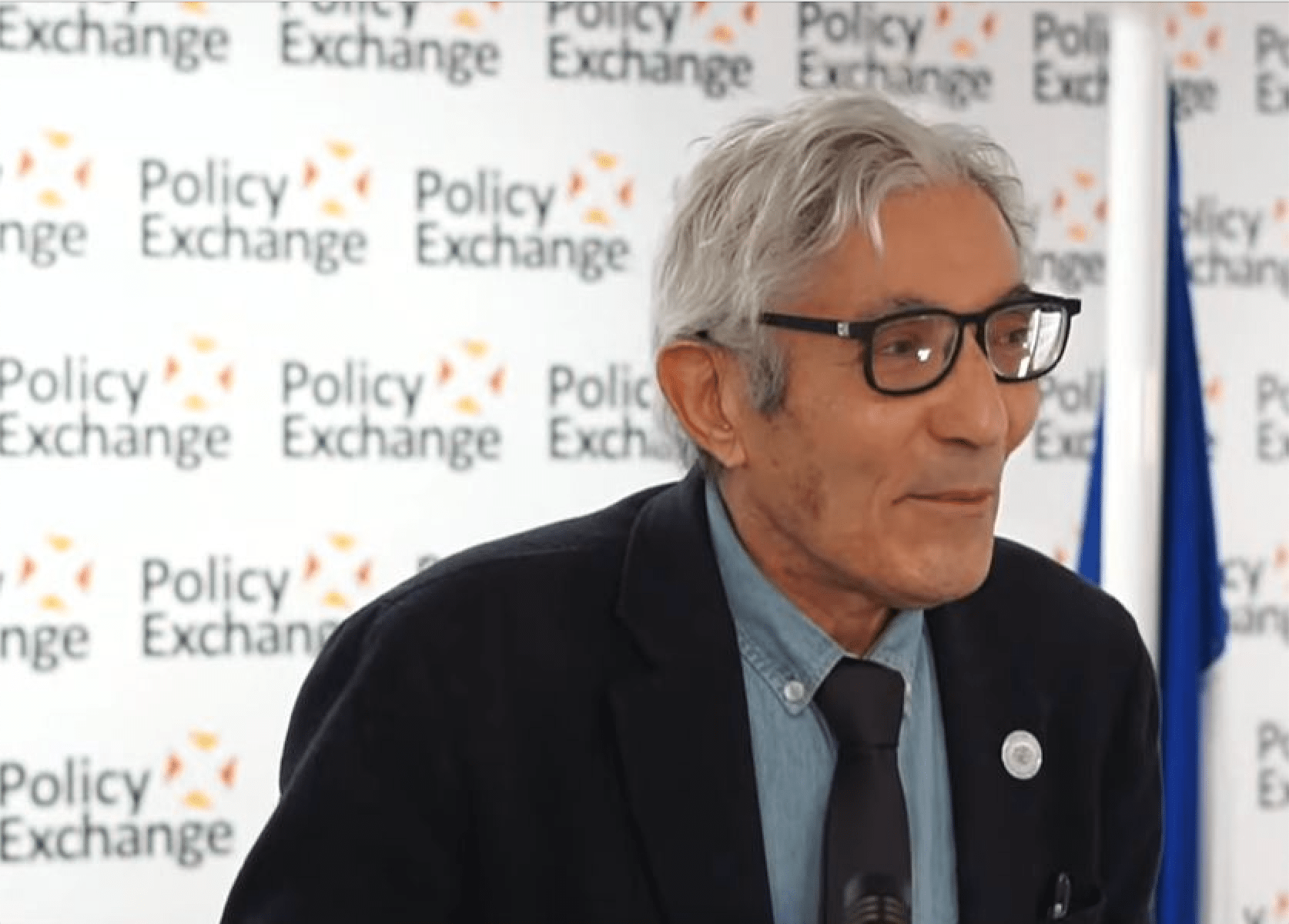
Sansal was speaking to me after he had just given a speech in London, at the Policy Exchange think tank – his first public interventions in Britain since leaving prison in Algeria, where he had been jailed after a sham trial, where there were no witnesses or legal defence. Sansal was originally taken into custody in November 2024 for ‘undermining national unity’, and was further charged for insulting the authorities. Inside prison he saw prisoners whipped. This is why Sansal’s insights matter. When he talks about totalitarianism, he is not drawing analogies as a comfortable European intellectual, but because he has seen inside it.
‘In Islamist controlled countries, his candour is not tolerated. Nor, he has increasingly come to believe, is it fully welcome in Europe.’
After achieving independence from France, Algeria never truly settled the question of who should rule the country. The army emerged as the real power, presenting itself as the guardian of the state, while political Islam grew as the language of moral authority among the population. When Islamists were on course to win elections in the early 1990s, the military cancelled the vote, triggering a brutal civil war. It was during that war – remembered in Algeria as the ‘Black Decade’ – that Boualem Sansal, a recently retired senior civil servant, began to write fiction. His first novels were bleak dissections of a country hollowed out by violence, corruption and religious fear, followed by books that went further still, imagining an Islamist dystopia in 2084, a homage to Orwell.

His works, written in French, are popular across the Francophone world and continental Europe – he has won several French literary awards including the Grand Prix du Roman, and was given the Legion d’honneur last year after being released from prison. At the beginning of this year he was elected to the Academie Francaise, the highest honour that a French language author can receive. His success has afforded him a degree of protection. When he was in prison both the French President Emmanuel Macron and the German President Frank-Walter Steinmeier (who is an avid reader of his work) were urging the Algerian government to release him.
One of his greatest offences, in the eyes of Islamists, was his refusal to boycott Israel. He even attended the Jerusalem writers festival, which led to Hamas accusing him of ‘treason’. In Islamist controlled countries, his candour is not tolerated. Nor, he has increasingly come to believe, is it fully welcome in Europe.
We begin by talking about Europe. Although he says that he is not a complete pessimist about the continent, he seems almost despondent about its response to Islamism. Twenty years ago, he said, France along with other European countries still had governments and an intellectual class willing to mobilise against Islamism. ‘Islamism is strangling society like a snake,’ he says. He believes that our willingness to confront the issue has drained away as people have become exhausted by the battle.
Sansal has not resigned himself to despair. He recognises that politicians like Donald Trump and Le Pen are anathema to Islamists. Of Le Pen, he says that her victory would terrify Islamists. He is also moderately positive about Donald Trump, who he sees as willing to act on the threat Islamists pose.
Sansal does stop short of directly endorsing Trump or Le Pen, but this is perhaps explained by his view of the role of intellectuals in public life. He believes that intellectuals cannot transition into politics as they do not have the political qualities needed to build coalitions effectively, citing the example of Eric Zemmour – who he says had much of the French public on his side before making a doomed pitch at the presidency.
So whilst Sansal wishes to act, he believes that he remains an author – albeit one with a strong political steer. He regrets, in a sense, that he did not get to spend more of his time writing non-political novels, but also believes that to have ignored Algeria descending into Islamist rule would have been a form of complicity, and that he was bound by his conscience to do what he could to resist totalitarianism in both Europe and his home country.
His time in an Algerian prison has now become part of that work. While incarcerated, he became what he calls a ‘legend’ amongst the prisoners and guards, feeding false rumours about his access to senior figures in the Algerian government in the hope that it would disrupt the penitentiary system.
His hope was that his cellmates would tell their friends and family outside of prison about his abilities, to foment ‘the legend’ even further. It worked, and now Sansal is a famous celebrity in Algeria. My translator – Sansal has that admirable Gallic trait of steadfastly refusing to speak English – tells me that Sansal is now hailed by Algerian taxi drivers in Paris who agree with his view that the regime is ‘abominable’. These experiences form the basis of a new book due out later this year, titled Legend.
In one of his final broadcast interviews, Orwell warned that the fight against totalitarianism was not a matter for governments alone but for ordinary citizens – that everybody must resist it, in language as much as in law. More than half a century on, in societies where people are investigated, arrested or professionally ruined for what they say and think – perhaps we should have listened to his warning.
Sansal does not claim to be Orwell’s heir, he claims only to have seen what happens when totalitarianism is allowed to fester. Algeria ignored its warning signs until it was too late to avert catastrophe. Europe still believes it has time to change course. The question is not whether Boualem Sansal is too pessimistic about Europe, but whether we will one day regret not listening to him while we still had the chance.



Comments