
Speaking on the sidelines of the Brics summit in Delhi last week, Vladimir Putin once again insisted that Russia had no plans to attack Europe. ‘There is no such threat and never has been. We do not threaten, nor do we intend to threaten, European countries. Why should we?’ the Russian president said.
And yet, in the weeks after Germany publicly blamed Russia for a series of drone attacks on Leipzig airports earlier in the summer and a Russian drone struck a Ukrainian train carrying former prime minister Boris Johnson just over a mile from the border with Poland, the evidence suggests that the Russian threat to Europe – and the Nato alliance – is growing. Indeed, the CIA chief John Ratcliffe flew to Moscow late last month, reportedly to warn Kremlin officials against carrying out any escalatory attacks against Ukraine’s Baltic allies.
The problem for the Norwegian authorities on Svalbard is that they are increasingly at risk of losing control over who arrives and leaves the archipelago
In the aftermath of Ratcliffe’s visit, talk yet again turned to the threat posed to Poland and the Baltic states bordering Russia. The chatter has focused on the Suwalki Gap between the Russian exclave of Kaliningrad and Belarus, and on potential false flag and grey zone attacks designed to weaken the resolve of the allies supporting Ukraine in fending off Putin’s invasion.
But what if the threat posed by Russia were to come from further north, up in the Arctic circle? What if the Norwegian-controlled archipelago of Svalbard is where Putin is seeking to exploit a weakness in Nato’s armoured carapace and test out the strength of the alliance’s pledge of mutual defence?
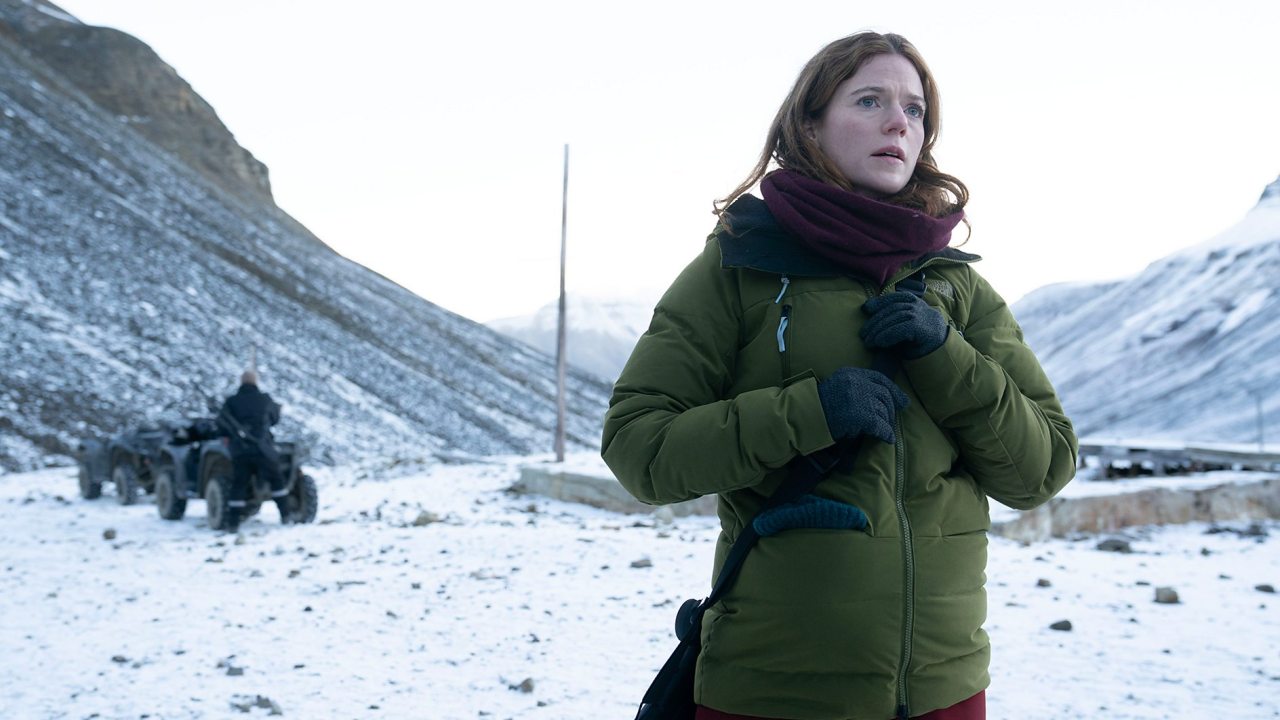
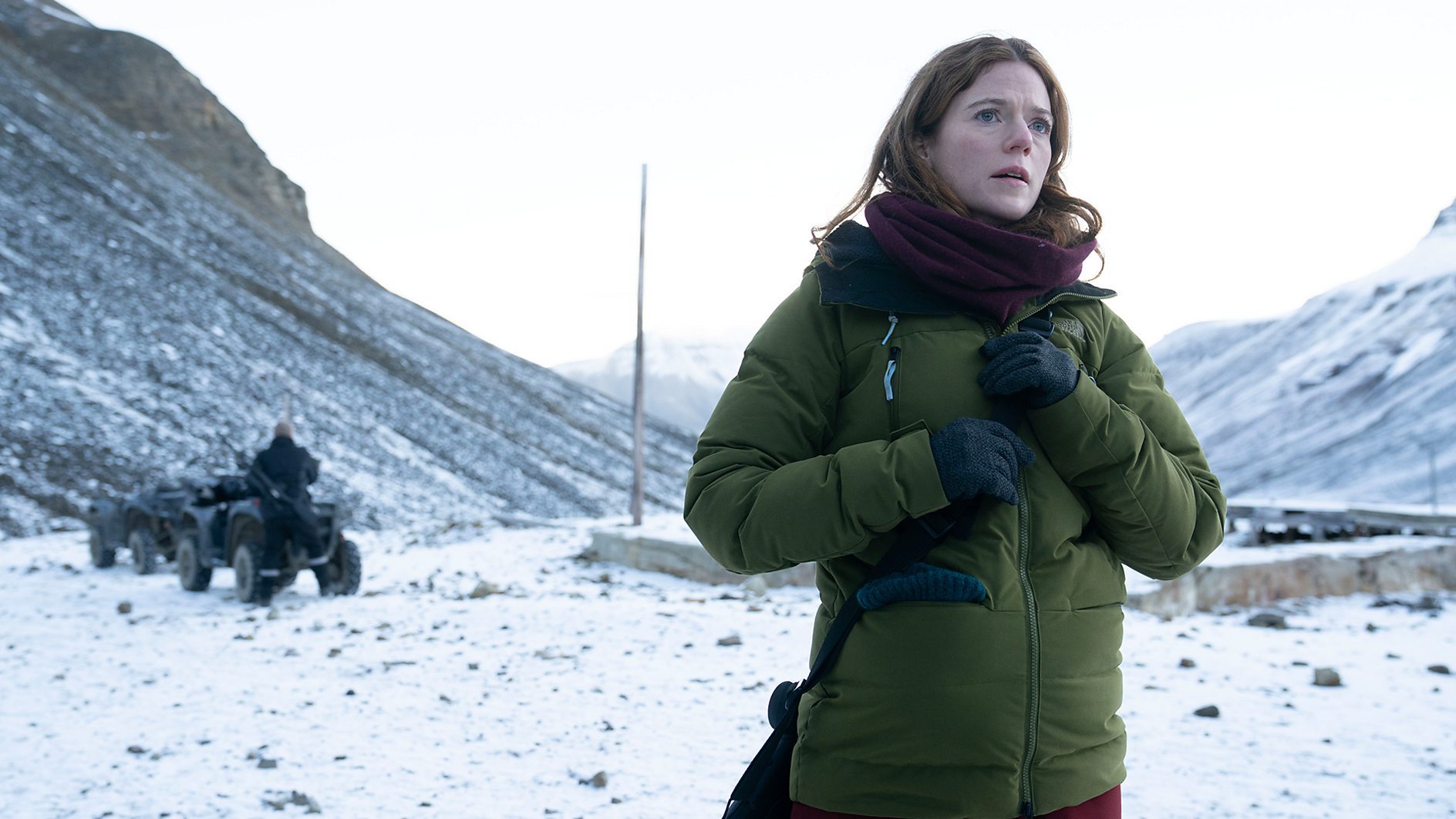
It is this question which hovers over most of the third series of the BBC show Vigil, the finale of which aired last night. (If you don’t want spoilers, look away now). One of the show’s main characters, Detective Inspector Kirsten Longacre of Police Scotland, is sent to Svalbard to assist in the murder investigation of a British special forces operative working under civilian cover on the archipelago. The victim had been found dumped in the fictional settlement of Baltegrad hours after a shoot-out with Russian soldiers – all also posing as civilians and contravening Svalbard’s restrictions on military activity.
These circumstances in part lead Longacre and her colleagues to suspect that parties unknown are trying to provoke an escalation in hostilities between Russia and Nato, of which Svalbard (by virtue of belonging to Norway) is a part. The subsequent murder of a Russian woman, Polina, in the Svalbard science hub – for which the Russians blame DI Longacre – crank tensions up between the two sides even further.
Vigil’s scriptwriters helpfully use the character of Svalbard’s police chief to provide exposition on the delicate diplomatic situation these murders put the archipelago in: ‘Before the invasion of Ukraine, Putin claimed Russians were being killed in the Donbass,’ he says. ‘Twelve years before that, they said the same thing about Georgia and sent troops in. He won’t have to lie this time.’
Later in the series, the plot of Vigil somewhat messily moves away from Svalbard – but the early episodes illustrate rather successfully the tightrope of diplomacy the archipelago’s authorities must walk.
Svalbard is governed by a treaty established in 1920 that, while recognising Norwegian sovereignty of the territory, grants all signatories the right to commercial activity on the archipelago. Citizens of any country signed up to the Svalbard Treaty may become residents; there are three main settlements: the Norwegian-run Longyearbyen and two Russian – Barentsburg (on which Baltegrad in Vigil is based) and Pyramiden.
Crucially, the treaty forbids the use of Svalbard for any ‘war-like’ purposes, including stationing troops or carrying out military exercises. A situation such as in Vigil, where special forces – British, Russian or otherwise – were discovered to be operating on the archipelago, would be a clear breach of the treaty. A breach by its adversaries could, theoretically, give Russia the perfect excuse to aggressively attempt to establish a more dominant hold over Svalbard – and even potentially invade.
The problem for the Norwegian authorities on Svalbard is that they are increasingly at risk of losing control over who arrives and leaves the archipelago. Last year, a boat route connecting Barentsburg with the Russian city of Murmansk was re-established, allowing travellers from Russia to circumvent the Schengen zone and Norwegian border control to reach Svalbard.
While the Norwegian authorities theoretically have the ability to inspect the ships, nominally bringing tourists and supplies to the archipelago, in practice this is harder to enforce. Can the authorities be confident that no Russian soldiers or so-called ‘little green men’ are travelling on the boat route? Or that military equipment isn’t being transported, to be stored on Svalbard for use at a later date?
Russia has, for some time now, been agitating on and around Svalbard, accusing Norway of pushing the boundaries of the treaty while doing precisely that itself. Just last week, fresh details emerged of an incident in April in which British, Norwegian and American troops caught Russian submarines off Svalbard’s coastline practising using a weapon capable of disabling critical undersea cables without a trace.
A Russian invasion of Svalbard is a scenario Nato has actively considered: in 2024, the alliance’s defence college identified this as one of its ‘Dragon King’ scenarios – a unique yet predictable event of huge consequence. It envisaged a situation where Russian forces took Svalbard in the night, cutting its internet and cellular services.
For Putin, a provocation on Svalbard would be the perfect opportunity to test the resolve of Nato’s members and their commitment to the alliance’s mutual defence clause, Article 5. If Russian troops swooped in to snatch the territory from Norway, how much of a fight would Nato put up for it? Would it support Norway in any attempt to reclaim the archipelago – home to less than 3,000 people and yet of vital geostrategic importance to northern Europe?
Svalbard’s importance to Nato lies in the fact it is one side of the so-called ‘Bear Gap’ – the bottleneck in the Arctic ocean that Russian ships and submarines must pass through to access the North Atlantic.
Surrendering Svalbard to Moscow’s control would grant Russia unhindered passage into, amongst other places, the North Sea and the English Channel, along whose seabed Russia has already been eyeing up the key energy and communications cables connecting Britain to mainland Europe. That is without even touching on the rich opportunities for scientific study that Svalbard presents, or preserving access to Svalsat – the world’s largest satellite ground station – which provides key data for Nasa and European weather agencies.
It is, of course, naive to believe Putin when he says Russia poses no threat to Europe or Nato. As the drone and sabotage attacks across Europe in recent years have demonstrated, that threat has already arrived. But Vigil has turned out to be an unexpectedly pertinent reminder of how grey zone tensions also carry the risk of spiralling into a hotter conflict. As the show hints at, perhaps it is not Poland, Lithuania or Latvia that are Nato’s greatest weaknesses; Russia most definitely has its eyes on Svalbard.






Comments