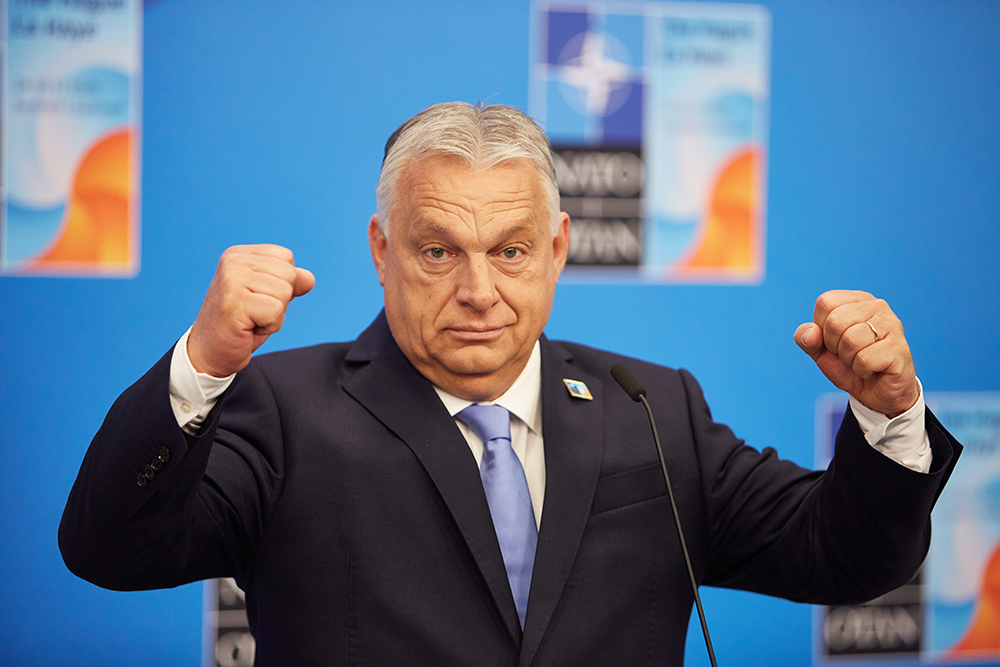


For a country of ten million people that spent most of the 20th century occupied and impoverished, Hungary today is thriving. This, in the eyes of his supporters, is down to the 16-year rule of Viktor Orban. Hungary’s Prime Minister has, to use his phrasing, aimed to create an ‘illiberal democracy’. He has reformed the country’s judiciary, given tax breaks to mothers to increase the birth rate and zealously resisted the EU’s refugee policies. The last is illustrated by the 140-mile fence along the Serbian border constructed during the 2015 migration crisis. Proud border guards tell you that 1.1 million migrants have been kept out in a decade.
Nevertheless, Orban faces his toughest election yet when Hungarians go to the polls this Sunday. His main rival is Peter Magyar – apt, as Magyar is Hungarian for Hungarian. Once a member of Orban’s Fidesz party, Magyar is the Tony Blair to Orban’s John Major. Just as New Labour offered Tory economics with a fresh face, Magyar offers continuity Orban on immigration alongside pledges to end corruption, repair EU relations and splash the cash.
If Orban loses, the fallout will be messy, with resistance from his allies in the judiciary and civil service
Once branded ‘baby Orban’ by Brussels officials, Magyar was married to a former justice minister but he entered politics (post-divorce) in 2024, after a scandal over a pardon for the director of a children’s home linked to abuse. Magyar took over Tisza, a small pro-EU party, and won 30 per cent of the vote in the 2024 EU elections. Today, he has the backing of other opposition parties hoping to end Fidesz’s rule.
Under communism, Orban was a liberal student leader – studying in Oxford on a scholarship funded by George Soros – but he has long leaned into national conservatism, butting heads with Brussels on everything from migration to Ukraine. He has argued that the unwieldiness of western war aims make total victory for Ukraine impossible. He has blocked EU loans and sanctions packages amid suggestions that his ministers are in cahoots with the Kremlin. His critics suggest hugging Vladimir Putin close betrays the student who called for a Soviet withdrawal; Orban would point to Hungary’s reliance on Russian oil and gas and say he demonstrates to the West a much-needed realism. Donald Trump, needless to say, is a big fan.
This election campaign has been unedifying. Magyar has claimed Fidesz plans to release a secretly recorded sex tape of him. Reports suggest that Russia considered staging an assassination attempt to boost Orban’s ratings, while Orban has implied that Ukraine is plotting to blow up the Balkan Stream pipeline, which channels Russian gas into Hungary. He brands Magyar the ‘pro-war’ candidate, circulating AI posters and videos of him plotting with Volodymyr Zelensky and Ursula von der Leyen. An investigative film claims Fidesz offered money and drugs in return for votes in rural Roma-dominated villages, but for Fidesz, such accusations are water off a duck’s back.
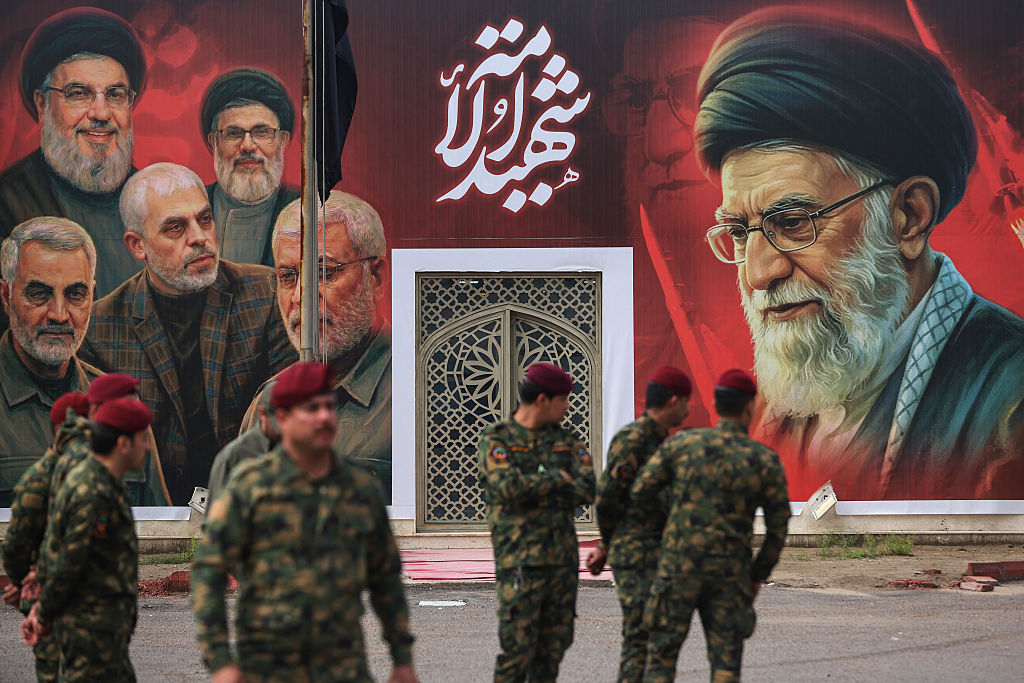
Orban has been accused of ‘democratic backsliding’ – of building a fiefdom in the style of his Moscow chum. Brussels has frozen €18 billion in funding over allegations that Orban has used public money to enrich himself. Estimates suggest that Fidesz controls, directly or indirectly, around 80 per cent of the media.
If Orban loses, the fallout will be messy, with significant resistance to a non-Fidesz government from Orban’s allies in the media, judiciary, civil service and thinktank archipelago, all of which he has shaped in his image. Due to the electoral system, Magyar would require a lead of around ten points to ensure a majority. Nonetheless, the prospect of Orban’s exit already has Europe’s liberals in paroxysms of delight.
Fidesz is flawed. For all the money Orban has chucked at natalism, Hungary’s fertility has risen broadly in line with regional trends. Inflation has been twice that of the UK’s; the economy has barely grown this decade. Nevertheless, the British right can learn from Orban. Politics is about retaining and wielding power. Fidesz understands this in a way our politicians do not. Unlike the Tories, Fidesz has tried in its 16 years in power to both make the country more conservative and win influence on the world stage.
Hungarian ministers are more intelligent and charming than their British equivalents: learned, clear-eyed about trade-offs and interested and capable in debate. They situate their policies in the great sweep of Hungarian history in a way few members of our cabinet could. They take their cue from their leader. Attending an Orban press conference as a guest of Fidesz, I watched as he expounded on his overview of world politics, before taking questions, both friendly and hostile, for hours. Keir Starmer would not do the same.
However, having listened to Orban list the EU’s iniquities, I had to ask: if Brussels is so bad, why not follow Britain out? He paused and looked me square in the eyes. ‘Britain,’ he said, ‘was very brave’ for leaving the EU, but Hungary could not. Britain is a G7 economy, a nuclear power, a former empire. Hungary is small, wedged between different blocs, reliant on EU trade. It could not go it alone. I thought back seven decades, to those bleakly resigned to Soviet rule after the failure of the 1956 revolution.
Having had a much happier 20th century, this impotence feels strange to the UK. But as we limp from crisis to crisis, hobbled by high energy prices and a spiralling welfare bill, unable to stop small boats in the Channel or shoplifters on our streets, which of our countries feels braver? For all the criticisms he faces, Orban has devoted his life to Hungary, determined to make it matter. Today, when asked about Britain, Hungarians look at our rape gangs and our scuzziness and they pity us. They have a confidence we lack.
Branding Orban unconscionable stops us from confronting this. Ironically, he would leave power just as Europe is turning to Orbanism. National Rally and the AfD top the polls in France and Germany; resisting illegal migration and sinking birth rates are now EU priorities. One has to separate the grand rhetoric from the reality, and Orban’s illiberalism makes my high-minded side queasy. Nevertheless, I admire his chutzpah.



Comments