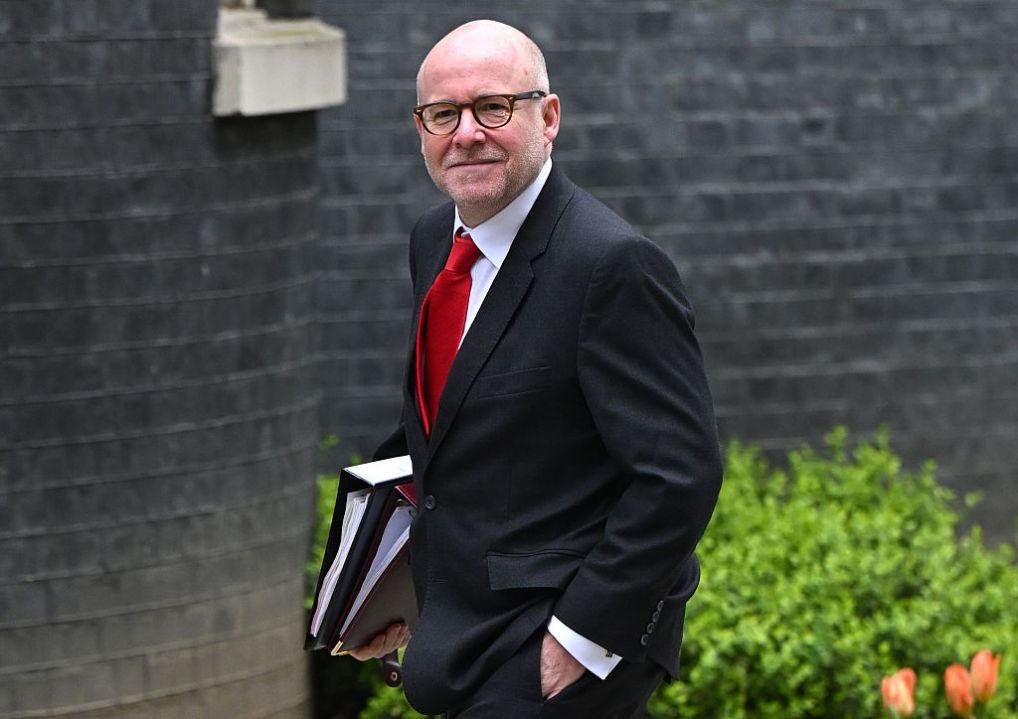
Just when things couldn’t get much worse for Keir Starmer’s premiership, they have. Last week the Telegraph exposed Lord Hermer’s continued support for the Al-Sweady claims between 2008 and 2013 against our forces in Afghanistan, despite clear indications that they were a try-on aimed more at devilment than justice (as established in the 2014 inquiry under retired judge Sir Thayne Forbes). Now more correspondence has emerged. This time it reveals embarrassing details about the real Lord Hermer.
This week’s disclosures demonstrate something vastly more damning about Lord Hermer
After the inquiry had heard damning evidence about the Iraqi claims, Hermer made abundantly clear his personal view. In an email to a solicitor at Leigh Day, who had inadvertently filed away a vital document indicating that the alleged victims were no innocents, but soldiers bankrolled by Iran, he glossed over the omission, instead congratulating her for promoting the ‘important big picture’ of torture practised in Iraq by UK forces. He added that in contrast to the soldiers wrongly accused, who could be dismissed as never having ‘made a real difference to people’s lives,’ the human rights lawyers acting against them had been the real heroes.
This latest disclosure matters. One reason is that last week’s revelations were not quite the slam-dunk blow to Starmer and Hermer that you might think. Even though Kemi Badenoch has reported Hermer to the Bar Standards Board for unprofessional conduct, he has a plausible get-out. Very often lawyers find themselves acting for clients whose case is weak and whose veracity is, to say the least, in doubt. Think of the defence barrister acting for the old lag with a million previous convictions, accused on excellent prosecution evidence of yet another burglary that he says he didn’t do. Even if intellectually all the indications are that the client is lying through his teeth, we can hardly criticise counsel for defending him. So too with the Al-Sweady claimants. There is a very respectable argument that even if there were strong grounds for suspecting their case was trumped-up, we should not deprive them of their right to advance it, nor make it improper for lawyers like Hermer and Starmer to help them. That’s not the way we do law.
By contrast, this week’s disclosures demonstrate something vastly more damning about Lord Hermer. They show that he is a person who, in common with many of the leftish intelligentsia who went through university in the late 1980s, does not particularly like the British state, has reservations about its traditions, and views its armed forces with scepticism verging on outright hostility.
They also suggest that he feels distinctly uncomfortable with the grubby matter of promoting internationally what advances the UK’s interests. He comes across as someone who is much happier when contemplating highly abstract notions of human rights and international law as seen from the point of view of a UN apparatchik. Someone who views such matters as enormously more important than the raw interests of either his country or its electors.
Of course he has a right to these views. So too does Keir Starmer, a leftish human rights lawyer closely connected with him, from the same chambers and of much the same vintage, whose views one suspects are deep down much the same.
An intelligent voter, however, should be very suspicious of anyone who thinks this way. International law, which is fairly vague and flexible at best, often encourages states to push the envelope and promote their own interests. That is the way it works, and how most states see it. The country that timidly follows international law before doing anything and acts to avoid even the possibility of censure by an international body is not so much admired as seen as a pushover. Witness, for evidence, the sorry debacle over the Chagos Islands. Voters have a right to expect, and one suspects are likely to demand, more from the government they elect to represent them.
So too with human rights. Soldiering is a difficult, opaque and often murky business: and a grim necessity to protect a country’s interests. Most voters, you suspect, will not take kindly to seeing their politicians side with the human rights community over our armed forces. Keir Starmer and Lord Hermer need to watch their backs carefully.


Comments