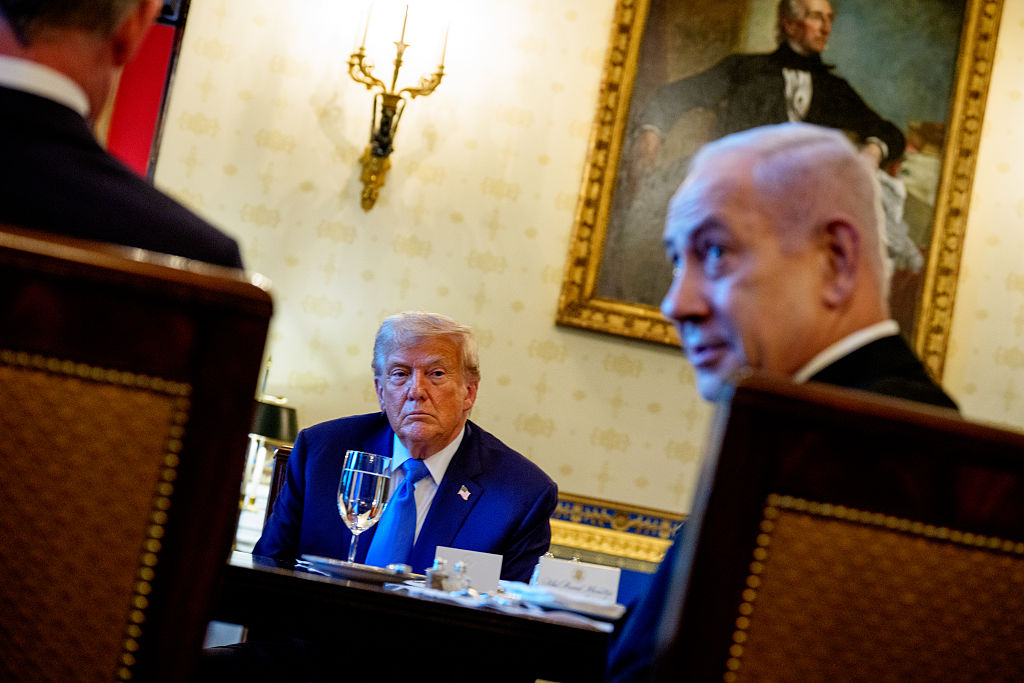
Denials, contradictions, inflammatory statements and exaggerations have for years characterized the conduct of Prime Minister Benjamin Netanyahu and US President Donald Trump. It is therefore difficult to determine who, this time, is closer to the truth in the dispute that has developed between the two countries regarding attacks on Iran’s energy facilities.
It appears that Israel’s political and military leadership believe that Trump was angry, but is playing a double game – and using Israel as part of his good cop, bad cop routine
Twice during the war, the Israeli Air Force (IAF) has attacked Iran’s energy infrastructure. The first time was on the night of March 6 when about 30 fuel storage facilities in and around Tehran were struck. The depots were used by the Iranian military and the Revolutionary Guards (IRGC).
Following the strike, leaks emerged from officials claiming that the operation had not been coordinated with the US administration. Sources in the Israeli Prime Minister’s office responded that they had taken note of the hints and regarded them as a warning, and that it would not happen again.
At first, Iran responded to the Israeli strike only with minor attacks on energy installations in the Gulf states, intended to send a message to the United States that if strikes on its national infrastructure continued, Iran would not hesitate to expand its offensive. At the same time, the regime worked to close the Strait of Hormuz.
Commentators in the United States and elsewhere explained that Trump was not interested in a protracted energy war, which could lead to a global economic crisis, rising oil prices in the US, sustained high interest rates and fears of renewed inflation.
But the commentators were proven wrong. Last Wednesday, the IAF again hit –more forcefully – Iran’s most important energy sites: Fars and Bushehr in southern Iran. The strikes focused primarily on strategic energy infrastructure, especially gas and oil.
In the Bushehr area, the massive South Pars field was attacked, home to some of the largest gas production facilities in the world. The strikes were intended to harm regime revenues, disrupt its internal energy supply and impair the ability of the IRGC to finance its military activity.
Qatar, which shares and partners with Iran in the Pars field, was furious and criticized Israel’s attack, as did other Gulf states – and not without reason. It was not long before Iran responded with a furious attack on major oil and gas facilities in the region. Oil prices surged to $115 per barrel, further harming the US economy and global markets.
Trump quickly distanced himself from the strike. He claimed the US was not involved and had not even known about it. Later, he backtracked and said that he had warned Israel against attacking the complex. He went further and stressed that from now on, he would not allow Israel to repeat similar strikes.
At first, Israel reacted with surprise and concern. But then it recovered. Political, security, and military sources emphasized that the strike had been coordinated in advance with the United States and carried out with its approval.
It appears that Israel’s political and military leadership believe that Trump was angry, but also that his standing in the United States is weakening, and that he was playing a double game – and using Israel as part of his good cop, bad cop routine. It’s hard not to conclude that Israel is correct in this assessment.
It’s a position which suits Netanyahu, who has become a kind of Trump-whisperer in chief. No one is happier to play the role of the whip striking Iran. It was once said mockingly that Israel is America’s largest aircraft carrier. The current war backs up that cynical image – at least as long as it serves Netanyahu’s goals.
Trump also threatened to strike Iran’s energy infrastructure and bomb the country’s nuclear reactors, but said that due to the negotiations he is conducting, he has put the decision on hold until Saturday.
This is where America and Israel’s interests diverge. As has been the case over the past two and a half years, since October 7, Netanyahu is promising Israelis victory in this war. He is building Israel’s entire future on regime change in Iran – a regime which, for now, shows no signs of collapse. On the other hand, while he still supports the Israeli prime minister, Trump now appears to be seeking an end to the conflict.
Netanyahu will be hoping these diplomatic efforts come to nothing. He is betting that a continued war with Iran will help him win elections at the end of 2026. And so far, it looks like the public are willing to support him.



Comments