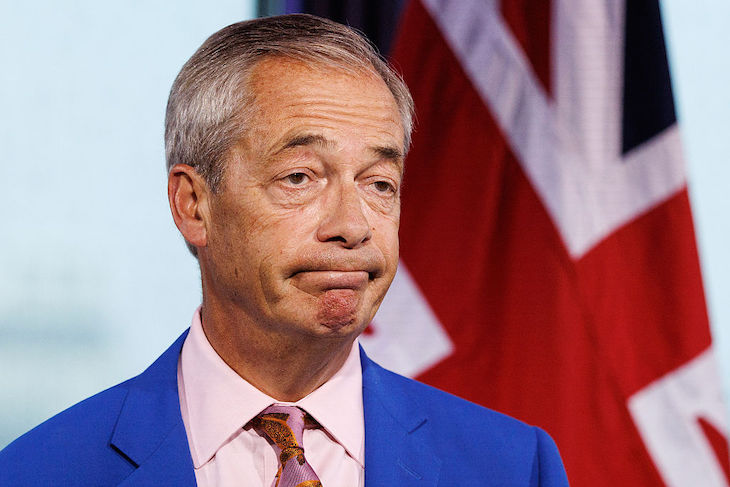
The moment I heard that Nigel Farage was going to make a 2 p.m. statement yesterday regarding his “political future,” I can’t have been alone in having a sense of deja vu. On 23 June 2016, the morning of the historic EU referendum vote, I texted my boss Nigel Farage to say he ‘had fought a hard battle and deserved to win’. He texted back: ‘One dares to hope’.
Only two weeks later, on 4 July 2016, Nigel resigned as leader of Ukip saying he wanted to “get his life back”. This was the third time he had resigned from the post, after leading Ukip from 2006 to 2009 and again from 2010 to 2015.
Farage is a master of using political resignation as an opportunity for re-invention and changing the agenda
The reality is that Farage is a master of using political resignation as an opportunity for re-invention and changing the agenda. He regards political set-backs – however life threatening – as merely opportunities.
It was no coincidence that yesterday’s video footage, in which he announced his resignation as an MP and decision to stand again in a by-election, came directly via a studio link at Millbank Towers, his political stronghold HQ. A key to Reform’s success is that Farage has created an “anti-establishment” party whose modus operandi is to operate outside of Westminster’s committee rooms and chambers and engage directly with the public. Combined with the slick, American campaign-style press conferences that are staged across the country, from Dudley to Dover, you have the Farage blueprint for a party that operates outside the parliamentary channels.
Indeed, Farage spends hardly any time in his Commons office. Most of Reform’s MPs have crappy and dingy offices in Parliament. Political party defectors have their offices re-allocated and Reform’s senior figures have all had downgrades. But nobody at Reform cares as Farage has rewritten the Westminster playbook rules by making his political movement a non-Commons-based political force with his target almost always “The Establishment”.
This is why, within a few hours of stepping down, party members were sent a message: “The establishment is scared. They’ve now decided they can’t beat us fairly, so are using foul means…They’re now smearing me and hounding my daughter. Let me be clear: I have done nothing wrong…Why should they – the people who’ve broken Britain, decide my fate? It is the people of Clacton who gave me a mandate. It is they who should judge my actions”.
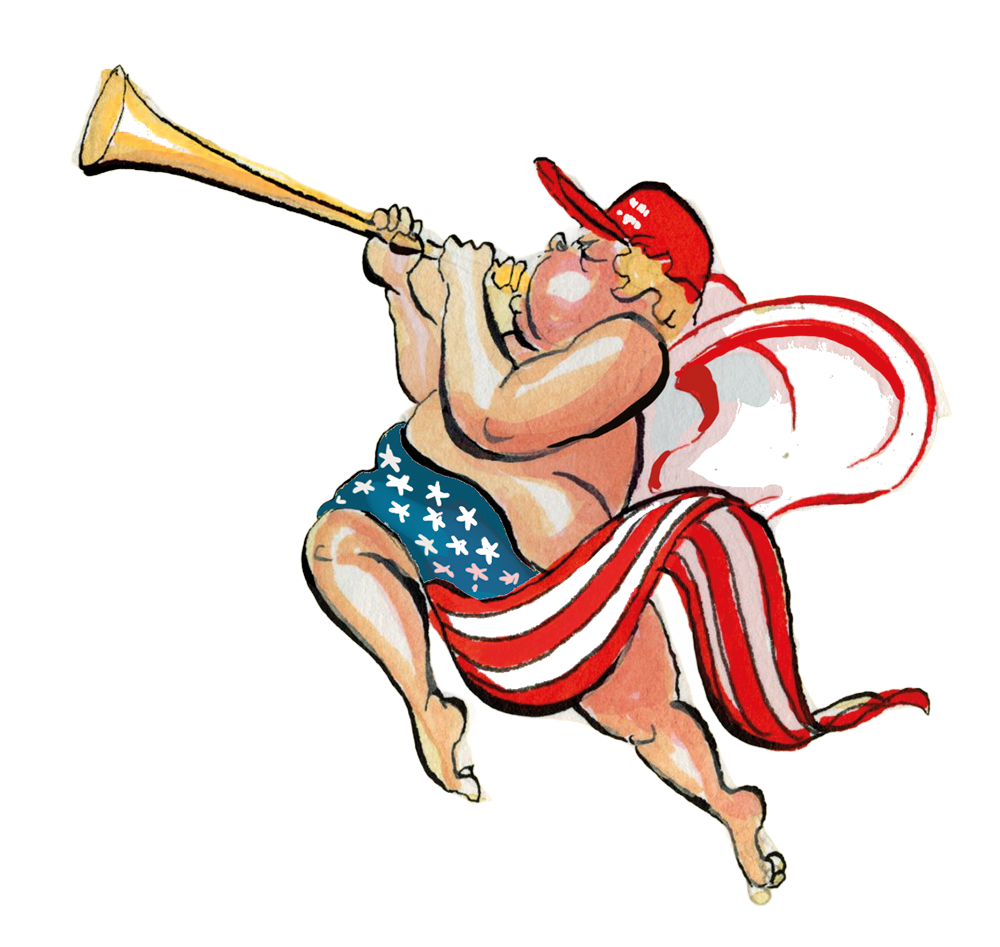
But will it really be the “establishment” that he is taking on in Clacton, in the same way that Donald Trump went to war with such “liberal elite” media outlets as the New York Times and CNN? Farage’s attack on Sky News for ‘hounding’ his daughter did seem to be Trumpian. But whilst many – notably Sir Ed Davey – were quick to label Farage’s actions as being straight out of the Trump playbook, the truth is that Farage’s political outlier, us v them style of political rhetoric actually far pre-dates Trumpism by decades.
Farage had been defining himself as a scourge-like anti-establishment outsider since 1992, when he departed from the Tories because of their EU policies and joined the Anti-Federalist League, set up by Alan Sked, which later became Ukip. The moment Farage became the leader of Ukip, he began setting out his anti-political elite credentials, talking about being the “real voice of opposition”.
Trump, by comparison, only first positioned himself as an anti-establishment populist when he made his debut presidential running speech at Trump Tower in New York City on 16 June 2015. Saying the American people needed to take power back from the political and financial elite, he then quickly emerged as the “anti-establishment” front-runner with a right-wing populist ideology that propelled him to the White House.
So it’s politically lazy, and wrong, to simply compare Farage’s rally cry to Trump’s US political elite bashing as nobody – let alone the voters of Clacton-on-Sea – really know what the word “Establishment” actually means anymore.
What is certain is the word “Establishment” means something very different across the Atlantic. Farage’s Clacton-on-Sea brand of English “anti-establishment” populism is a world apart from the MAGA brand.
It was in The Spectator back in 1955, that the journalist Henry Fairlie first popularised the phrase ‘The Establishment’, in an article that set out the way that real power was exercised, largely over cosy club lunches behind closed doors, in Britain: ‘By the “Establishment”, I do not only mean the centres of official power – though they are certainly part of it – but rather the whole matrix of official and social relations within which power is exercised.’
When he resigned in 2016, I wrote that Nigel will be remembered by history as a politician of more importance than David Cameron, George Osborne or any other recent figure because of his “ability to be classless”.
Over the decade he has realised – partly because of his security needs – that being “classless” isn’t enough to be a successful populist. You need funding and personal wealth as well. Which is why Farage made no apologies about how he has been so successful financially, to the tune of a £4.7 million property portfolio plus a £5 million “no strings’ gift. For “outsider” populists, having ready cash, rather than social class and connections, is what allows politicians like Farage the freedom and speed to operate independently and effectively outside the Westminster and Whitehall system. Personal wealth – as well as political party funding – is now a more essential political currency than membership of the Atheneum.
More than Trump, Jimmy Goldsmith is perhaps a better model of the wealthy “outsider” corporate raider populist who – decades before Trump – used his money to engage directly with the public. He spent a fortune sending copies of his anti-EU manifesto video to voters, and in some ways Farage – who enjoys the privacy of 5 Hertford Street members’ club which has Goldsmith’s DNA in its walls – has more in common with Goldsmith than Trump. It was Goldsmith – a close ally of my father, Sir Bill Cash, who led the Maastricht Rebellion of the early 1990s – who bravely first put the idea of any referendum in the public consciousness.
To simply lump Farage’s us v them cri de coeur with that of Trump fails to understand the nature of the populist rule-book
The old matrix that Fairlie described in 1955 has been replaced by a political EU loving class of ideological New Progressives, from all parties – George Osborne being an example, along with the disgraced Peter Mandelson – who embody the centrist, Remainer, political and legal class that Farage wants to destroy as he feels they represent what is “broken” about Britain.
It’s often been a mistake to underestimate Farage. Not many understand that he is such a paradoxical and fundamentally social figure, which Trump isn’t. For all Farage’s anti-elite fervour, there’s plenty about him that makes him – in style at least – still seem posh and old-school in his tastes and lifestyle, from his nicely tailored tweed suits, former Coutts bank account, Land Rover Defender, being a regular at Royal Ascot (he would probably have gone this year had the Makerfield by-election not been on Ladies’ Day) and Cheltenham (last year was the first time he didn’t go for over a decade). After a lunch was hosted in his honour at White’s, he said it was one of the most enjoyable of his life. There is a side of him that also wants to be loved by the very “establishment” he rallies against.
True, there were some Trumpian parallels in his resignation speech yesterday, with Farage mentioning the number of ‘death threats’ he has received. There were also echoes of Trump doubling-down on his attacks on the political establishment and liberal fake news in 2024, appealing to his populist base as a political martyr.
But to simply lump Farage’s us v them cri de coeur with that of Trump fails to understand the nature of the populist rule-book, which is that there is none. There is no founder or Political Godfather of “anti-establishment” populism as its leaders can be either hard left – like Zack Polanski – or hard right like Marine Le Pen. Populism has roots that go back to the American 20th century and it also had movement in the 1970s in Europe.
A few years ago, the US historian Michael Kazin, author of The Populist Persuasion, described the American populist movement as “a language whose speakers conceive of ordinary people as a noble assemblage not bounded narrowly by class; view their elite opponents as self-serving and undemocratic; and seek to mobilise the former against the latter.”
Farage may rail against the Westminster political class as a political “outsider” but in reality he is a highly experienced strategist who understands the political game as a seasoned insider as well as anybody. He is also a very decent shot at country weekends and a convivial house guest and is welcome in many castles despite his ‘classless’ credentials. Whether the same can be said of Trump is another question.





Comments