
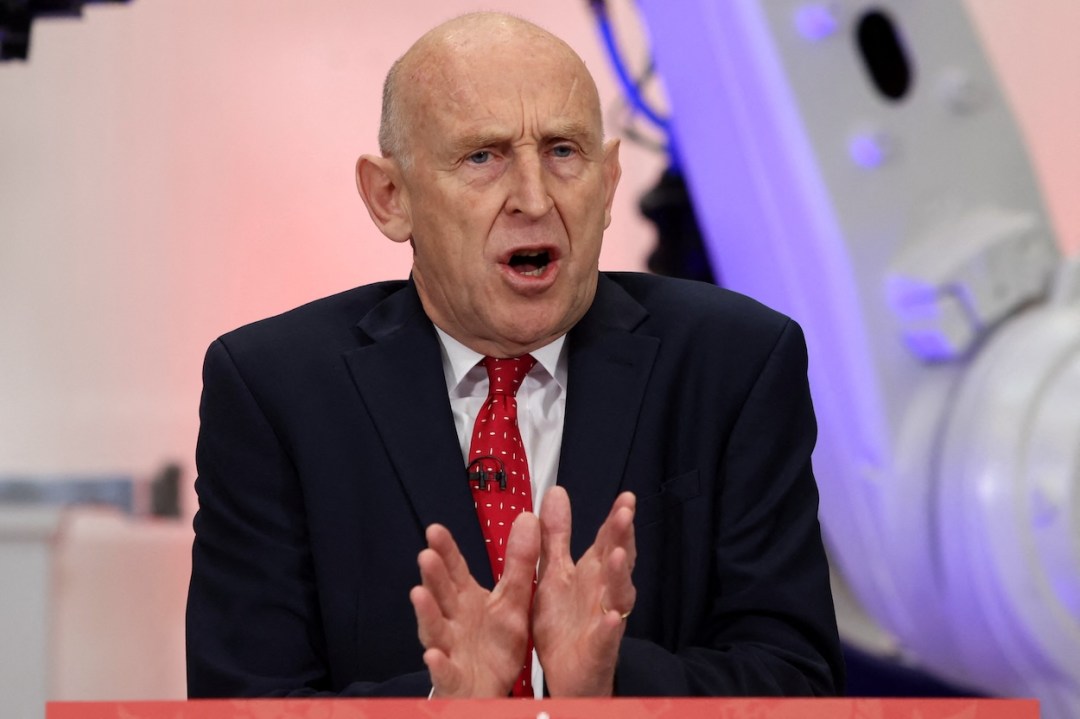
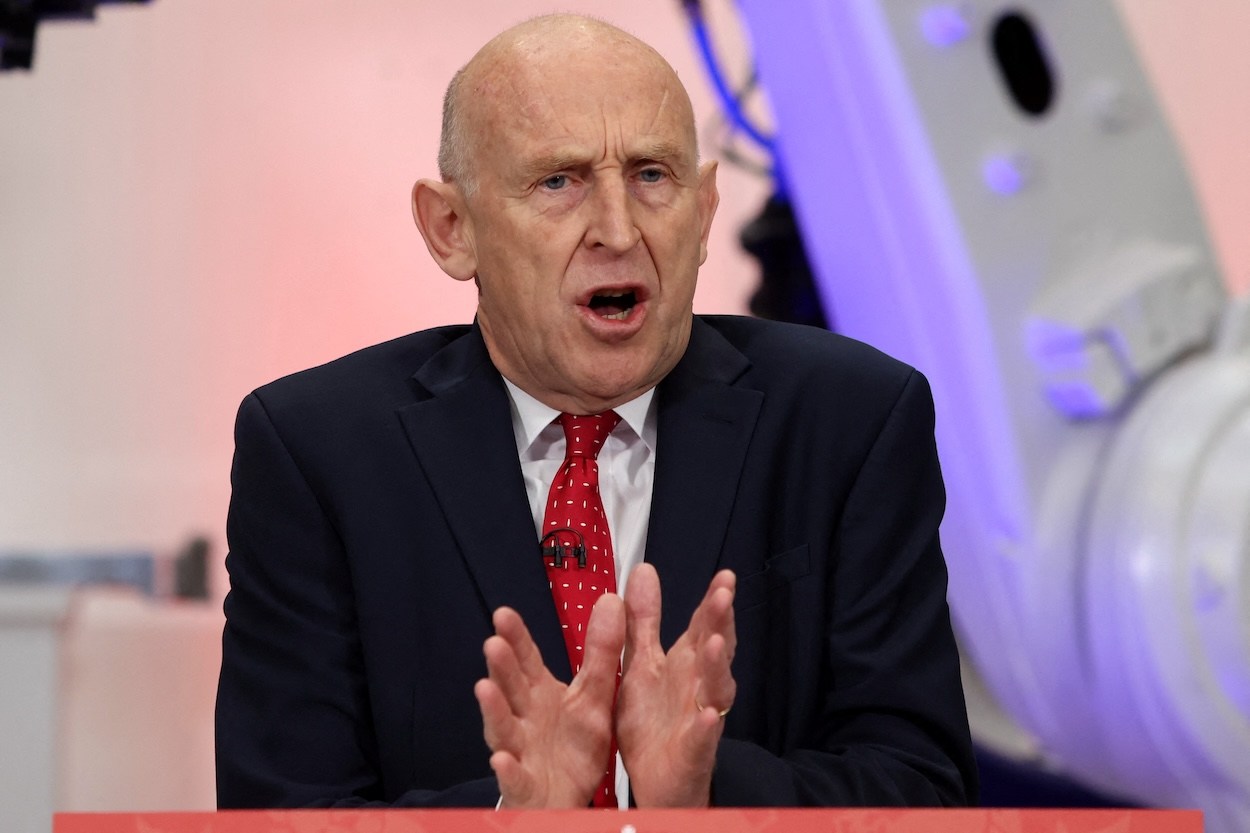
John Healey has tried so far as chancellor to suggest that he is part of a ‘continuity’ Labour government – largely because he hopes that this will reassure the nervous bond markets that Andy Burnham isn’t going to veer off to the left on public spending and borrowing. It has sparked some speculation that the two men aren’t on the same page. Today, in his first speech in the job, the Chancellor insisted that they were in fact ‘in lockstep’ – which is the kind of assertion a politician only makes when there are doubts about the relationship. To be fair, he said they were in ‘lockstep in our commitment to meeting the fiscal rules at the upcoming Budget, to balancing the books with a buffer to protect against uncertainty, to controlling borrowing to bear down on inflation, and reducing long term pressures on our public finances.’ That does leave a fair bit of room for them to be out of step on other matters. He also said that Labour would keep the ‘very strong, very clear, very specific commitments’ in the 2024 manifesto not to raise income tax, national insurance or VAT.
Burnham is tapping into a frustration that nothing seems to change in government
He couldn’t rule out raising other taxes, though, and neither can he suggest that he is going to lessen the current tax burden on businesses, even though the increase in employers’ national insurance contributions is something firms repeatedly point to when asked why they are not hiring more young people. Instead, Healey wanted to talk today about lifting regulatory burdens. He said: ‘Let me be clear, I recognise that the costs of business, its energy bills, regulation, burdens, planning constraints, labour costs, have grown since Covid and I want to draw the line.’ He wants to cut the burden of business regulation by 25 per cent by the end of the parliament, saying: ‘I will take an axe to the thicket of consultation, litigation and administration that has a stranglehold too often on private investment.’
That ‘thicket of consultation’ will also have major implications for policymaking. Healey wrote in a letter signed by him, Attorney General Ellie Reeves and First Secretary of State Louise Haigh, that too often, ‘consultation culture’ has created ‘an industry of dither and delay’. That’s a striking turn of phrase, given it was a refrain adopted by Boris Johnson when he called the 2019 election to break the Brexit deadlock. It shows the journey that Labour, including under Keir Starmer, has been on since coming back into government and discovering how slowly things can move even when ministers really want to act. Johnson was tapping into public frustration that parliament seemed unable to reach a decision, while Burnham is tapping into a frustration that nothing seems to change more widely in government. In that sense, the Prime Minister and Chancellor are continuing some of the thinking of the Starmer government that Whitehall and Westminster need major reform: it’s just that Starmer never quite seemed to get round to it, whereas the new crew are making it an early priority.






Comments