
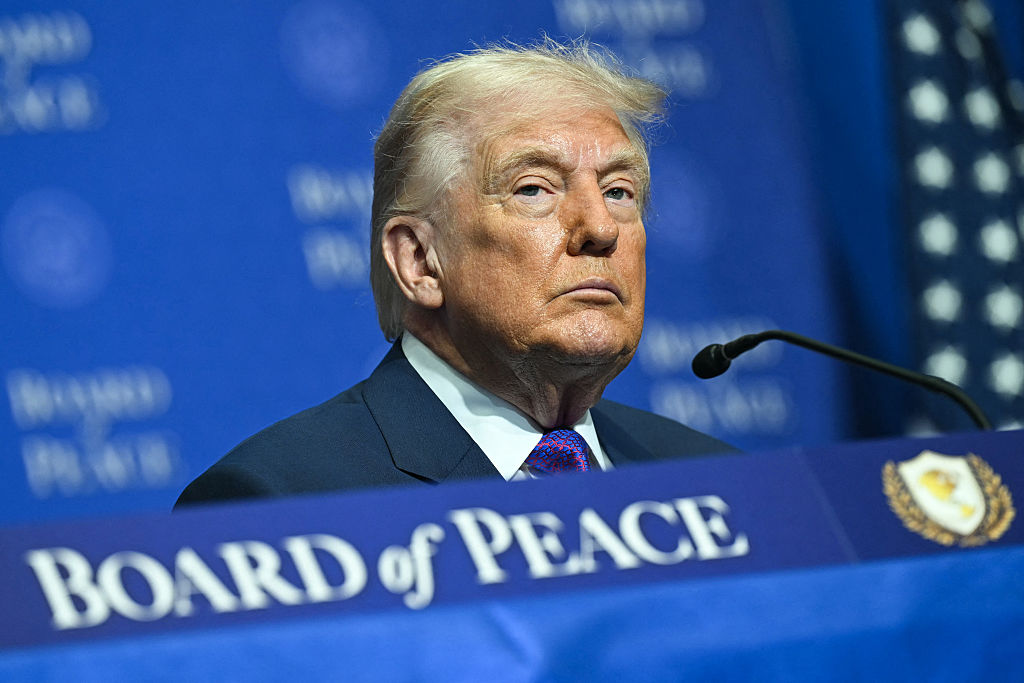
It was a banner day for Donald Trump. On Thursday, at the Justice Department, a long perpendicular banner with his stern visage was unfurled, proclaiming “Make America Safe Again.” And just across from the State Department, Trump convened his shiny new Board of Peace at the former US Institute of Peace, which has a dove-shaped white roof. It was seized in 2025 by Secretary of State Marco Rubio and renamed after Trump. “I had no idea,” Trump said. But for all his disclaimers, Trump was not shy about expressing his delight at the new name that adorned the building’s entrance.
A bevy of strongmen, including Vietnam’s General Secretary To Lam and Hungary’s Prime Minister Viktor Orban, looked on as Trump proclaimed that he would reshape the Middle East. Missing was Belarusian dictator Alexander Lukashenko. The Belarusian delegation, apparently, never received visas from the Trump administration and issued a statement expressing its displeasure: “If even basic formalities aren’t respected, what ‘peace’ are we talking about?”
It was a pertinent question. Trump fell asleep at one point – was he bored by his board? – but vowed to contribute $10 billion to support its efforts. He also threatened Iran and explained that an international peacekeeping force, including troops from Albania, Kazakhstan and Kosovo, would help pacify the Gaza Strip.
Trump succumbed to the notion that he can, willy-nilly, rearrange the global chessboard
The plan is predicated on Hamas disarming, but given the sanguinary nature of the organization, disarmament seems like a rather iffy prospect. Indeed, the latest reports are that Hamas is taking advantage of the ceasefire with Israel to stash its loyalists in government positions and the police. Perhaps, then, the most dubious part of Trump’s ambitious plan is creating a large military base in Gaza to house thousands of foreign soldiers. It would be difficult to think of a more tempting target for Hamas and other malefactors. But Trump breathed optimism. “We will help Gaza,” he said.
We will straighten it out. We will make it successful. We will make it peaceful. And we will do things like that in other spots.
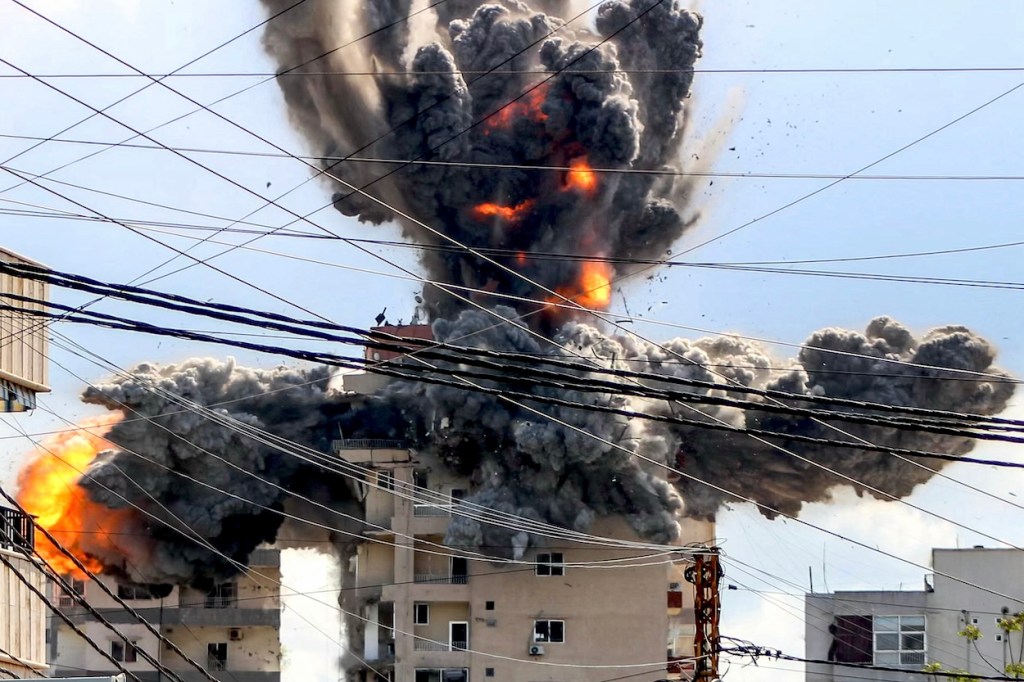
“We” will? Those ebullient words suggest that the former avatar of America First may have gone somewhat doolally – succumbed to the notion that he can, willy-nilly, rearrange the global chessboard. This is a delusion that has afflicted not a few of his predecessors, starting with Woodrow Wilson before reaching full flower with George W. Bush. The danger is that an all-out war with Iran would have knock-on effects that might well eclipse those of the second Iraq War: soaring gas prices, China seizing Taiwan, tumult in Egypt and Jordan, and so on. This, more than anything else, might be America’s Suez moment.
The thinking in the Trump administration seems to be that a tidy war against Iran could knock out the mad mullahs and lead to the rise of a friendly, or at least neutered, regime in Tehran, much as has occurred in Venezuela. The Wall Street Journal is reporting that Trump is mulling over a preliminary limited strike to try and cow the regime into surrendering its nuclear ambitions. But the notion that Iran would simply fold its nuclear cards seems far-fetched. If Trump attacked Iran and it called his bluff, he would have to lean in or capitulate himself.
Perhaps it should not be surprising that leading lights of the MAGA movement, such as Steve Bannon and the American Conservative’s founding editor, Scott McConnell, are voicing pregnant doubts about the wisdom of attacking Iran. They are apprehensive that Trump, who once promised to end the forever wars, may be on the verge of starting a new one. “Sad if he rolls it all back by becoming G.W. Bush 2.0,” McConnell declared in a social media post. As he ponders a fresh, excellent adventure abroad, it is difficult not to wonder whether Trump is becoming what he once reviled – a globalist.

Comments