There was a time when I looked forward to seeing myself in the newspapers. After ten years of obscurity, it meant that I was finally being noticed. It’s hard to believe, but I even went out before breakfast and bought half a dozen newspapers to see what the critics had said about my latest TV show. Not any more. These days when I see my name in print, I have to take a deep breath before I dive in and find out what unfortunate joke I’ve made at a literary festival or how badly I’ve behaved in a public space. With most of my news arriving digitally now, it can be quite a shock to open an iPad and see my own face staring out and my first thought is always the same. What have I done this time?
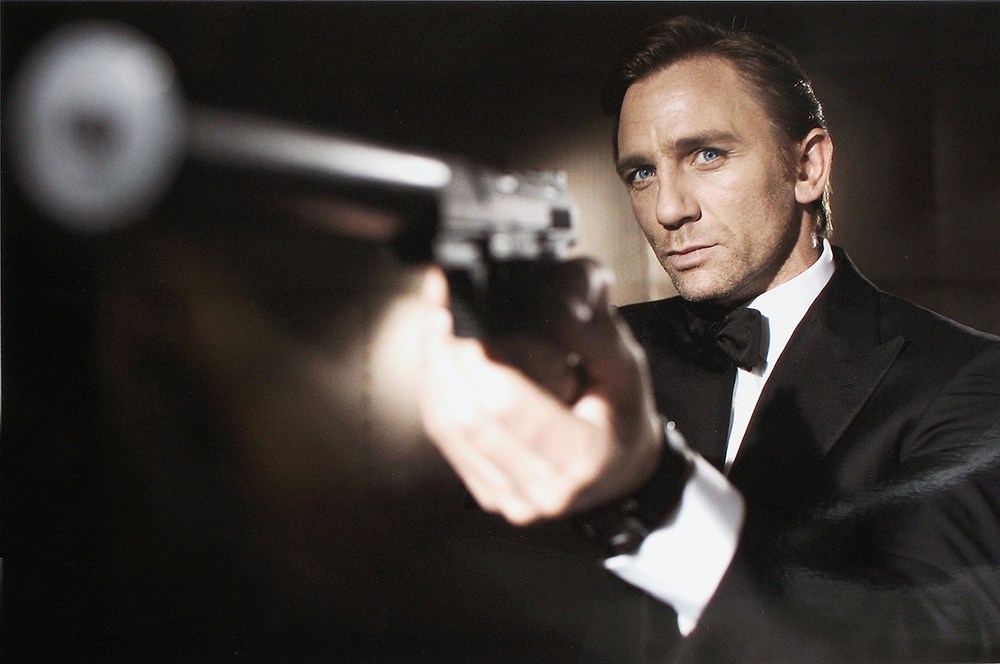
So it came as a nasty jolt to find myself called out, twice, in an article on The Spectator website the other week. In what I thought was a rather sour piece by Melanie McDonagh – ‘Why continuation novels need to end’ – she mentioned my work on Sherlock Holmes and James Bond, and I can’t say she was too flattering. No mention of the healthy sales figures or the fact that The House of Silk (‘Holmes Heaven’ – the Times) is still in print 15 years after it was written. She calls me a body snatcher, for heaven’s sake! And this is her verdict on continuation novels generally: ‘They are always less good than the original, usually way less good.’ She concludes that the characters should die with their authors, which rather blows a hole in the billion-pound film franchises that Bond and Holmes have generated.

To be fair, she does have a few nice things to say about Nick Harkaway, the son of John le Carré, so it seems that continuation novels might have a right to exist provided she enjoys them. As it happens, I’ve just finished reading a brilliant, original book by James Marriott. In The New Dark Ages, he describes what could well be the death of reading, so it feels both unhelpful and poor timing to be taking potshots at a genre which gives many people pleasure and does absolutely no harm. Yes, there are good continuation novels and less good ones but that’s true of all fiction, so live and let live is what I say – or would say if it didn’t sound like a Bond sequel.
Meanwhile, I’ve begun writing a new novel and I may have a problem. The book, which is not a murder mystery, is set in Berlin between 16 April and 8 May 1945… in other words, the last 23 days of the war in Europe. It demands a great deal of military, historical and sociological knowledge, and fortunately help is at hand. I have ChatGPT and it’s brilliant. It’s as if I have the entire British library on my desk. It can find exactly the book I want and not just that – the exact page, the very line… everything I need. For example, how many days were there between 16 April and 8 May? I didn’t have to do the mental arithmetic. I just asked ChatGPT.
But it doesn’t stop there. Over the past few months, Chatty’s got to know me and now he’s started offering to write whole paragraphs for me. He’s a devil, whispering in my ear. Let me tell you how your hero would get to Berlin. This is the model of the plane, its route, its speed. Would you like to know exactly what it looks like inside? I’ve begun to see that if I let it have its way, I will relinquish the very forces – intellectual curiosity, imagination, creativity – that made me want to become a writer in the first place.
And then there’s the question of morality. Everything that AI knows, it has stolen from other authors, a process called ‘scraping’, and it’s outrageous that to this day not a single penny has been paid to anyone whose work has been appropriated. The first and loudest voice protesting against this belonged to Kate Mosse, one of the brightest and most morally upright authors I know. Coincidentally, she was also named as a body snatcher in the very same sentence as me. As if.
People say that AI could wipe us out altogether, and it reminds me of an interesting thought that Marriott raises, which is that even the invention of the printing press played a large part in bloody and violent revolution (the point being that the rise of literacy led to less acceptance of the status quo). It makes me wonder if there has ever been a brilliant invention that hasn’t in some way done us harm. The seatbelt, Chatty suggests. As usual, he may be right.
Anthony Horowitz’s continuation novels include The House of Silk, Moriarty, Trigger Mortis and Forever and Day.






Comments