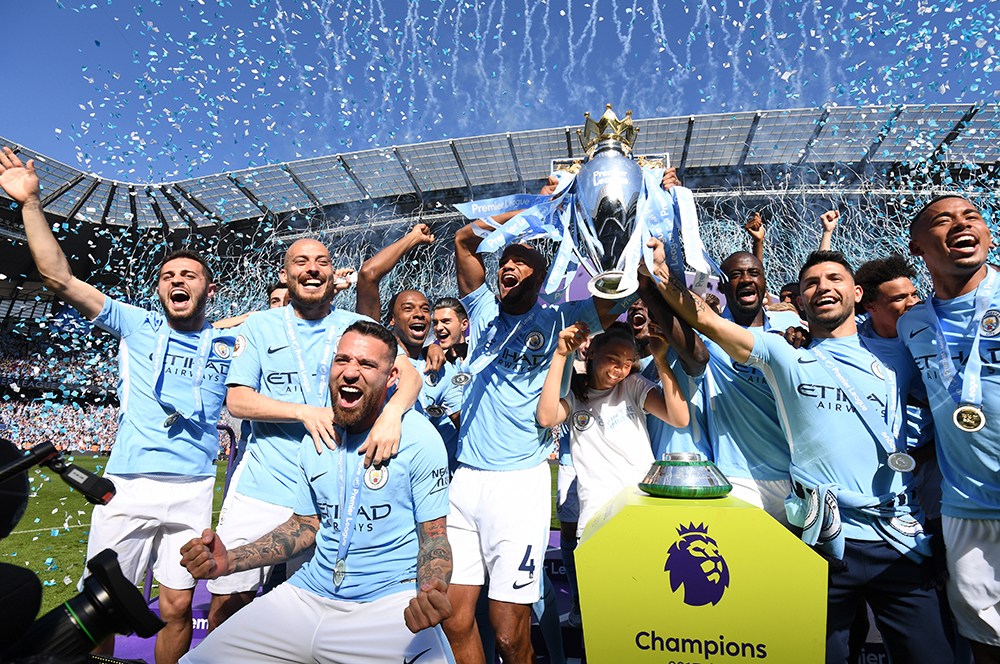
Fifty-nine years ago this month, a barrel-chested footballer called Francis Lee left Bolton Wanderers for Manchester City, and an impressionable eight-year-old followed him. Within a year ‘the City’ were First Division champions, and ‘Franny’, my childhood hero, had become an England international.
Early memories are usually the most vivid. FA Cup winners in 1969, the men from Maine Road completed a trifecta of domestic pots the following year with the League Cup – and added a dollop of cream with the European Cup Winners’ Cup. The years of plenty didn’t last. In those days prizes were distributed more widely. But what larks.
Manchester City’s transformation, it appears, was facilitated by persistent rule-breaking by a foreign state
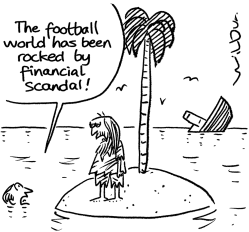
Last week the club Lee served as a star player and, two decades later, as chairman, found itself chained in the doghouse. A Premier League investigation, conducted over three years of laborious fact-checking, found it guilty of 114 charges relating to financial jiggery-pokery.
Cooking the books, in other words – and in the eyes of their accusers, City then smothered them with a Béarnaise sauce. Beyond east Manchester, great was the rejoicing. A club once regarded as a variety act – the disgraced broadcaster Stuart Hall habitually referred to Maine Road as ‘the theatre of base comedy’ – have been widely resented since the Abu Dhabi United Group, led by Sheikh Mansour, rode into town 18 years ago, carrying bags of gold. The Etihad Stadium, their home since 2003, is seen as a den of cheats.
City have vowed to challenge any punishment and, as they have unlimited funds, the claims and counter-claims may stretch on like the Great North Road. As far as the footballing world is concerned, however, they have been judged bang to rights. A significant points deduction, and even relegation from the Premier League, are possible.
It’s a grubby tale of a game that has sold its soul, and City are by no means the only offenders. The Premier League fined Chelsea £10 million four years ago, Everton and Nottingham Forest were docked points, and the Glazer brothers – Americans who own a majority share in Manchester United – have run up £1 billion worth of debt since they took over England’s biggest club in a leveraged buyout 21 years ago.

But City is the main story, on account of their decade and more of glory. Champions of England eight times since 2012, they became European champions in 2023 when victory in the FA Cup landed them a remarkable treble. A club that went 35 years without winning a trophy has come in from the cold. Except, it now appears, the transformation was facilitated by persistent rule-breaking by a foreign state.
The fans don’t care. Fans never do. So long as ‘their’ team is winning, the scarf-twirlers will tolerate everything: the reflexive dishonesty of players, the shrieking of one-eyed managers and the shenanigans of agents. Since the Premier League was created in 1992, all parties have frolicked in a land of milk and honey. The traditional English game has been marketed as ‘entertainment’ for an international audience, promoted by biddable television pundits.
When City topped the old First Division in 1968, all 11 players were English. So was the manager, Joe Mercer, and the coach, Malcolm Allison. The chairman, Albert Alexander, was a local man who had given his life to the club. Lee cost City £60,000 when he travelled ten miles down the road from Bolton. Colin Bell, the finest player to represent the club since the war, joined from Bury for £45,000. Other members of that champion team were recruited from Doncaster Rovers, Plymouth Argyle, Stockport County and Swindon Town. Never such innocence again.
Now there are few English players in the Premier League and most clubs are owned and managed almost exclusively by foreigners. Commercially, it has been a roaring success. Morally, it brings to mind Mickey Duff’s maxim. ‘In this game,’ the boxing promoter said, ‘you can fuck a flea if the money’s right.’
It wasn’t always a land of enchantment, even when England were winning their only World Cup in 1966. The players were paid poorly and the grounds, while characterful, were dismal. At Maine Road there was a malodorous cavern called the Kippax Stand, which could have passed for Nibelheim, the subterranean home of wretches in Das Rheingold.
Was the game better in those days? Well, it produced men like Gordon Banks, Jimmy Armfield, Ray Wilson, Bobby Moore, Bobby Charlton, Jimmy Greaves, Martin Peters and Alan Ball, who would walk into an England XI today. Not one wore a tattoo, crashed a Bentley or lived in a mansion. Between 1959 and 1976, no team retained the First Division title, so the game was certainly more competitive. And those men played on heavy pitches, with old-fashioned leather balls, when referees took a more tolerant view of what constituted foul play.
Three years ago, after City had won that treble, I wrote my hero a letter. ‘I have drifted away from the club,’ I told him, ‘but I’m grateful to you for providing so many golden memories. For at least one person it’s still the club of Colin Bell, Francis Lee and Mike Summerbee, and it always will be.’
He replied in an unsteady hand, which suggested something was wrong. A week later Franny died, at the age of 79, after a battle with cancer. He’s still my hero, and I remain temperamentally a Blue. But modern cocky Manchest-oh has got the club it deserves, and Manchest-oh can keep it.
Sport, the great Hugh McIlvanney liked to say, should never be more than ‘a glorious distraction’. We have come a long way since then, but even in the squalid world of contemporary football there are standards to observe. Throw the book at ‘Citeh’. They deserve no mercy.





Comments