
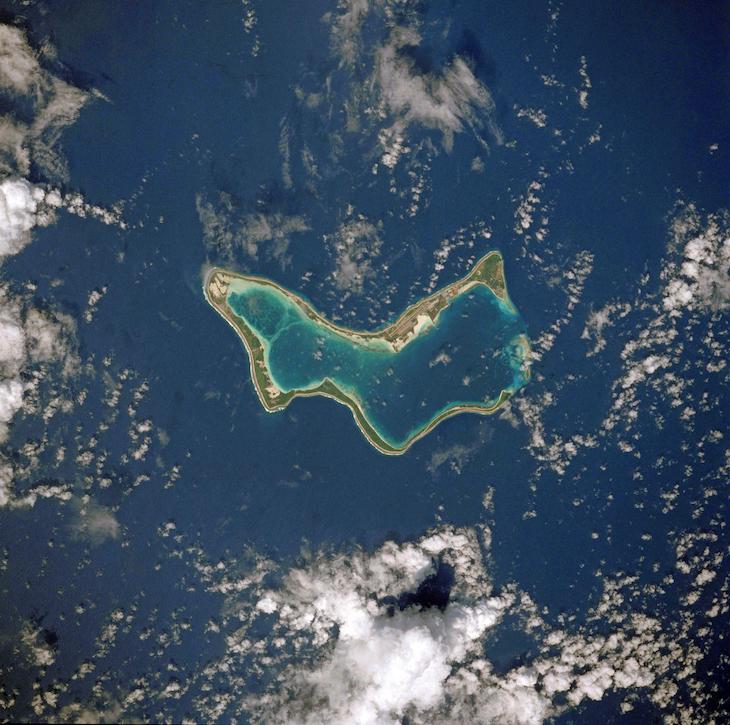
Can Donald Trump veto the UK’s cession of the Chagos Islands to Mauritius? And if he can, does he want to? On Tuesday, he termed it an act of “great stupidity,” which certainly seems to imply opposition. Scott Bessent, the Treasury Secretary, followed up to say that the UK was “letting down” the US by handing over the Islands to Mauritius. But Sir Keir Starmer was unmoved during Prime Minister’s Questions on Wednesday, claiming that in denouncing the Chagos deal Trump was simply trying to put pressure on the UK to abandon Denmark and Greenland, which Starmer of course rightly refused to do. The implication, which may be correct, is that Trump does not really oppose the Chagos deal and if the UK goes ahead with it would not be breaking faith with the US, which remains our most important ally. Press reports, however, have suggested, that Trump was acting, belatedly, on firm military advice.
Unless the Americans agree to amend the 1966 treaty, the UK cannot transfer sovereignty over the Chagos Islands to Mauritius without breaching international law
Still, the question matters. If Trump is in fact now opposed to the Chagos deal, is his opposition decisive? Should the UK call off the surrender of the Islands to Mauritius in the interests of its relations with the US? Must the UK call off the surrender to comply with its treaty obligations to the US? Or is it now all too late? This poses a political question and a legal question, because what may not have been understood thus far is that American consent to the transfer of sovereignty is a legal condition, not simply a political necessity – and may not yet have been granted.
The Mauritian government has asserted that the deal is done, that Mauritius is now sovereign, and there is no going back. Well, it would say that. One cannot blame the Mauritian government for taking this position, not least since taxes have been cut for Mauritian voters in expectation of large annual British payments to rent back the island of Diego Garcia. But the UK-Mauritius Agreement – the Treaty – has not yet been ratified and unless and until it is ratified the UK can still walk away. And the Treaty cannot be ratified unless and until Parliament enacts the Diego Garcia Military Base and British Indian Ocean Territory Bill, which is back in the House of Lords on Monday January 26.
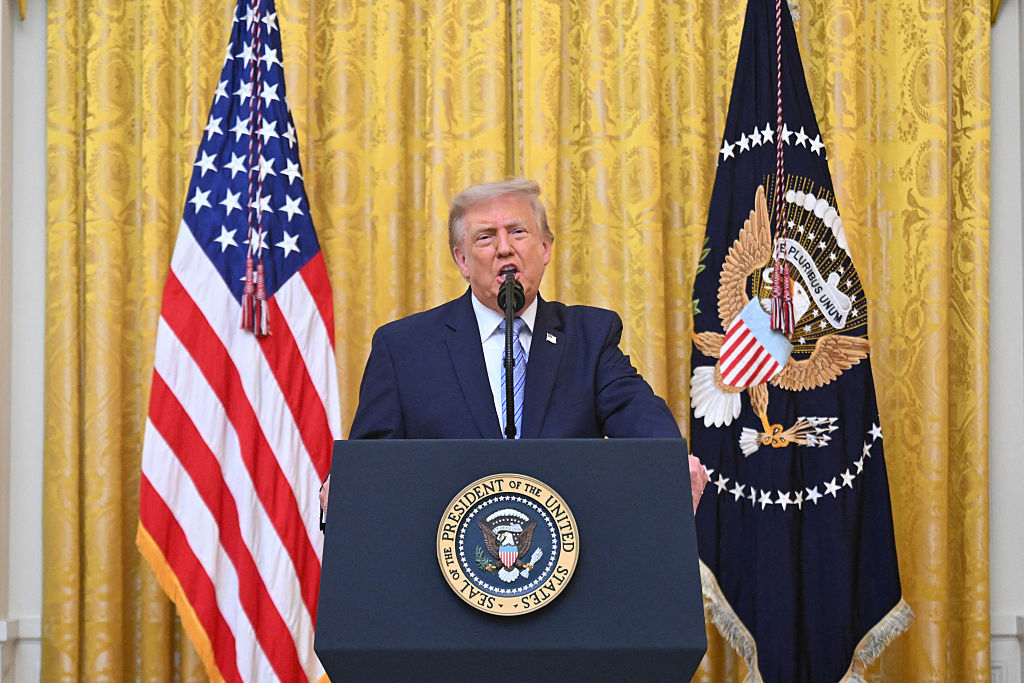
The passing of this legislation, though, is not the only condition on ratification. American consent is another condition. The British government may have been assuming that this was a mere formality, but if the Trump administration no longer supports the Chagos deal, it may prove a very real obstacle to ratification.
In an exchange of notes in 1966, the US and the UK reached an agreement “concerning the availability for defense purposes of the British Indian Ocean Territory.” Article 1 of this treaty provides that “The Territory shall remain under United Kingdom sovereignty.”
If the UK transfers sovereignty to Mauritius, it breaches the Agreement. Or in practice, if the UK transfers sovereignty to Mauritius without American consent, it breaches the Agreement. In 1976, the UK excised three islands – the Aldabra Islands – from the British Indian Ocean Territory in connection with the independence of Seychelles. The 1966 US-UK agreement was amended by a further exchange of notes. In other words, the US agreed to the excision of the Aldabra Islands, leaving the Chagos Islands as the British Indian Ocean Territory, before the UK relinquished sovereignty over them. It was accepted then that American consent was legally required.
The question thus becomes: has the 1966 treaty been changed? Do the terms of the US-UK agreement no longer require the Chagos Islands to remain under UK sovereignty? Marco Rubio, the US Secretary of State, made a statement in May 2025 saying that the US supported the Chagos deal, which was the American position until Trump’s intervention on Tuesday. But unless the 1966 treaty has been formally and irrevocably amended, the US retains the right, as a matter of international law, to withhold its consent to the transfer of sovereignty. Unless the Americans agree to amend the 1966 treaty, the UK cannot go ahead with transferring sovereignty over the Chagos Islands to Mauritius without breaching international law – without violating its treaty with the US.
In February 2025, Ben Obese-Jecty MP asked the Secretary of State for Defense whether the proposed treaty with Mauritius would require amendment or supplementation of the 1966 exchange of notes. The Government’s less than helpful reply, also in February, was that the 1966 exchange of notes “has been subject to routine amendments and supplementation since signature. Any amendments resulting from the proposed agreement with Mauritius will be factored into this existing process.” In late December 2025, Lord Callanan raised the point again, with the Government saying only that “Talks are ongoing to update the UK-US Exchange of Letters on the operation of the Diego Garcia Base.” It thus seems that the 1966 agreement has not yet been amended. If it had been, one would have expected the Government to have said as much.
Ministers have said repeatedly that the Chagos deal would only go ahead if the Americans are content. Up until now, they might reasonably have thought that the US did consent and was willing to amend the 1966 agreement accordingly.
Keir Starmer was unmoved during Prime Minister’s Questions
But unless and until the 1966 agreement actually is amended, the US retains the right as a matter of international law to withhold its consent, to hold the UK to the terms of our agreement and thus to veto transfer of sovereignty to Mauritius. Moreover, Article 7 of the UK-Mauritius Agreement says that each party confirms that none of its existing international obligations conflict with this new agreement. So, unless the 1966 treaty is amended, ratification of the Chagos deal will be in breach of the treaty with Mauritius from the very start.
Parliamentarians should be asking the Government to explain whether the US has formally agreed to amend the 1966 treaty and to confirm that the Mauritius UK-Mauritius Agreement will not be ratified before the US has done so irrevocably. The alternative is that the UK ends up handing over the Chagos Islands in breach of our legally binding agreement with the US (and, perhaps less importantly, immediately breaching Article 7 of the new treaty).
Keir Starmer is apparently committed to handing over the Chagos Islands to Mauritius, which, like his Attorney General Lord Hermer KC, he may well see as a demonstration of fealty to international law. If he is thinking in this way, he is mistaken, because international law does not demand the UK to surrender the Chagos Islands, as Policy Exchange has made clear in a series of papers. But it does have the effect, which the Prime Minister and others may have overlooked, that surrendering the Chagos Islands before the US has agreed to an amendment to the 1966 treaty would be a breach of international law – quite apart from running the risk of poisoning our most important security relationship when it is already under strain.
It is possible that the Government might argue that the 1966 treaty has fallen away, that the UK could not agree to maintain sovereignty over the British Indian Ocean Territory because the Chagos Islands were not the UK’s at all but rather belonged to Mauritius all along. Article 1 of the new UK-Mauritius Treaty is, disgracefully, framed to be compatible with that view, stating baldly that “Mauritius is sovereign over the Chagos Archipelago in its entirety, including Diego Garcia.” The Treaty has not been ratified but one could certainly say that, just by signing this agreement the Government has weakened the UK’s position in international law on that point. But the better view must be that this is indeed, as the US and most others have assumed it to be, a treaty of cession, that the UK is sovereign now and has been since 1814, when France ceded the Chagos Islands to Britain, and that (if we go ahead with this deal) we will be handing over sovereignty, rather than recognizing that Mauritius was sovereign all along.
The practical realities of our alliance with the US and the terms of our 1966 agreement require the UK not to relinquish sovereignty without American consent.
Comments