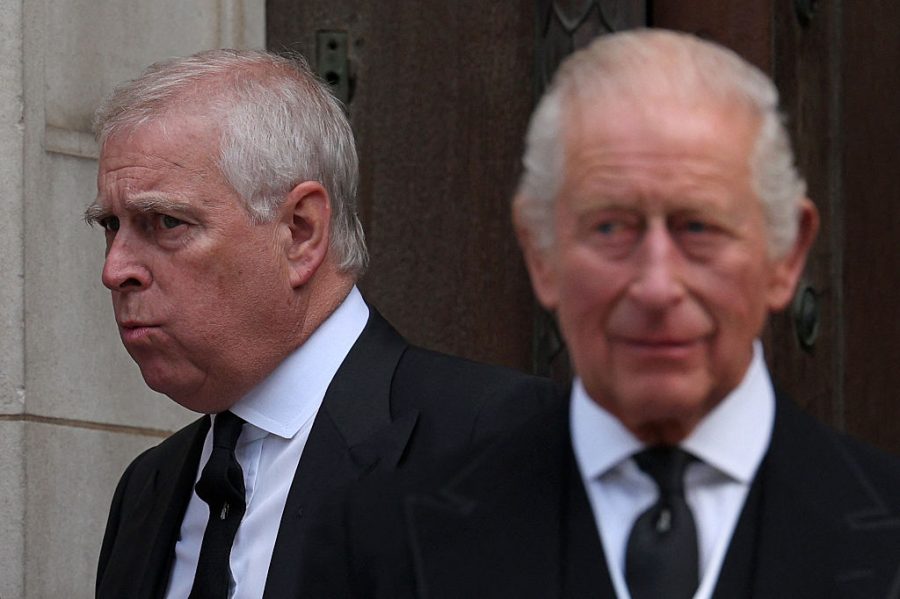
No balloons, no cake, no well-wishes from the palace – Andrew Mountbatten-Windsor’s 66th birthday was instead marked by something Britain has long awaited: the rightful application of the law. For years, public frustration has built around ill-fated interviews, settlements, and the sense that proximity to the crown offered immunity from scrutiny. For Andrew, that immunity has finally ended. This is not merely personal disgrace. It is a constitutional moment: the collapse of centuries of royal exceptionalism. For decades, the monarchy has existed in a grey zone, formally subject to law but practically protected. That illusion has finally crumbled.
The story of royal accountability in Britain stretches back more than eight centuries. In 1215, King John was forced by his barons to accept that he too was subject to the law. Magna Carta was the first formal recognition that even a monarch could not govern without constraint. Four centuries later, the Bill of Rights 1689 reaffirmed parliament’s supremacy over the crown. And in 1647, Charles I, the last English monarch to wield absolute power, was arrested and beheaded by parliamentary forces. These moments remind us that Britain’s story of power is not one of unbroken royal authority but of repeated attempts to bind it. Yet despite this history, modern senior royals have largely remained in an ambiguous terrain.
Britain has finally applied its laws even within the palace gates.
The public spectacle of Andrew’s past decade only deepened that liminal space. His awkward 2019 Newsnight interview with Emily Maitlis – which raised more questions than were answered – crystallised a growing impatience with royal immunity. That impatience intensified in 2022, when a civil settlement (reportedly worth £12 million) with Virginia Giuffre resolved a claim but said nothing about liability. Money seemingly drew the curtain as years of public frustration and moral unease bubbled beneath the surface. Andrew has already faced the humiliation of losing his public role, military title and royal residence, but now reputational ruin is no longer his greatest concern.

Andrew has consistently denied all allegations of wrongdoing. For years he insisted he longed for the opportunity to clear his name; after emails appeared to show him sharing official information with Jeffrey Epstein, that opportunity has arrived. Mountbatten-Windsor is under investigation on suspicion of misconduct in public office, a formal arrest marking the first time a senior royal has been treated like any other citizen in modern history. The police raids, investigations, and formal arrest now apply to him like they do to anyone else.
Political and constitutional voices have been unified in acknowledging the weight of this precedent. In a rare statement last week, King Charles seemed to signal that the necessary actions should proceed and he ‘would support any police investigation’. On Thursday, he made clear that ‘the law must take its course’. He added that what now follows must be ‘the full, fair and proper process by which this issue is investigated in the appropriate manner’, offering the monarchy’s ‘full and wholehearted support and cooperation’. This is a brother who is no longer protecting his sibling but rather a sovereign submitting to the rule of law.
David Lammy, echoing Keir Starmer, has reiterated the same message: ‘Nobody in this country is above the law.’ These are not platitudes: they are declarations that the monarchy is submitting, willingly or not, to the same structures of accountability as the rest of society. For the first time, a senior royal is being treated not as a potential embarrassment to be managed behind closed doors, but as a citizen fully subject to ordinary legal scrutiny. Andrew’s fall is therefore not merely symbolic; it is constitutional.
And yet, the slowness of this process cannot be ignored. Decades of orchestrated damage control, muted accountability, and endless public attention without formal investigation demonstrate a monarchy insulated by tradition. There will, inevitably, be searching questions for the palace.
In this case perhaps the delay has only heightened the sheer magnitude and profound significance of the moment. The collapse of privilege is all the more striking precisely because it comes after years of seeming indifference to the allegations against him. Andrew’s failure to reconcile his personal conduct with the responsibilities of his station has forced a public demonstration of principle that might otherwise have remained abstract.
The irony is that a formal investigation into Andrew, once thought potentially destabilising, may be precisely what preserves the institution he embodies. By allowing a prince to be investigated like any other citizen, the crown demonstrates that it is capable of submitting its most privileged members to ordinary law. The monarchy endures not by claiming special status, but by accepting that no one is above accountability when necessity demands. After a lifetime cushioned by institutional loyalty and familial protection, Andrew must now answer for himself.
Whatever the outcome of this investigation, Andrew will be remembered not for royal service, but for grave misjudgements and public embarrassments. Paradoxically, he may also be remembered as the royal who forced the monarchy to prove its legitimacy in public. Eight centuries after the Magna Carta, Britain has finally applied its laws even within the palace gates. For the monarchy, the message is clear: surrender privilege, and survive. Andrew ensured that this scrutiny could no longer be postponed.





Comments