Convention dictates that one should never speak ill of the dead, but imagine telling that to my former friend Rod Liddle – the most aggressively unconventional journalist of our times, scourge of the PC crowd (and sometimes of his own colleagues) and the most brilliant journalist I have ever met.
In a broad generalisation, BBC producers on Today tend to fall into two categories: those who remember who won the Boringwood by-election in 1943, and the swashbuckling imagineers who insist it’s the perfect day for a feature examining whether people are wearing hats. Rod had both skill-sets in abundance. He was the cleverest, most knowledgeable and most inventive at the same time.
Sometimes working with Rod felt like living in Scoop. I remember sitting at home late one Friday afternoon on a day off when I took a call that went something like this:
Rod: Rog, mate, I need you to go to Morocco.
Roger: What?
Rod: The Moroccans have invaded a little Spanish island called Perejil off the coast of Morocco. They are claiming it is theirs. We are going to lead the programme with it tomorrow. It’s Gibraltar all over again.
Roger: Are you joking? Have any shots been fired?
Rod: No – there is only a goatherd living on the island. But it’s symbolic.
Roger: How am I going to get there?
Rod: Your flight is booked. Pick up tickets at the airport. Take a taxi overnight and be there for 8:10 a.m.
Roger: It’s one of the kid’s birthdays tomorrow…
Rod: You are on shift. Get on the fucking plane.
I grabbed a few hours’ sleep then sped in the taxi to a point where I would actually be able to see the island. The taximan had underestimated the journey time and as the newsreader started the 8:00 a.m. bulletin I was still in the car racing towards the cliff.
Just as the presenter began the cue for my live, I threw myself out of the door and ran towards a place where I could get a glimpse of the island… I tumbled on to the airwaves with a last-minute phone call.
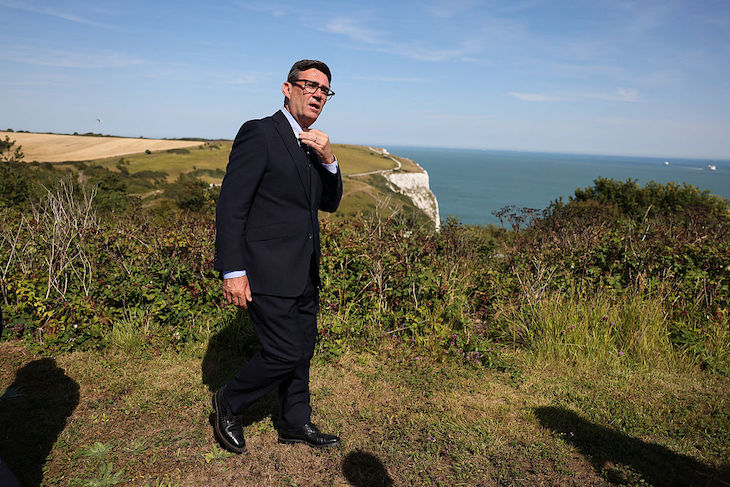
I had nothing substantial to say. I described the sea and the coastline and the island where half a dozen brave members of the Royal Moroccan Navy were apparently camped out with the goats.
Rod was delighted. No other media organisation was daft enough to have spent so much cash on a story of such scant relevance, so it was an old-fashioned scoop, fulfilling Rod’s mandate of being different and new, and in its weird way, an intriguing lead story. Sorry about the kid’s party, he said.
Rod gave me great commissions. On PM he ordered a series of features on the economics of extinction (he was very green at the time). I tossed the idea around reluctantly for some days, and tried to slide out of it – but Rod wouldn’t budge. Eventually I succumbed and produced a series examining the fate of the brown trout in Scotland, the sand lizard in Dorset and a curious bird, the corncrake, in Northern Ireland. Rod was big on birds.
One warm, summer midnight we interviewed an old, softly-spoken farmer in Donegal about the crake: ‘I’ve heard that bird every year of my life,’ he whispered. ‘Now I’ll never hear her again.’ To ram home the point I left a three-second blank hole in the broadcast. It gave the studio manager kittens, but it was radio gold. The heart-tugging sound of extinction.
The series won me an award two years in a row, but credit goes to the man who devised the idea then forced me to do it.
Rod was a fantastic deputy editor, but things started to sour when he became editor of Today. Bosses had been warned about his increasingly bad behaviour with staff, the way he often humiliated senior producers waiting for him on Thursday lunchtime after he had taken the reporters to the pub. The less resilient would sometimes be shaking at their desks as he loomed over them and dismissed their running order with a torrent of crude insults. It was c****, he used to shout.
His office, festooned with posters of genital warts, was a dangerous place for anyone Rod deemed, sometimes rightly, to be under-performing. His constant injunction was for the programme to break new ground, to spread mischief.One joke on the departure of a senior correspondent was that he had broken many great stories, some of them even true. Yes, he was very funny, and for some years my best friend in the BBC. We shared loves of football, the environment, films and meals, as well as unorthodox – and sometimes challenging – views.
I held the wonderful position of being one of his favoured reporters. We had endless discussions about the Overton Window – what was acceptable to say on air – and both of us were willing to think the unthinkable.
Rod’s firm opinion at that time was that the only thing that could save the planet was a green dictatorship, and I believe his later ridiculing of climate activists in print was not from any great conviction, but because they offered an easy target to a writer seeking controversial and highly saleable stories on the political right.
On Today, he insisted on a diet of originality, and he took the whole staff on a weekend retreat out of London to learn what a news story was. Among the lecturers was a journalist from the News of the World newsdesk. Rod concluded the day by insisting: ‘You’ve got to be fucking original, fucking original, fucking original.’
I could only stay for the Saturday session because on Sunday I was on a shift, due to cover the massive countryside march that was descending on London. I was fretting about what original thing could be said on Monday about an event that happened on the morning of the previous day. I cycled to St James’s Park where numbers were swelling, but I had no inspiration. Then I wondered how many of the rural protestors had considered the downside of city dwelling, especially homelessness.
I cycled to Camden Lock and found a homeless busker, playing awfully and croaking in an Australian accent. On a wild guess I asked if he knew anything about farming in the EU. He launched into a diatribe – don’t you know what damage EU farm subsidies are doing to Australian farmers? It seems he was a sociology lecturer from an Aussie farm family – down on his luck in London. I offered to take him by taxi to busk for the countryside marchers, who were exercised about hunting laws and general rural neglect. He agreed, and we put my bike in a cab.
It was one man against the half million. Red-cheeked landed types in expensive tweeds dropped cash into his hat without noticing he was singing anti-hunt songs. Then came a short man in a bowler hat who declaimed, pointing at the Cenotaph: ‘They died for freedom. We are marching for freedom.’ Our busker was at his throat like a dog on a fox. ‘C’moff it, mate,’ he drawled. ‘You are just marching for the right to kill small furry animals.’
It was a triumph – and totally fucking original. Trouble was that, unbeknown to me, my satirical piece had not been adequately balanced in other parts of the programme. We were hit by a shotgun blast of complaints. Rod wasn’t in the office that Monday, so I had to wait to hear his compliments until Tuesday.
He insisted on a diet of originality
To my dismay, he burst into the room shouting at me from the doorway: ‘That was fucking shit. So many complaints. It was fucking shit.’ I was very confident of the quality of my work, so I was certain Rod hadn’t heard it. I demanded that he listen to the piece on minidisc, and he snatched it from my hand.
Three minutes later he emerged from his glass box. ‘Fucking brilliant, mate, fucking brilliant. I’m going to run it again tomorrow.’ Please don’t, I implored. I didn’t need any more controversy. But he insisted.
He didn’t carry out his threat but later I found that my piece had prompted him to write his Guardian column referring to the foetid breath of the gentlemen’s clubs that adorn St James’s. That was the column that got him sacked – but not until he had milked publicity from the event by stirring controversy in newspapers. Managers tried to rein him in, but he was a force of nature – far cleverer than his bosses. Some of the views he expressed after leaving the Beeb were truly shocking, but he was an extraordinary man, and for me, for a while, a great companion.

Comments