
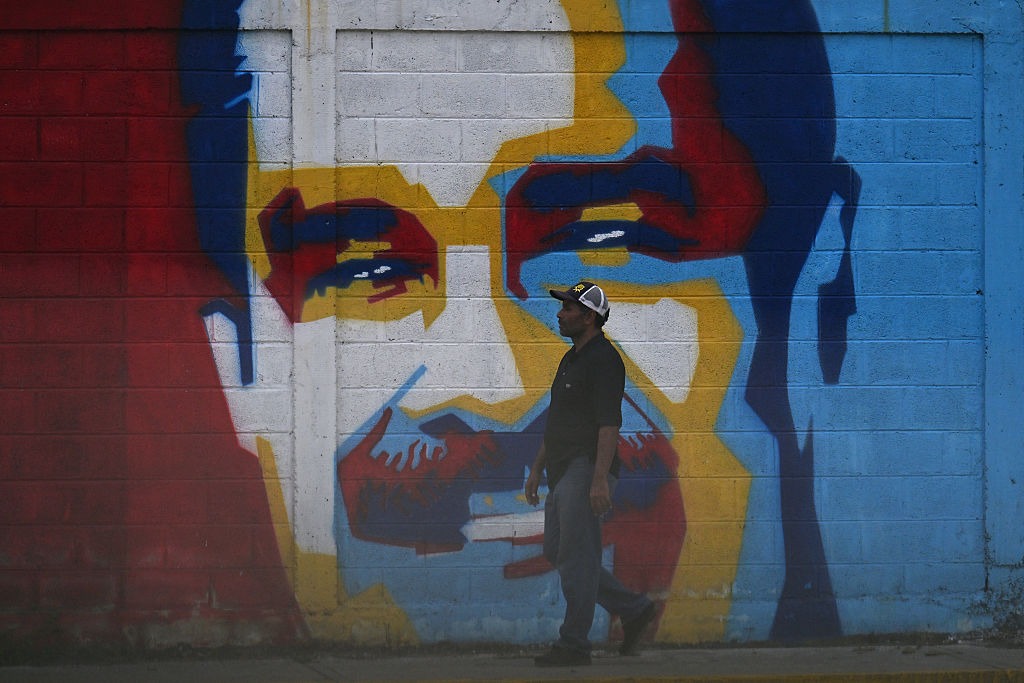
Nicolas Maduro is a very lucky man. The Venezuelan dictator – or ex-dictator now – might not feel that way as he enjoys the hospitality of the U.S. justice system after being snatched from the safety and comfort of his own capital on the orders of President Trump. But once he’s had a bit of time to relax, he should compare photos of his capture, Nike-clad and brandishing a water bottle, to the way Saddam Hussein looked when he was dragged out his “spider hole” in 2003 – or the way Muammar Gaddafi looked when a mob of his own people got done with him.
Maduro didn’t lose a war or get killed in a revolution against this rule. If elements of his own regime collaborated with the U.S. to get rid of him, he nonetheless would have fared worse if some Venezuelan colonel had dealt with him the way Latin American militaries historically deal with inconvenient leaders. No dictator hopes to end up like Manuel Noriega, the Panamanian strongman toppled, arrested, tried, and imprisoned by the United States in the days of the George H.W. Bush administration, but there are far worse fates for those who lead that lifestyle.
‘Venezuela was in no position to resist the U.S. even when Maduro was ensconced in his palace.’
Trump has once again defied the laws of probability, as well as the rules his critics and many of his supporters alike insist he follow. MAGA’s non-interventionist wing says he shouldn’t have acted against Venezuela at all. Neoconservatives and other center-right advocates of regime change say, on the contrary, that cashiering Maduro doesn’t go far enough – now the U.S. must make Venezuela a liberal democracy. Progressives say much the same thing, though on the farther fringes of the left there’s outright pro-Maduro sentiment.
Trump has once again put Democrats in a very awkward position, as he’s done before with immigration and transgender politics. Democrats want to condemn Trump, as always, but do they dare say it’s a bad thing Maduro’s gone?
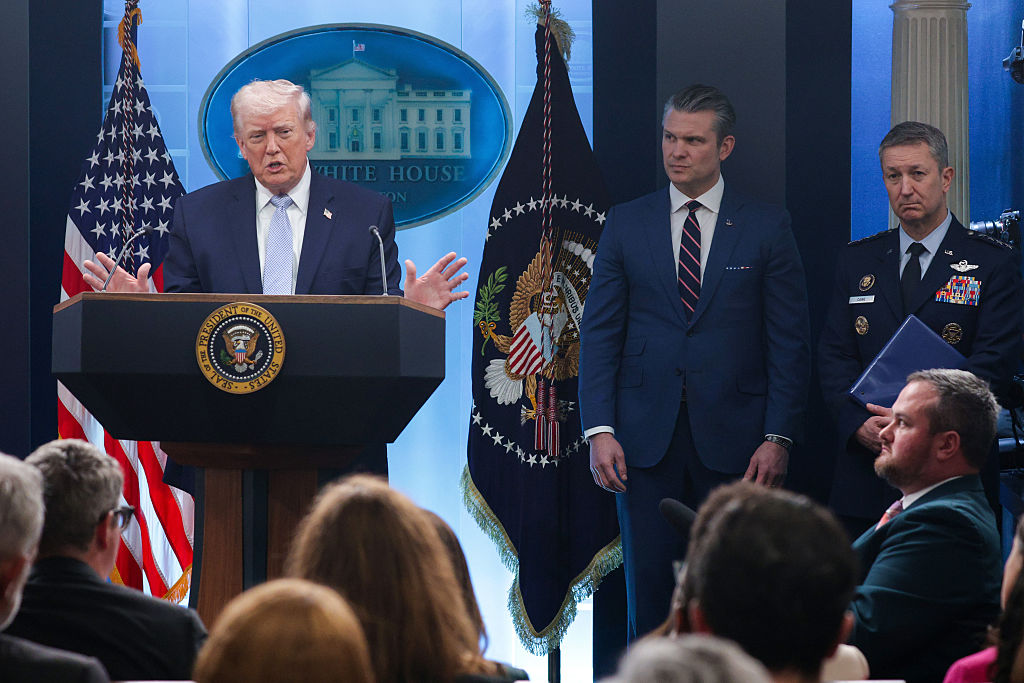
They will be able to say that if Venezuela collapses into chaos, as Iraq did after George W. Bush took down Saddam Hussein. But Trump is doing the opposite of what Bush did in almost every respect: he hasn’t invaded Venezuela, and he hasn’t expressed idealistic aims for what comes next. Bush went out of his way to maintain that oil had nothing to do with his intentions toward Iraq. Trump, who said a decade ago that Bush should at least have seized Iraq’s oilfields if he was going to go to the trouble of launching an occupation, has been forthright about wanting the U.S. to dispose of Venezuela’s considerable petroleum assets.
And while Washington habitually depicts the democratic opposition to dictators in the rosiest of hues, Trump on Saturday gave very short shrift to Maria Corina Machado, the Nobel Peace Prize laureate whom many regime-change enthusiasts would like to see lead a liberal and democratic Venezuela.
‘I think it would be very tough for her to be the leader. She doesn’t have the support within or the respect within the country. She’s a very nice woman, but she doesn’t have the respect,’ the president said.
Yet somebody will have to run Venezuela, and while Trump has made clear he expects it to be someone who will cooperate with Washington. Right now Maduro’s vice president, Delcy Rodriguez, appears to be in charge, and she’s cut from the same cloth as he was. Her statements since Maduro’s abduction have been defiant. And yet…
Venezuela was in no position to resist the U.S. even when Maduro was ensconced in his palace. He knew what was coming, and he – along with the rest of his regime – knew he couldn’t do anything about it. Rodriguez is not in a stronger position than he was. Socialists have held power in Venezuela for nearly 30 years, and ordinary citizens are not only the only ones who have grown frustrated. The military was Maduro’s indispensable support. Do its leaders think there’s a deal to be struck with Trump, who is nothing if not a dealmaker?
What that would look like is unclear. A leftist military regime subservient to Washington is difficult to imagine, though Trump is a master of turning unimaginable things into reality. Venezuela has held socialist ‘elections’ all along. Is some hybrid between regime continuity and a transition to real democracy possible? That would be a difficult enough proposition even without the complications that oil and foreign interests represent.
But Venezuela’s dilemmas are not so different from those facing many other countries at a time when stronger powers increasingly demand a decisive say in the internal politics of weaker neighbors. Trump seems disinclined to invade Venezuela, or anyone else. Yet if Maduro’s policies toward the U.S. (and China) continue now that Maduro is gone, the country’s next leader will face similar treatment, and sooner or later, as ambitious regime elements or foreign-backed anti-regime movements jostle for power, chaos will be the result.
Trump, deal-maker that he is, likes to leave a foreign opponent a way to save face. Delcy Rodriguez, or any other Venezuelan leader, can say whatever she wants in public. What counts with President Trump is what a regime does for America’s interests as he defines them. That’s a lower standard than the one American presidents have applied in the past. George W. Bush never seriously contemplated leaving Baathists in charge of Iraq. Trump is not looking to morally purify the Venezuelan government. He just wants it to do business on his terms.
To an idealist, that may sound monstrous, but anyone who looks at the results of idealism in foreign policy, compared to Trump’s successes, might find a moral as well as practical argument for his transactional approach. Venezuelans now have some transactional matters to settle among themselves, as well as with Trump’s America.

Comments