
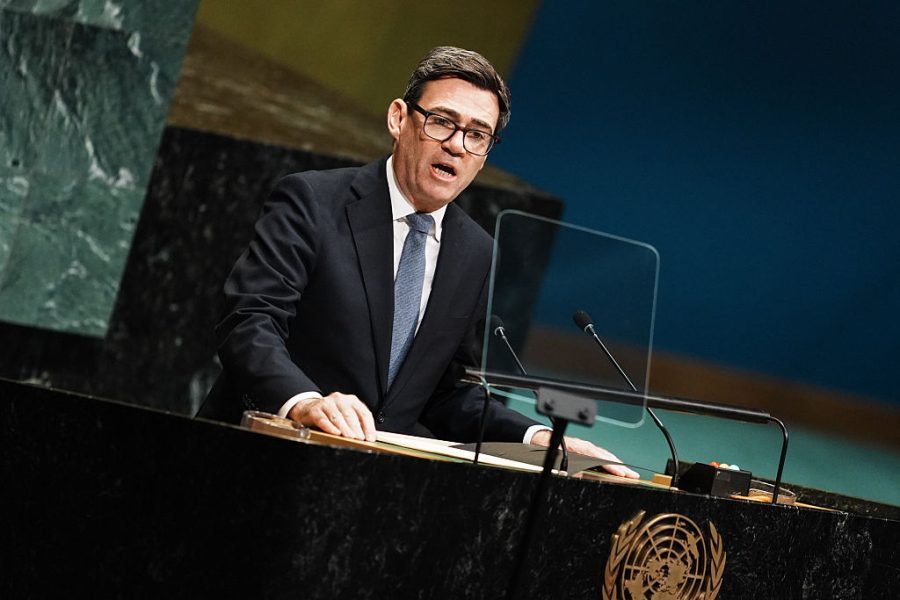
Hoaxers, trolls and disinformation merchants beware, Andy Burnham is on your case. In his speech at the UN General Assembly, the PM damned Russia for its ‘poisonous tide’ of disinformation and committed the government to establishing a National Centre for Information Defence. Quite what this will be and when it will actually emerge remains to be seen, but the existing track record of such centres does raise some cautionary notes.
It is perfectly true that Russia has, as Burnham said, ‘used bots and fake websites, falsified newspaper articles, forged the branding of 28 British organisations, including universities and the BBC’ in the name of spreading false narratives and division. Burnham’s claim, however, that ‘the Kremlin spends around £1.3 billion each year on manipulating information’ appears to be based on the line item in the Russian federal budget spent on the media, ranging from domestic TV and foreign output – like the RT channel, banned in the UK – to various news agencies and online media initiatives.
Is this all propaganda and lies? Not at all. As someone who has to consume it on a daily basis, let me say that while there absolutely are poisonous ulcers of the most toxic nonsense to be found in the Russian media, there is also serious journalism and wholly benign pap.
The Kremlin has no Jedi mind tricks
To equate Russia’s media output with, say, the BBC, would be nonsensical. That said, in both the UK and across the west, there are outlets and commentators who could teach the Russians a lesson or two in partisan ‘information warfare’. And let’s also not pretend that we, in our own ways, never practise these dark arts ourselves, even if often outsourced to convenient emigre or private bodies.
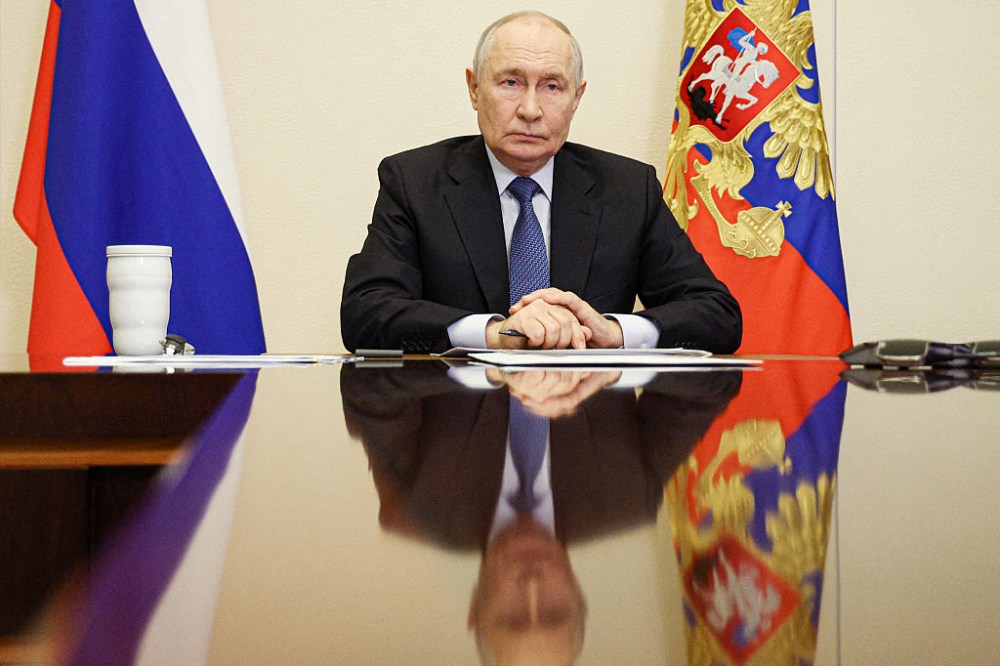
We seem to be dealing with one of those pesky irregular verbs: I conduct strategic communication, you spin, they wage information warfare.
Of course, there is also the most dangerous part of the infoberg: the unseen, underwater mass of troll farms, AI-targeted and algorithm-hijacking online mischief. However, here’s the warning: fact-checking, debunking and similar responses can be ineffective at best, counterproductive at worst.
In 2017, the Czech government blazed a trail, setting up its Centre Against Terrorism and Hybrid Threats. A large part of its work was monitoring and countering what it considered fake news. I lived in Prague for a couple of years, and while there, as much out of human curiosity as professional interest, I tried engaging with some Czechs who were especially prone to spouting bizarre conspiracy theories that were a stock in trade of Russian disinformation at the time.
What very quickly became clear was that there is a very human response to being told that you are wrong by a ‘man from the ministry’. You dig in your heels. As one interlocutor told me over a beer, ‘if there wasn’t something in it, they wouldn’t be so desperate to suppress it’. Disinformation became forbidden fruit.
More importantly, much of what is labelled disinformation or misinformation (respectively, the deliberate and inadvertent spreading of falsehoods) is often simply different opinions. To say that Covid was all a hoax is false; to assert that governments exploited it to increase their control over society is a perspective that can be debated. Yet if one looks at presumably well-meant initiatives like the European Union’s East StratCom Task Force, debunking falsehoods can quickly descend into simply rival narrative warfare.
Of course, at this stage we don’t know quite what Burnham’s new centre will be. It could be more of a research hub, a British counterpart to the European Centre of Excellence for Countering Hybrid Threats in Helsinki. It might pioneer new and useful ways of inoculating the public against hyperbole and misdirection (politicians and advertisers beware).
But just as creating new institutions is one of a bureaucracy’s instinctive responses to any new challenge, so too, whatever their initial goals, such bodies tend to default to debunking hostile and inconvenient narratives. After all, this lends itself to metrics, beloved bureaucrats. Never mind whether we changed anyone’s opinions, we debunked ten per cent more Russian narratives this quarter, hurrah!
But the most important point is that the Kremlin has no Jedi mind tricks. It cannot generate dissent from nothing. Burnham talked of:
An insidious campaign that reaches into people’s homes and twists what they feel about their own country and community – creating a narrative of decline, stoking division and sowing despair.
Yes, Russia does what it can to open existing divisions within and between western societies and amplify existing discontents. But it has to have something to work with. Is Britain divided and in decline? Many readers might well agree, and not simply because Tanya from Tomsk or Sergei from Sverdlovsk wrote a particularly sharp comment under a news article.
It is absolutely appropriate and necessary to push back against disinformation, whether it comes from Russia, China, Brussels or DC. The danger, one I fervently hope the British government avoids, is when unwelcome views are conveniently dismissed as the product of foreign ‘cognitive warfare’. Instead, they should be debated and explored, and the root causes behind them addressed. ‘Debunking’ can very easily become ‘deplatforming’ – and if anyone was wondering whether refusing to engage positively with those holding views outside the mainstream (and offensive to many) works, just ask Germany’s AfD or Nigel Farage.






Comments