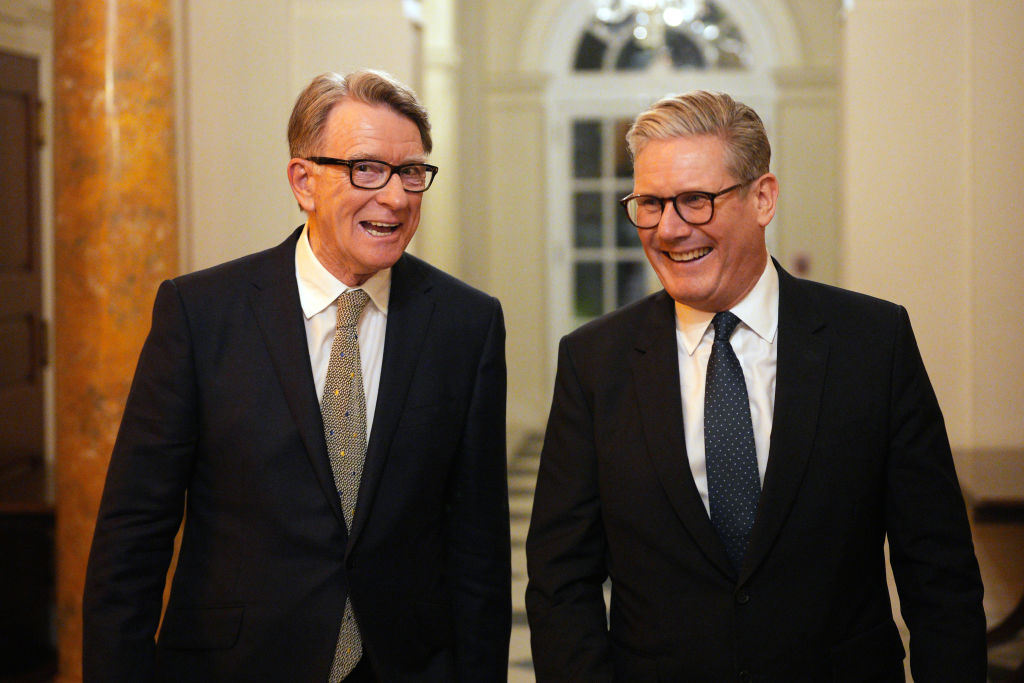
If there is anything less edifying than the newly-released emails implicating Lord Mandelson in some very bad behaviour, it is the stream of politicians and others in the UK piling in on the already disgraced peer. Mandelson was never to be trusted, we are told; he should never have been allowed to return to a public position, where his reputation and that of the government and the country were bound up with each other. We should remember, of course, that a good number of those suggesting police action and demanding he be stripped of his peerage, include some of the very people responsible for his repeated comebacks, including his most recent, if short-lived, resurrection as our man in Washington DC.
Step forward, first and foremost, the Prime Minister, Sir Keir Starmer, who had the temerity – or, rather, misjudgement – to jump the gun on announcing his ambassadorial appointment before, it transpired, any vetting had taken place and before the requisite approval had been received from Washington. It took the Prime Minister seven months to acknowledge that the risks of his appointment really had outweighed the rewards, after the then latest tranche of released Jeffrey Epstein papers had laid bare the real extent and duration of Mandelson’s ties with the paedophile financier. His recall – in effect, his sacking – also reflected a belated awareness in Whitehall of the extent to which any association with Epstein represented a huge political liability in the United States.
Recalling an ambassador, still more the ambassador to Washington and your own personal nominee, selected from outside the diplomatic corps, represented a very big climbdown for the PM. How far it also harmed UK interests is hard to judge, but it left the country without top representation in Washington at a very tricky time in bilateral and US-Europe relations, which is never a good position to be in.
Now, what began as a scandal about a New York financier with a penchant for underage girls, private planes and private islands, and a contacts book spanning practically every power-centre in US life, has transformed into something else. Money, rather than sex, is the chief dynamic, along with power and influence. Anyone who thought Mandelson’s out-and-proudness as a gay man might protect him against any serious embroilment in Epstein’s network missed an important element.
Starmer’s judgement leaves a lot to be desired
Epstein’s appeal lay not just in his capacity to procure young women for friends and associates – something to which many blind eyes were turned in those days – but in the reach of his empire, his capacity to trade favours, and his money.
This explains at least part, if not all, his appeal for Mandelson. It is sometimes said that an individual of independent personal wealth is less likely to be corrupt in public office than one lacking such means. I would qualify this by saying that it is often those who constantly feel they do not have enough. Mandelson would seem to fit that mould from an early stage, when his first resignation, as a cabinet minister, was forced by revelations in 1998 about a home loan advanced by Geoffrey Robinson, a fellow MP, which was deemed a conflict of interest.
From then on, if the latest emails are genuine, Mandelson’s quest for money is a recurrent theme, with Epstein apparently willing to provide what Mandelson wanted – in the form of loans, gifts and accommodation. The actual mechanics are not clear, but it would appear that, when Mandelson returned to frontline politics as business secretary in the government of Gordon Brown, he used his access at a delicate time for the national and European economy to dispense, or return, some favours.
‘One hand washes the other,’ as a German proverb has it. But the emails involving Mandelson also draw back the curtain, just a little, on how power relations work – and not just in known clan societies, but right here in the UK.
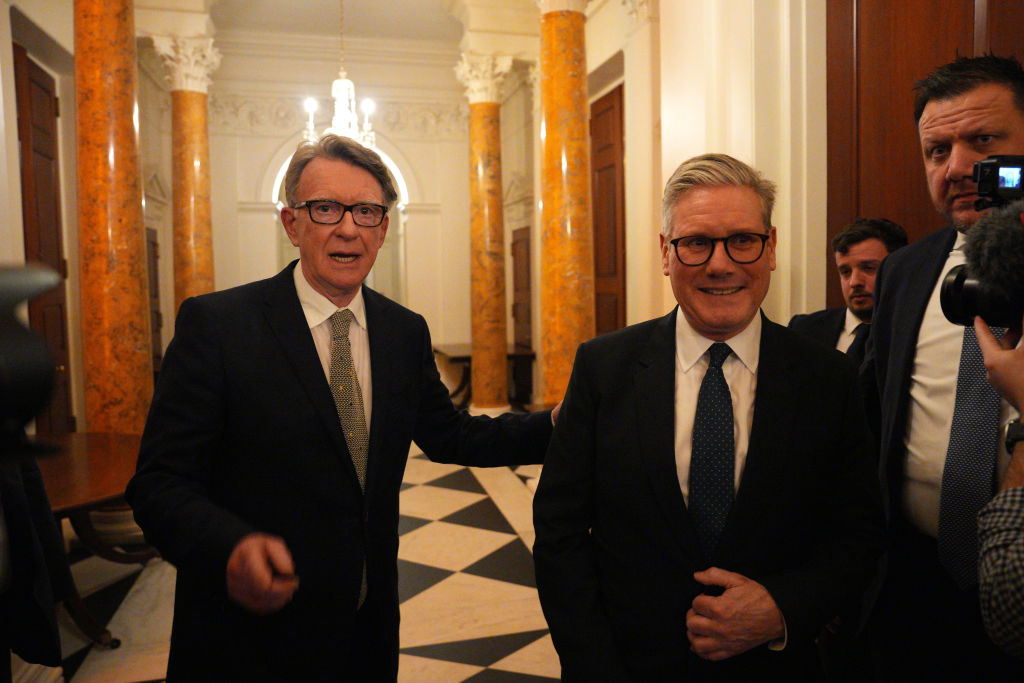
The trading of tip-offs and the ‘revolving door’ hint at how government really works, and how money may actually flow when transparency is wanting. The glasses, suits, holiday flats and show tickets received by Starmer and other Labour ministers, many courtesy of a single donor, are similarly part of a patronage problem.
Many of the Mandelson emails date from the last years of the last Labour government, under Gordon Brown, whose own patent integrity may have led him to trust Mandelson more than was perhaps wise – or perhaps to see in him a canny operator with strengths that he himself lacked. Unfortunately, it often takes one to know one, and Brown was probably not best equipped for that task.
Something similar might underlie Starmer’s decision to appoint Mandelson to Washington. He may have felt he needed someone very different from himself to cope with Donald Trump. But this also serves to underline a third angle of this scandal: Starmer’s judgement leaves a lot to be desired. And while the appointment of Mandelson as ambassador to Washington may represent the biggest and most conspicuous misjudgement to date, it follows a string of failed recruitments, starting with that of Sue, now inevitably Baroness, Gray, as his chief of staff.
Like Mandelson’s known weaknesses for money and power, Starmer’s misjudgements of character can be traced back over many years and could ultimately disqualify him from power.



Comments