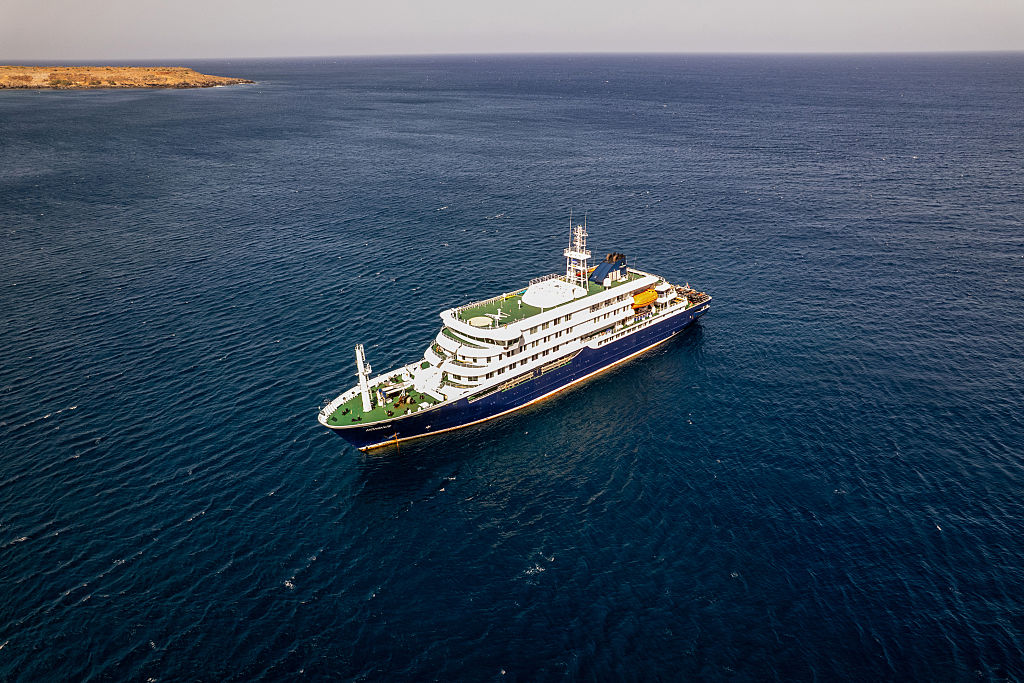
Here we go again, or maybe not. The World Health Organization is reassuring us that the public health risk from hantavirus is low, after the outbreak on a cruise ship. Hantaviruses are a classic zoonosis: caught from animals. You have to inhale dust containing infected rodent droppings or – in the case of this Andean variant, which has shown limited human-to-human transmission before – to have close and prolonged contact with somebody who has already caught the virus. That means being coughed on, not just sharing the same air in a room.
Zoonotic agents are often very good at killing people – Ebola, Marburg, Nipah, Hendra, SARS and Hanta have high fatality rates – but are not so good at infecting people
Trouble is, of course, WHO said the same about Covid. For three whole months they went on insisting “Covid-19 is NOT airborne,” the upper-case letters being theirs, not mine. They were wrong, badly so. They cried “sheep” when it was a wolf. They trashed their own reputation so lots of people will no longer trust them.
Yet in this case I suspect they will be proved right. Even if most of the five, possibly eight, cases on board the cruise ship caught it from each other, it will have been close contact that did the spreading. Here’s why: zoonotic agents are often very good at killing people – Ebola, Marburg, Nipah, Hendra, SARS and Hanta have high fatality rates – but are not so good at infecting people. It takes time for a virus to evolve a good match of its proteins to the receptors on the cells of a new host.
In the case of Covid, it almost certainly did that evolving in a lab, which is why it was highly infectious but not very lethal from the start. (Debilitating or killing your host is not a good strategy for a respiratory virus; you want them out kissing friends at parties. It’s different for insect-borne pathogens.)
There is a key part of this story that has not yet been told. When the ship docked at Ascension Island, having had one death at sea and disembarked a second case at St. Helena (who died on arrival in South Africa), a third person was ill. The doctor on Ascension, Bill Hardy, realized he was seeing a cluster of infections so he called the British Overseas Territories’ on-call infectious disease medic in Britain, Matthew Dryden.
By chance Dryden and his colleagues had recently got the Foreign Office to equip all the overseas territories with simple-to-use kits to test for rare diseases. So Dryden suggested testing for Legionella and bird flu. Both came up negative.
Dryden then called Professor Lucille Bloomberg at South Africa’s National Institute for Communicable Diseases, and she tracked down the third case to a private hospital in Johannesburg. Bloomberg took the samples to the institute and on a hunch tested them for hantavirus: they were positive. She then found samples from the second case, just before they were discarded, and tested them too: also positive. All within 24 hours.
Where did the passengers pick up the virus? The ship had been to South Georgia, where rats have been eradicated, so sniffer dogs regularly inspect ships for rats. So it is unlikely that an infected rodent was on board.
The Dutch couple who died first had gone bird watching at a landfill site outside the Argentinian city of Ushuaia. It’s a well-known birding site because three species of caracara (hawk) and even Andean condors gather there to fight over human refuse. It is a famously windy spot and the dust was no doubt blowing in their faces. The Argentinian authorities are now looking for infected rodents at the site.
Incidentally, landfills are ecological disaster zones: they breed rats, subsidize predator populations that then devastate other prey and spread litter. Incineration is far better.





Comments