Pandemics

How dangerous is the cruise ship hantavirus outbreak?

Here we go again, or maybe not. The World Health Organization is reassuring us that the public health risk from hantavirus is low, after the outbreak on a cruise ship. Hantaviruses are a classic zoonosis: caught from animals. You have to inhale dust containing infected rodent droppings or – in the case of this Andean variant, which has shown limited human-to-human transmission before – to have close and prolonged contact with somebody who has already caught the virus. That means being coughed on, not just sharing the same air in a room. Zoonotic agents are often very good at killing people – Ebola, Marburg, Nipah, Hendra, SARS and Hanta have high fatality rates – but are not so good at infecting people Trouble is, of course, WHO said the same about Covid.

hantavirus

Anthony Fauci’s conveniently foggy memory

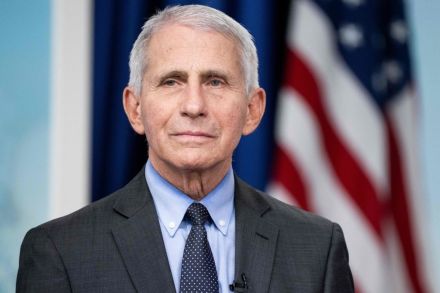
Dr. Anthony Fauci sat for a seven-hour deposition last week as part of a lawsuit brought by the attorneys general of Missouri and Louisiana. The suit claims that the Biden administration colluded with social media platforms to censor information surrounding the origins and circumstances of the Covid-19 pandemic, as well as information that went against CDC guidelines and mandates around vaccines and efficacy masks. Fauci, the NIAID and chief medical advisor to President Biden (and others), didn’t say much. In fact he used the term “I cannot recall,” or some variation, over 190 times.

anthony fauci

The World Health Organisation has lost all credibility

From our UK edition

Let’s be honest: is there anyone out there who has faith in the ability of the World Health Organisation (WHO) to tackle a future pandemic? Any lingering hope that the WHO might be an organisation fit to be trusted with global heath concerns has pretty well evaporated with the election, by acclamation, of China as one of the 12 members of its executive board on Friday.  It is true, of course, that an international body must have representation from all over the world if it is going to win the near-universal cooperation it needs in order to operate. It can’t be led entirely by western democracies and wealthy South Asian countries even if they might have the best skills available; you need members able to tap into every culture and religion on Earth.

End of the road for malicious lockdowns

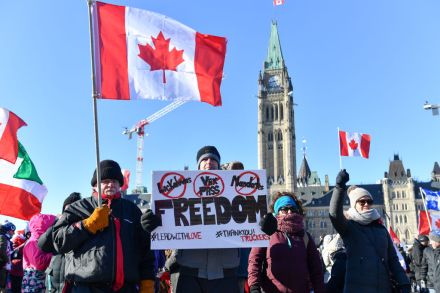
Is a modicum of sanity about to reassert itself regarding the Wuhan Flu? Are the people finally exhausted by their panic over the Fauci-altered coronavirus? Remember those little bulletins that Mike Pence carried around, enjoining us all to to take “fifteen days to stop the spread”? I think we’re at about day 750 now. New York restaurants and many cultural emporia demand that you produce your papiers (it sounds better in German) — identification plus an image attesting to your “vaccination status” — in order to enter. Some are even requiring proof that you’ve had a “booster” jab. Pfizer likes that.

Netflix’s Barbarians taught me those Romans had it coming

From our UK edition

Of all the times and places to have been on the wrong side of history, I can’t imagine many worse than to have been a Roman legionnaire in the Battle of the Teutoburg Forest in the year 9 AD. It was the Romans’ Isandlwana — a devastating defeat inflicted by native forces on what was theoretically the world’s most sophisticated, best trained, and almost insuperable military power. Over the years since I first learned about arrogant, tricked, doomed Roman commander Varus and his three legions (about 20,000 men, almost none of whom got out alive), I’ve often mused pityingly on how it must have felt: trapped in the gloomy forest, hemmed in by a bog, waiting to be slaughtered by hammer, axe or javelin by the hairy, painted, blood-crazed Germanic barbarians.

The US is coming out of COVID no worse than any European country

It has become a received wisdom in recent months that the US has failed where the EU had succeeded. On June 22, for example, CNN viewers were shown a graph of COVID cases in the US, which had seemed to flatten at around 25,000 cases a day, compared with those in the EU which had fallen away from an April peak to fewer than 5,000 cases a day. ‘Look at the EU,’ viewers were told. ‘That’s where we should be.’ Roll on four months, however, and it is looking a little different. While cases in the US fell away, then returned in what is beginning to look like a bit of a third wave, Europe has been consumed in a rapidly-growing second wave.

covid

Gretchen Whitmer’s white fragility

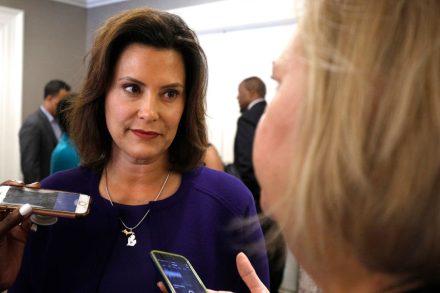
Let’s face it: under the best of circumstances governing is a tricky and difficult task. This is particularly true in a democracy such as ours with its clashing interests, roiling ideological divisions, partisan passions, and a system of government that often places rank amateurs in charge of career civil servants. This is not a recipe for sound decision-making. Perhaps that explains why Gov. Gretchen Whitmer is mandating implicit bias training for all Michigan healthcare workers in the middle of a pandemic?Even for experienced politicians genuinely motivated by the common good, 2020 has offered up daunting challenges. The arrival of COVID-19, the teetering instability of our economy, and a ratcheting up of racial divisions would cause a seasoned professional many a sleepless night.

gretchen whitmer

Tree-ring analysis has solved many historical mysteries

From our UK edition

History is only as good as its sources. It is limited largely to what has survived of written records, and in prehistory to random fragments unearthed by archaeologists and paleontologists. Climate history is no different. As the effects of global warming accelerate, it becomes ever more urgent to reassemble what we can of the atmospheric conditions of the past to gather evidence from wherever it may be. Glacial ice cores are one place, with their frozen snapshots of long-ago air and traces of ash and pollen and greenhouse gases such as carbon dioxide or methane. Other climate proxies include the annual accretion of stalagmites, the growth of corals and the incremental layers of bone in the ears of fish.

Could the lockdown have side-effects no one has considered?

‘Nothing makes sense in biology, except in the light of evolution,’ the splendidly named biologist Theodosius Dobzhansky wrote in 1973. It’s a good rule of thumb. Despite near-miraculous advances in medical science we remain biological beings, subject to biological laws. None is more central to our understanding of disease than evolution. Yet this theory remains poorly understood and poorly utilized in medicine. And an evolutionary perspective raises important questions about the drastic action we have been taking to confront COVID-19.Most doctors are too busy dealing with the day-to-day deluge of cases to have much time for what they may consider abstruse academic ideas.

effects