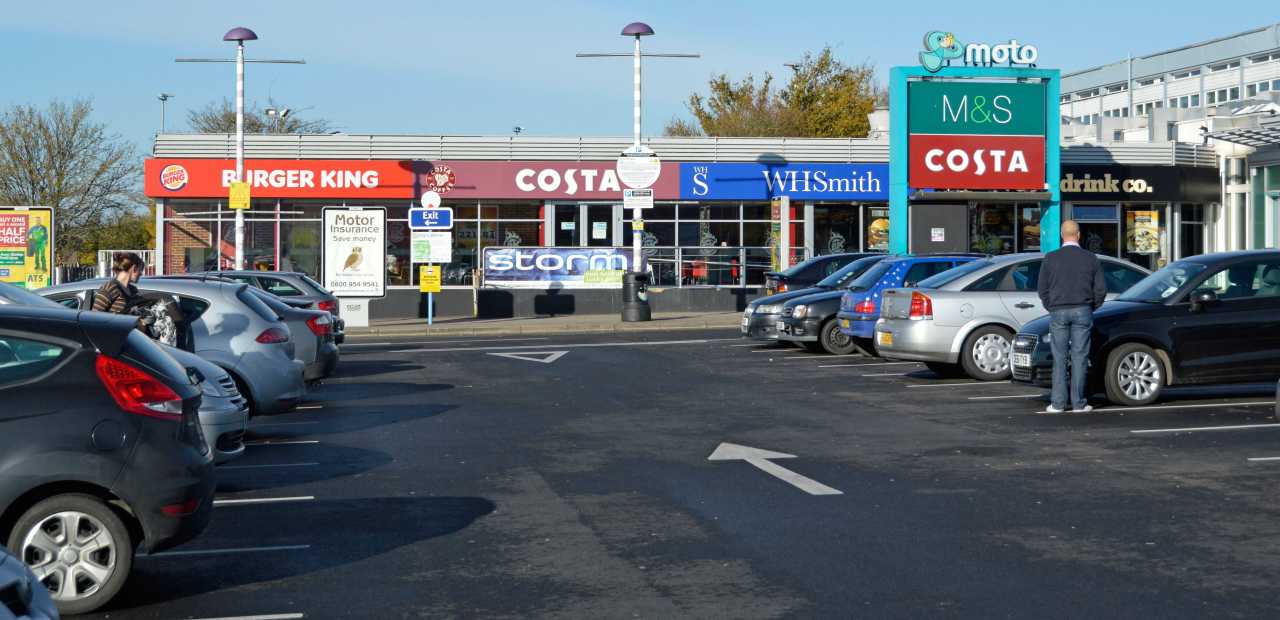
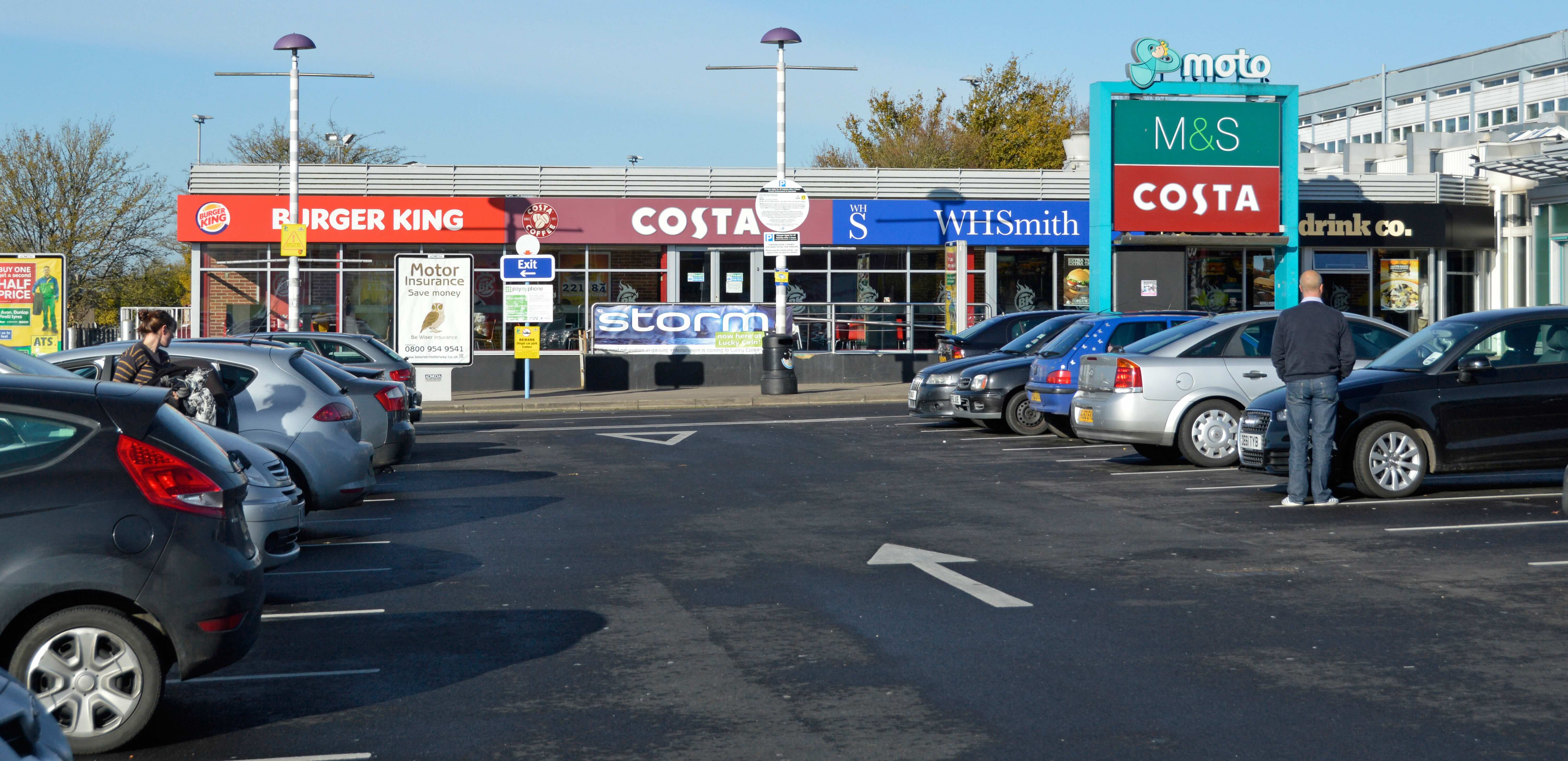
If OPM had released an antithetical response to their 2000 magnum opus ‘Heaven Is a Halfpipe’, I’m certain it would have been called ‘Hell Is a British Service Station’. Had this song been made, I think it would have gone a little something like this: ‘If I die before I wake / I’ll spend eternity in a Welcome Break / ’Cause right now on earth, I can’t do jack / I’m at a service station and my tyre’s flat / Now hell would be a Roadchef / With a Costa bacon bap / And hell would be the toilets / After a curry at Watford Gap.’ Admittedly, the lyrics could do with some workshopping, but you get the point.
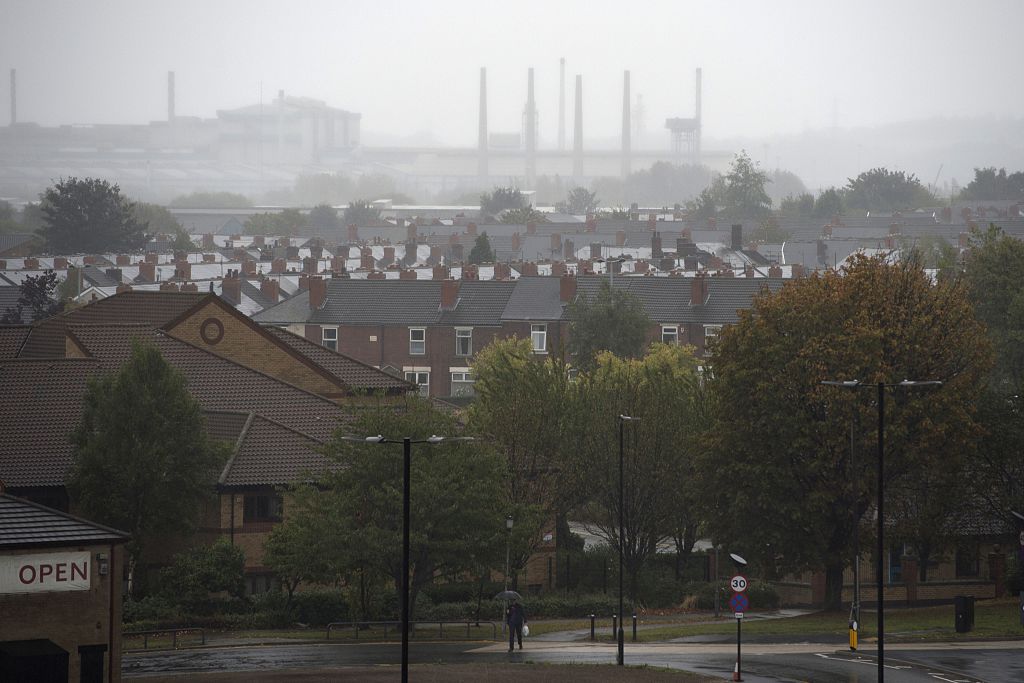
Britain’s service stations are some of the worst liminal spaces known to man, beaten only by the queue at the post office, a solo breakfast in the ‘dining room’ of a Premier Inn, and Westfield Stratford (or just Stratford in general). Service stations do something to our psyche. A person can’t claim to have experienced the silence of the cosmos until they’ve stood on the bridge at Charnock Richard services and looked down at the oncoming traffic as their Burger King Chicken Royale hardens in their hand. It takes watching a bloke in his thirties smoke a rollie and ride the kiddie coin machine outside the service station toilets to truly understand what Voltaire meant when he said ‘I am abandoned by God and man!’. Service stations warp time. If you’ve seen Interstellar, it’s basically like that: one hour inside a service station is the equivalent of seven years in the outside world.
But service stations weren’t always this bleak. In fact, there was a time when the service station was a destination unto itself. Britain’s first motorway opened in 1958 – for the petrolheads among us, this was the Preston Bypass, which would come to form part of the M6. The first section of the M1 was built a year later, and with it followed the UK’s first two service stations: Newport Pagnell and Watford Gap. Newport Pagnell might have had a slightly more salubrious reputation, but it’s Watford Gap – colloquially known as the ‘Blue Boar’ – that became something of a cultural epicentre in the 1960s; rock musicians such as the Rolling Stones, the Beatles, Jimi Hendrix and Pink Floyd frequented the glorified concrete shed as they were shuttled to and from gigs.
The 1960s were something of a golden age for motorway service stations. Between 1959 and 1970, around 20 were built across the UK. Highlights include the aforementioned Charnock Richard site, with its then futuristic glass bridge and fancy restaurant (now a wasteland with a bridge to nowhere and a general feeling of malaise); Lancaster and its brutalist air traffic control-inspired Pennine Tower (which once housed a restaurant but closed to the public in 1989 due to fire safety concerns); and Leicester Forest East for its silver-service ‘Captain’s Table’ restaurant – designed by Terence Conran – where staff wore sailor suits to give it an authentic nautical feel.
But the public’s love for motorway service stations was short-lived: rules and regulations were introduced, food quality declined, facilities became increasingly dirty, stations teemed with football hooligans and the novelty wore off. Britain’s vision for an ultramodern ‘motorway age’ had all but crumbled by the 1970s. Take it from Roy Harper and his 1977 song ‘Watford Gap’: ‘Just about a mile from where the motorways all merge / You can view the national edifice, a monumental splurge… It’s the Watford Gap, Watford Gap / A plate of grease and a load of crap.’ Not the most poetic of lyrics, but it does the job.
Britain’s service stations are some of the worst liminal spaces known to man, beaten only by the queue at the post office, a solo breakfast in the ‘dining room’ of a Premier Inn, and Westfield Stratford
In the late 1990s, the high street franchises moved in: McDonald’s, KFC, Burger King, WHSmith, Subway, Costa. Classic staples such as Little Chef and Happy Eater began to close down, and the service station as we know it today was born. Defenders of the modern service station will point to Westmorland’s outposts in Gloucester, Tebay and Cairn Lodge, and they will say things like: ‘But look, they sell cheese and octopus here! You can even have a glass of Veuve Clicquot as you gaze upon the Cotswold Hills! My dog loves it here!’ And while all of that may be true, Westmorland operates just three service stations – meaning there are 94 others across Great Britain in desperate need of a facelift.
A few weeks ago, I took a road trip with some friends to the Lake District. From London, it’s a straight shot up the M40 followed by the M6. The drive usually takes six hours, but if, like me, you’re stuck in the back seat with a mate who wants to urinate every 30 minutes because he’s crushed six pint cans of beer, it can take significantly longer. Whenever I travel across our country’s motorways, I like to play a game called ‘Which Service Station Was That?’. The game is pretty simple. I visit a service station and ask myself: ‘Which service station was that?’ I never win, and that’s because Britain’s service stations are almost all uniform, characterless waiting rooms where people stare into the abyss and wonder if their ham and cheese toastie has been reheated safely. (It hasn’t.) That said, on my recent trip, I had the pleasure of discovering a small ‘casino room’ in one of the service stations we visited. And reader, let me tell you this: it was grim. I must have spent five minutes staring transfixed at an unconscious man slumped against the fruit machine. Although he was asleep, his subconscious still knew when it was time to hit the spin button. I hate to admit it, but I was mildly impressed.
Not all service stations can look like Westmorland’s services, but that doesn’t mean the vast majority should resemble a supermarket in Chernobyl. Personally, I don’t want to eat octopus and drink champagne at a service station like some bloated business executive at Singapore Changi airport, but I would like to leave these roadside pitstops without wanting to put my head through a window. Like air travel, the golden age of motorway travel is undoubtedly behind us. And those days are unlikely to return. But that doesn’t mean we should accept defeat; that doesn’t mean our only options should be a stale steak bake from Gregg’s or a lukewarm can of Monster Energy from WHSmith. Surely we can do better than that?
Driving is already bad enough: petrol is expensive, motorways get clogged up, and you’re lucky to make it home without being blinded by some cretin’s LED headlights on full beam. (On a serious note, why are those lights legal?) How about we make things a little easier for the average driver by ensuring that their breaks aren’t more depressing than the journey itself?



Comments