
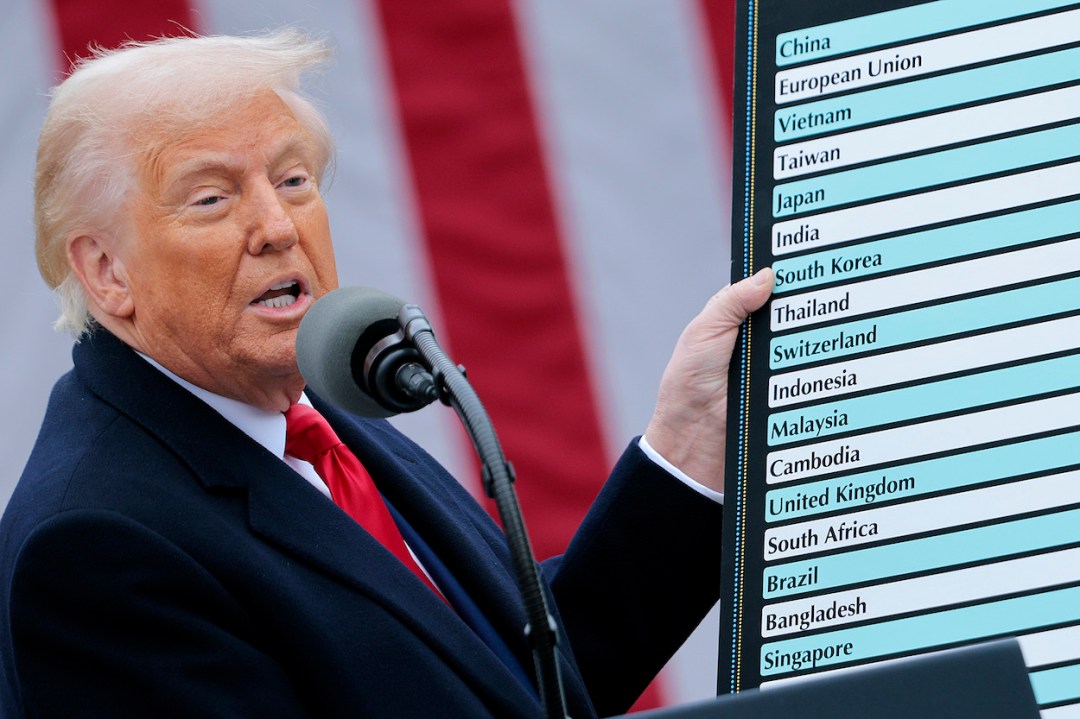
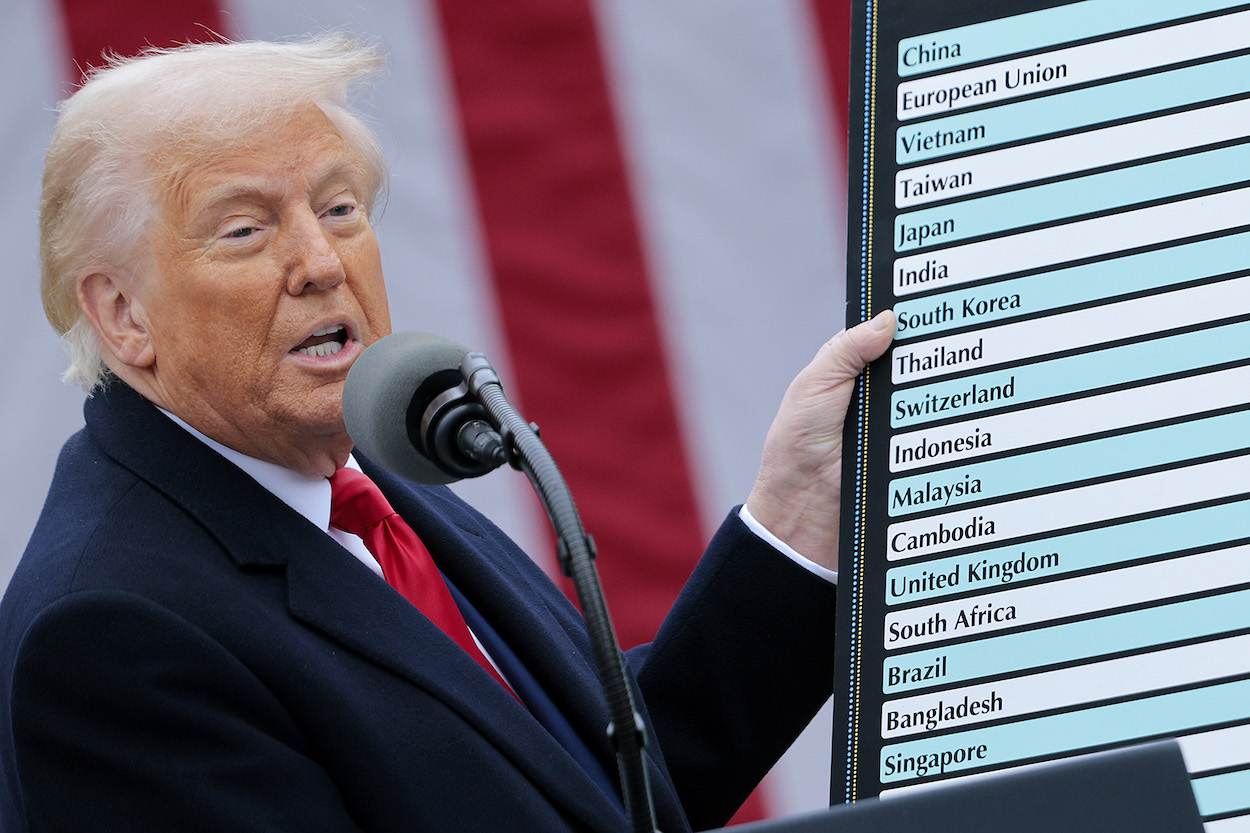
‘If the Supreme Court rules against the United States of America on this… WE’RE SCREWED!’ said Donald Trump on Truth Social last month.
Well, the Supreme Court has finally now ruled, and it is indeed a very serious blow to Trump’s economic agenda. The International Emergency Economic Powers Act, which the White House used to impose his sweeping levies, ‘does not authorise the President to impose tariffs,’ said the court.
Quite what this setback means for Trump’s tariffs remains unclear. There’s already much talk of the United States having to pay back duties to foreign companies, but that is a fraught legal question. Another highly contentious subject is what now happens to the various trade deals Trump has struck in recent months with other nations or blocs.

US Treasury Secretary Scott Bessent has been busy formulating a ‘Plan B’. Justice Kavanaugh, one of three dissenting voices on the court, suggested that, though he ‘firmly’ disagreed with the verdict, ‘the decision might not substantially constrain a president’s ability to order tariffs going forward.’ He listed several federal laws which the Trump administration might use instead: the Trade Expansion Act of 1962, the Trade Act of 1974, and the Tariff Act of 1930.
What’s certain, however, is that court’s rejection represents a huge barrier to Trump’s economic agenda, which after a rocky few months has been gaining positive momentum on the back of improved jobs numbers, falling inflation, and a surging stock market.
There was much talk of financial Armageddon following Liberation Day, that chaotic moment last April when Trump rolled out his extraordinary and sweeping tariff agenda. Yet the global economy seems to have coped surprisingly well with the heavy imposition of duties on goods coming into the United States.
It’s been a bumpy ride, of course, and many businesses have suffered under Trump’s at times capricious financial agenda. But Trump’s External Revenue Service has brought in many billions of dollars to the US Treasury, as he often likes to point out.
What markets hate, arguably more than excess government charges, is long-term fiscal uncertainty, and the Supreme Court’s decision now casts huge doubts over the direction of the world’s most powerful economy. The Dow Jones Industrial Average has responded positively to the Supreme Court’s ruling, rising by 200 points within an hour of the news, but the inevitable messy legal arguments over which tariffs can remain seem certain to cause turmoil in the coming weeks.
Worse still for Team Trump, the Supreme Court’s ruling, which the administration has long dreaded, comes just as the President has confirmed he will visit China in April. The tariff agenda may have been levied on almost every country, but its chief purpose was to loosen China’s hardening grip on the global financial system. The trade war with Beijing that has raged since last spring has been neither won nor lost. But now Trump could find himself in a position he’ll hate: having to negotiate without his favourite weapon of mass trade disruption (i.e., tariffs). He must be envious of Xi Jinping, the general secretary of the Chinese Communist party, who doesn’t have to worry about what the courts say.
This article first appeared on The Spectator’s World edition.





Comments