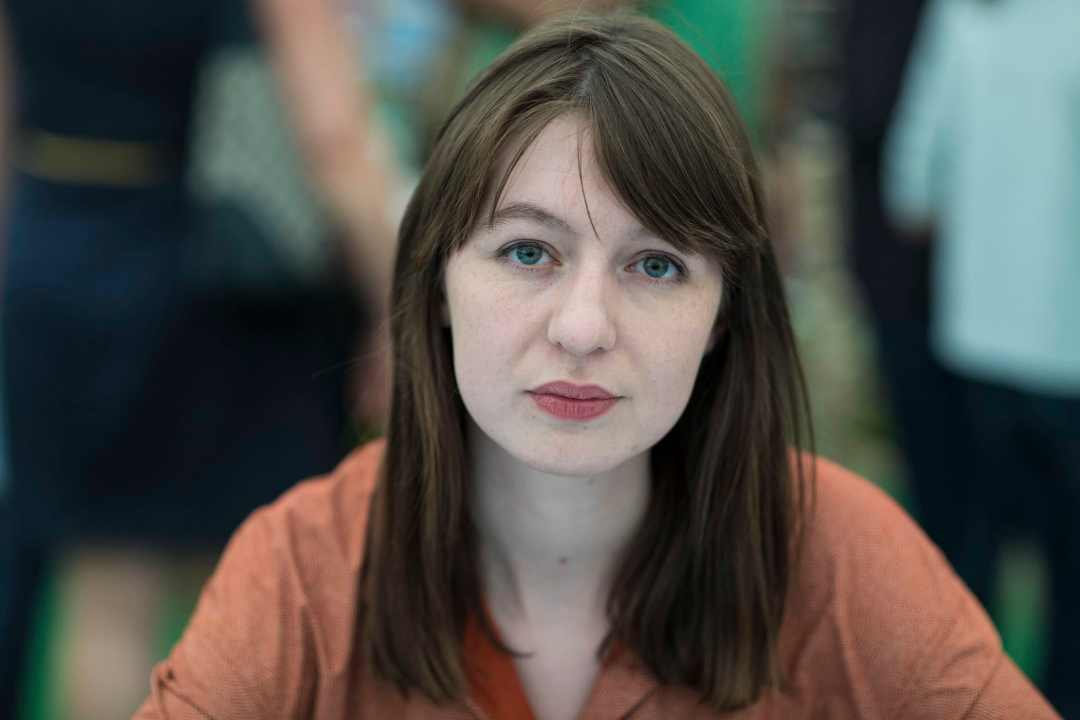
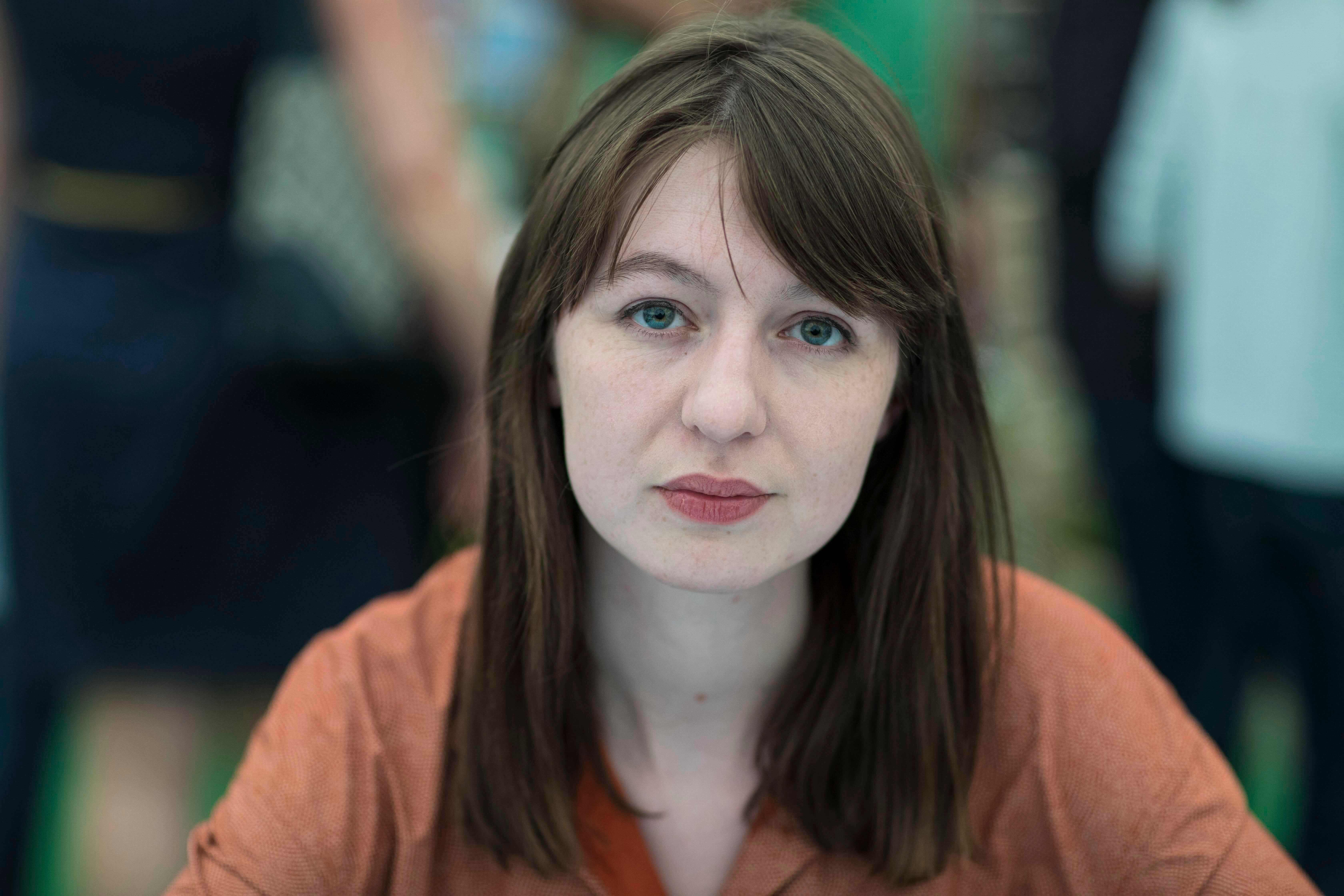
Sally Rooney must be delighted that her novels are being pulled from British shelves over her support for Palestine Action. This woman is never happier than when denying people the chance to read her books or those of others. She has previously refused to allow her work to be translated into Hebrew and has brought the Edinburgh and Hay book festivals to the brink of financial ruin by backing a boycott of their main sponsor, Baillie Gifford. Unlike many of her fellow authors, Rooney is successful enough not to have to actually sell books to make a living, and good on her.

But British readers should celebrate too, since we are now relieved of any feeling of responsibility to read her. Rooney is a literary phenomenon publishing Conversations With Friends at just 26 and selling more than 2.3 million novels in the UK alone. Her net worth is thought to be about £10m. She is very popular, but it’s pretty hard to tell if she’s actually any good.
Critics praise the spareness of her prose, the wit of her dialogue and the insight she offers into contemporary female experience. The Financial Times wrote of her debut: ‘Our literature is still in the early days of capturing this generation’s non-binary, exploratory approach to sexual relationships. Yet, as is clear in Conversations with Friends, writers are increasingly adept at capturing the way in which we all communicate.’ All of us? Really?
Her protagonists tend to be incredibly well-educated, left-wing and introspective. Nothing wrong with that – some of my best friends are educated. But they can be pretty tedious company. One character spends an entire passage looking at her own face, telling the reader: ‘I took a handful of my hair and looked at the ends, which were dry’. Is that a fascinating moment of self-exploration or just someone remembering they need a haircut?
All her plots are pretty much the same, combining one clever but self-effacing woman, another more charismatic, beautiful and sexually adventurous one, and a variety of interesting romantic arrangements. Essentially she takes archetypes and tries to extrapolate bigger themes. Sometimes the effects are rather crude. Consider the following from Intermezzo: ‘Sylvia in a silk blouse buttoned at the wrists and Naomi in a yellowish quarter-zip fleece… The one voice rich low golden and the other with the clear high purity of a bell.’ That’s just not very good writing.
All her plots are pretty much the same
Her fame has given a massive boost to Irish literature and helped raise the profile of brilliant Irish writers like Paul Murray and Claire Keegan. But Rooney herself is more often grouped with Lena Dunham, Phoebe Waller-Bridge and Greta Gerwig as a female ‘voice of a generation’ and a feminist riposte to that male-dominated class. But it is telling that the other three work in film and TV – necessarily less subtle mediums than literary fiction. Indeed much of Rooney’s popularity derives from TV adaptations of her work. The BBC’s Normal People racked up 62.7 million views, but let’s not forget it came out during Covid, when there was nothing else to do. It suited that weird time, when everyone was off their nut on banana bread and existential dread.
Whatever her talents as a writer, what’s beyond doubt is that her politics stink. She is an avowed Marxist, a believer in degrowth and a climate catastrophe she believes is caused by ‘a special kind of greed’. And, of course, there’s her support for Palestine which, she claims, is forcing the withdrawal of her work from Britain. In fact this is happening because she has committed to donate all proceeds from UK sales to Palestine Action, which is a proscribed terrorist organisation, the funding of which could constitute a criminal offence. In other words this is a stunt concocted with the full backing of her publisher.
She has, of course, every right to sympathise with Palestinians and it’s no surprise that this writer of binaries seems not to reserve similar compassion for Israelis. There is an argument, which Jonathan Sumption has made and Rooney has highlighted, that encompassing supporters of Palestine Action alongside those who are unequivocally engaged in violent and terrorist acts is legislative overreach. Certainly the proscription has led to a spike in arrests of keffiyeh-toting old ladies. But members of this group have attacked the strategic defences of our country and the Green Party’s determination that ‘Zionism is racism’ has made utterly clear what its motto ‘from the river to the sea’ really means. It means the rejection of a two-state solution and the destruction of Israel. Agreeing with that needn’t necessarily make you a criminal, but it is disgraceful. It is a shame that Rooney is dragging books and publishers into this mire.
She has form though. Rooney was among more than 200 authors who signed a letter threatening to disrupt the Edinburgh Book Festival unless its sponsor, Baillie Gifford, ‘divest’ from fossil fuels. The demand was absurd given that Baillie Gifford invests less than two per cent in fossil fuels and bears a fiduciary duty not to make ethical decisions relating to other people’s money. As a result the fund manager pulled its sponsorship of both the Edinburgh and Hay festivals and the financial viability of both remains in doubt.
The arts should always be anti-establishment. Only a totalitarian regime would demand all literature conform to a particular worldview. Yet such is the power of Rooney’s personal orthodoxy that she has self-banned her own books. Hers is a kind of reflexively anti-Capitalist thinking that lumps together causes whose only common feature is the extremism of their adherents. It’s inimical to free speech and, worse, inimical to art.




Comments